
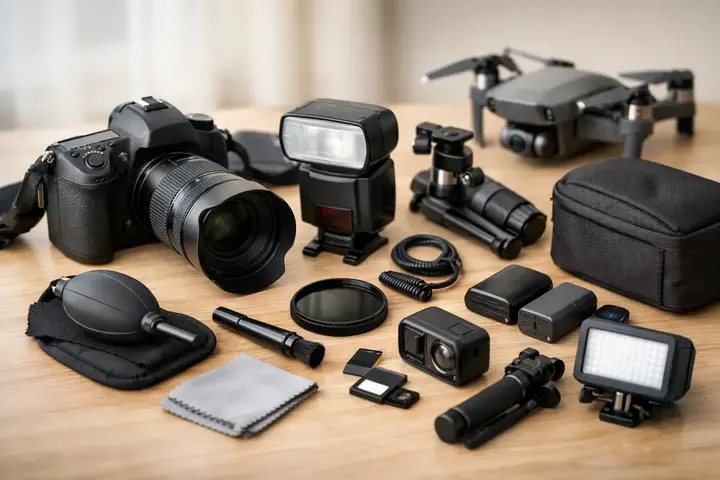
The first moment of disappointment after buying a camera usually comes not because of image quality, but when the battery runs out, the card fills up, or there’s nowhere safe to put the camera down. That is exactly why the best camera accessories for beginners are not random little extras, but equipment that genuinely improves your work from the very first photo or video sessions.
Beginners often focus on the camera body and lens, but practical experience shows something else - a good accessory kit often brings more day-to-day benefit than a more expensive camera model. The most important thing is not to choose a lot, but to choose correctly. If an accessory solves a specific problem, it is worth buying. If it only looks useful but ends up sitting on a shelf, the investment has not paid off.
In brief
- For a beginner, prioritize a spare battery, memory card, bag, and a stable tripod — these most often solve problems in the field.
- For video content, add an external microphone and a compact LED light — sound and lighting will instantly improve the quality.
- Buy filters and extra accessories only when you have a specific need; a cheap option often creates more problems than it solves.
What to choose for different tasks
| Task | Solution | Why |
|---|---|---|
| Travel photography | Light shoulder bag or backpack type + one spare battery and a compact tripod | Mobility and quick access to the camera ensure shots are not missed; a spare battery reduces the risk of running out of power. |
| Landscape and night photography | Stable tripod with the option to use long exposure and a high-quality memory card | Landscapes and night shots require stability and fast recording performance to avoid lost frames. |
| Video vlogs and talking to camera | Directional or clip-on microphone + compact LED light | Clear voice and controlled lighting improve viewer perception much more than just a better lens. |
| Product photography and portraits at home | Adjustable LED panel, tripod, and a bag with logical compartments | Consistent, targeted lighting and easy equipment organization speed up the workflow and improve results. |
| Filming in bright daylight (slow motion/filming with a wide aperture) | ND filter, stable tripod, and a suitable memory card | An ND filter lets you keep the desired exposure time and aperture, while the tripod provides stability and the card ensures continuous recording. |
| Everyday family photos and events | Spare battery, one or two medium-capacity memory cards, and a small shoulder bag | Convenient kit organization and backup power/storage reduce the risk of missing important moments. |
The best camera accessories for beginners for everyday use
If you need to choose a starter kit, the priority is reliability and convenience. In most cases that means a spare battery, a memory card, a bag, and a tripod. These are accessories that help not just in theory, but on every outing, at every event, or on every trip.
Spare battery
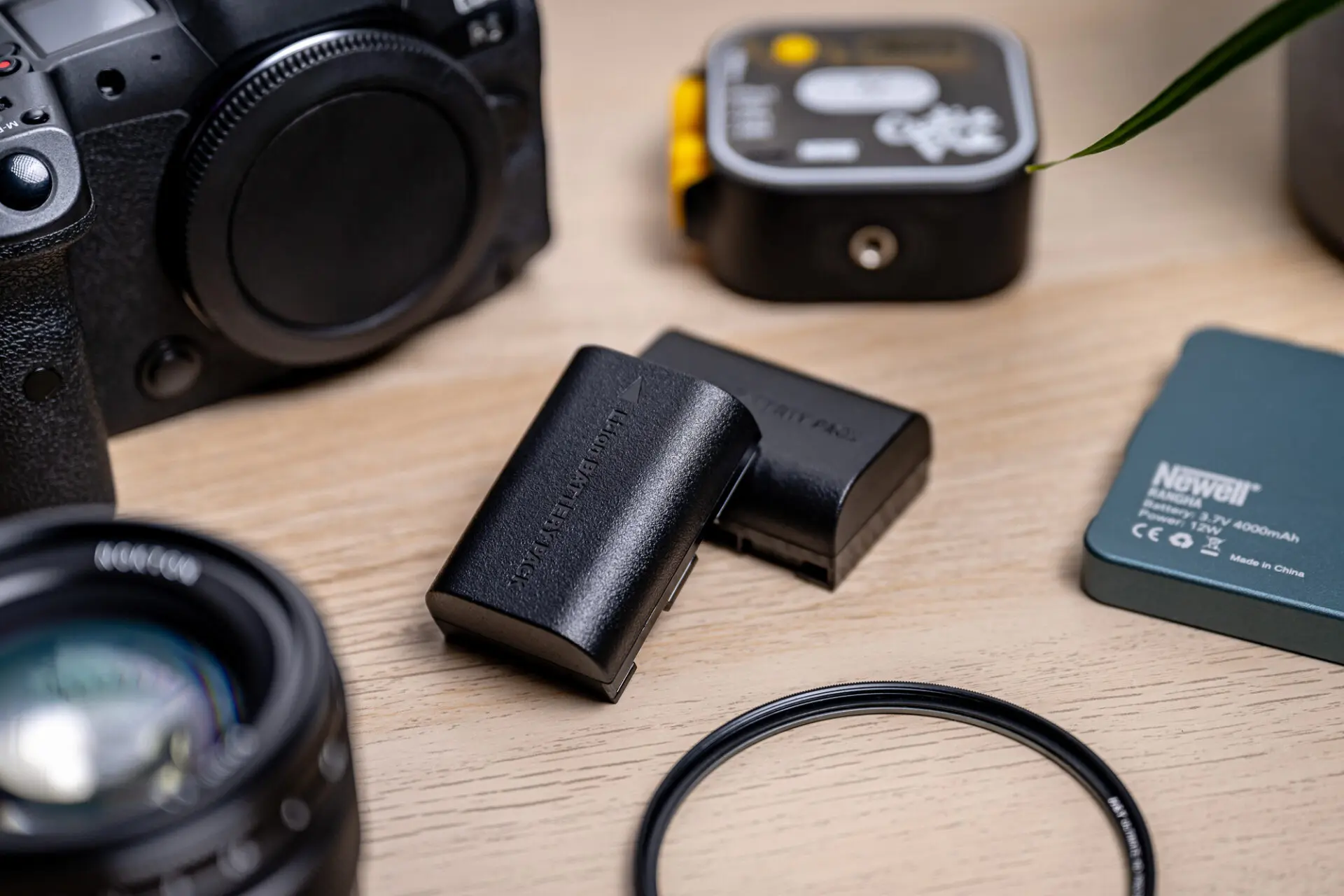
The original battery is rarely enough, and one extra battery is often more valuable for a beginner than any decorative filter. When photographing a family event, a walk, or a trip, the battery may last long enough. But when recording video, in cold weather, or when using the screen and autofocus intensively, it drains faster than expected.
The rule here is simple - if the camera is used away from home, a spare battery should be in the bag. Cheaper alternatives are available on the market, but they do not always provide stable operation and precise charging control. If the camera is newer or more demanding, the safer choice is usually the original battery or a battery from a proven manufacturer.
Fast and reliable memory card
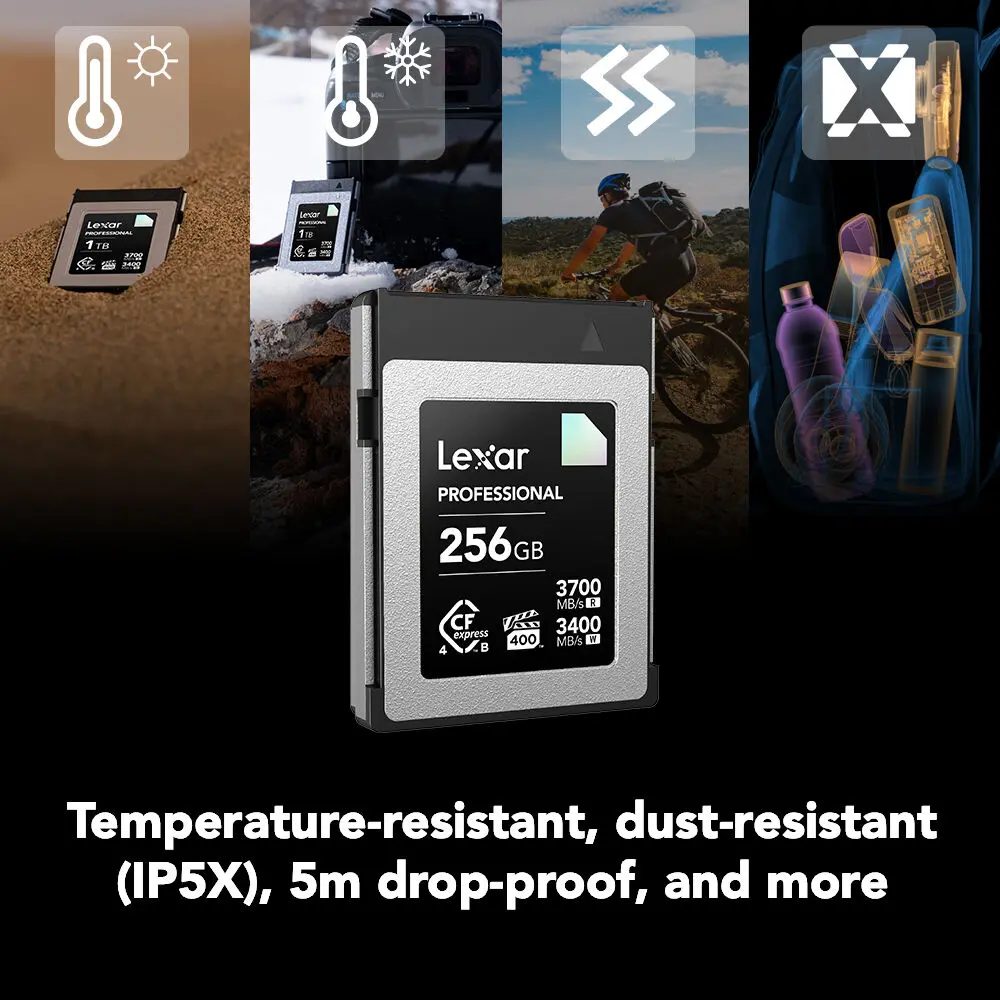
A memory card is not a place to save money without thinking it through. Beginners often look only at capacity, but speed and stability are much more important. If the card is too slow, the camera may lag during burst shooting or video recording. As a result, the problem is blamed on the camera, when the real limitation is the card.
A practically safe starter option is one or two medium-capacity cards from a known manufacturer, rather than one very large card of unknown origin. Two cards reduce the risk if one fails or fills up at an inconvenient time. For photography and Full HD video, this is usually enough, while 4K video will require closer attention to recording speed classes.
Camera bag or backpack
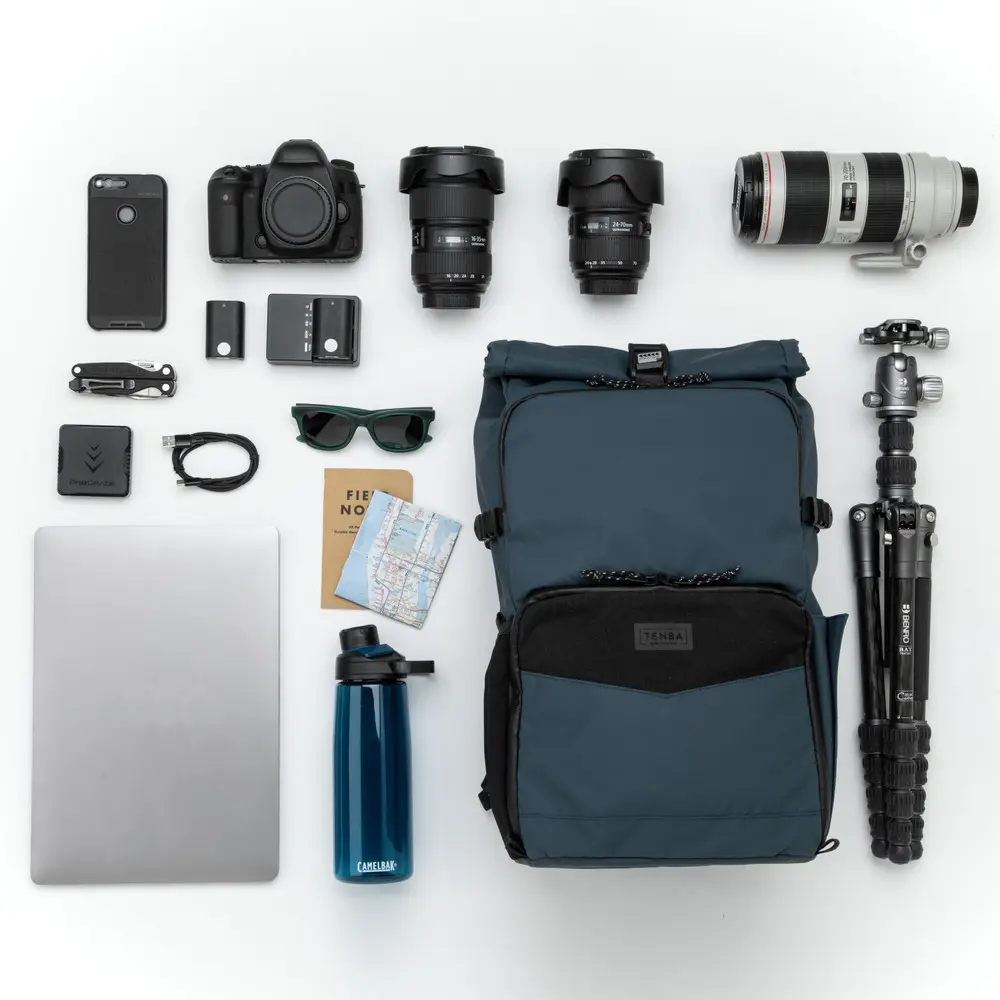
Without a proper bag, a camera is usually either carried uncomfortably or left at home. In both cases, the equipment is not used to its full potential. That is why choosing a bag is not just about protection, but also about usage habits.
A small shoulder bag will be convenient for a camera with one lens and everyday city outings. A backpack is better if you need to carry more equipment or travel longer distances. It is important to pay attention not only to size, but also to the logic of the internal compartments, moisture protection, and whether the bag is easy to open quickly. If access to the camera is inconvenient, shots are often missed.
Tripod
For a beginner, a tripod helps to understand framing, exposure, and working with light much better than shooting only handheld. It is useful for landscapes, night shots, self-portraits, group photos, product photography, and video. But balance is important here - a tripod that is too cheap can be unstable, while a model that is too heavy will stay at home.
A good starter tripod is light enough for everyday use, but stable enough for the weight of your camera and lens. Check the maximum load, working height, and head type. For photo use, a universal ball head is often enough, while in video shooting, a video head is useful for smooth movements. If mobility is the priority, a compact tabletop tripod or mini tripod can also be more practical than a full-size model.
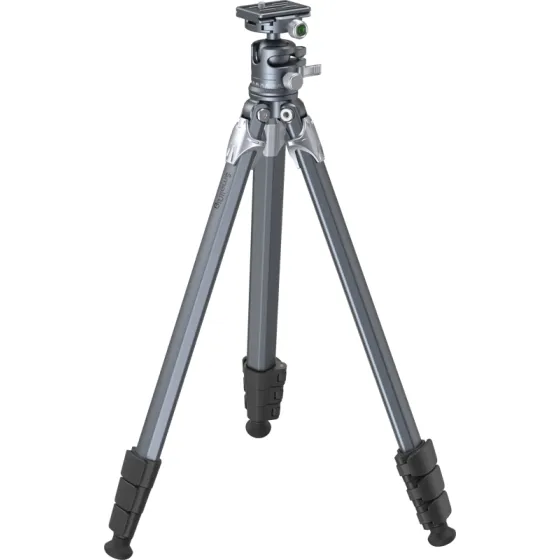 ProductSMALLRIG 3987 LIGHTWEIGHT TRAVEL TRIPODView product
Accessories that improve quality
Once the basics are sorted, the next question is quality. Here, the choice depends more on whether your priority is photo, video, or content for social media.
External microphone
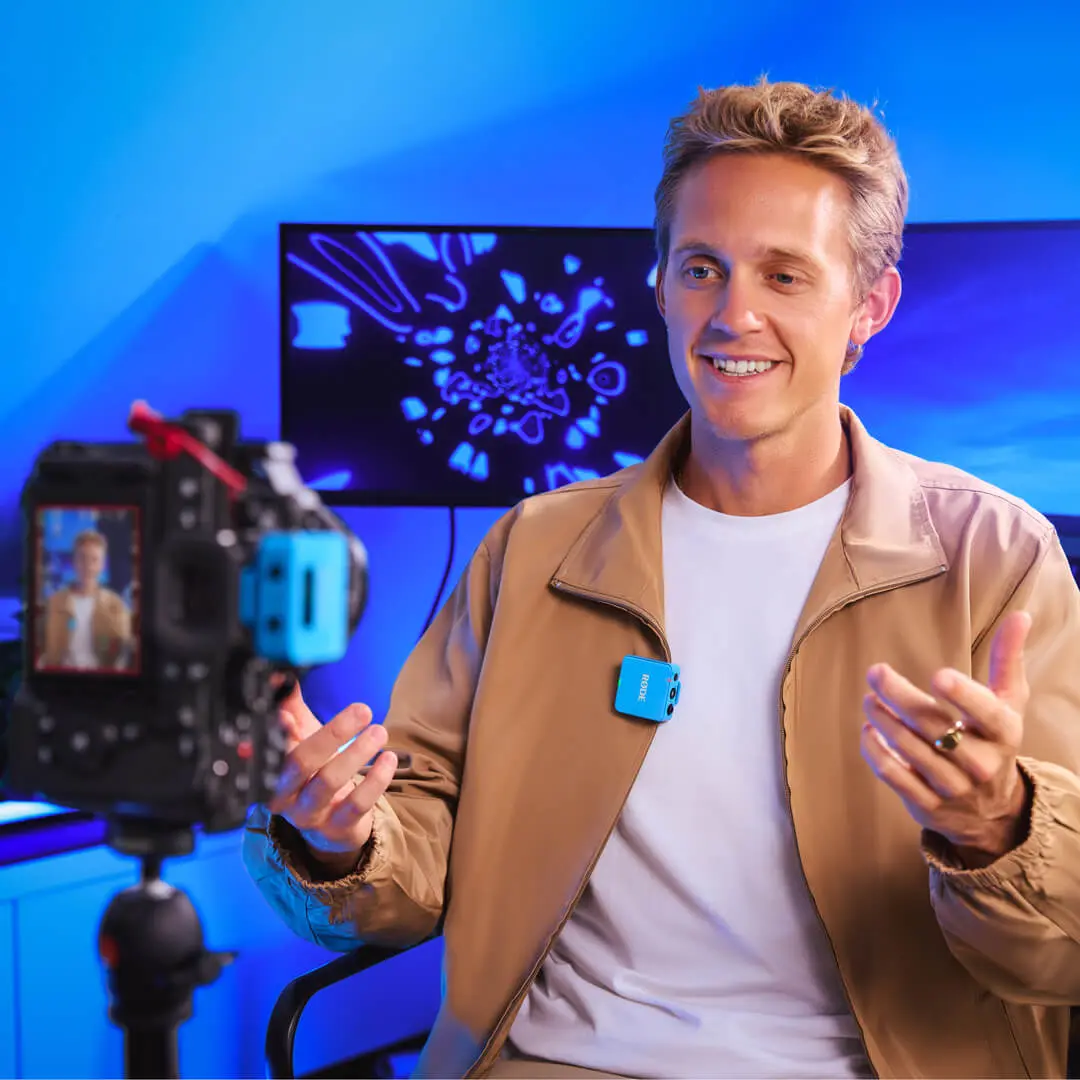
If the camera is used for video, an external microphone is one of the most valuable upgrades. Viewers tend to forgive image flaws, but poor sound immediately creates an unprofessional impression. The built-in microphone often picks up ambient noise, camera button sounds, and room echo.
A beginner usually has to choose between two directions. A directional microphone is suitable for vlogs, interviews, and filming with a camera. A lavalier microphone is a good solution if clear voice recording for one speaker is important. Here, you should consider the camera connections, power supply, and whether filming takes place indoors or outdoors.
Additional light
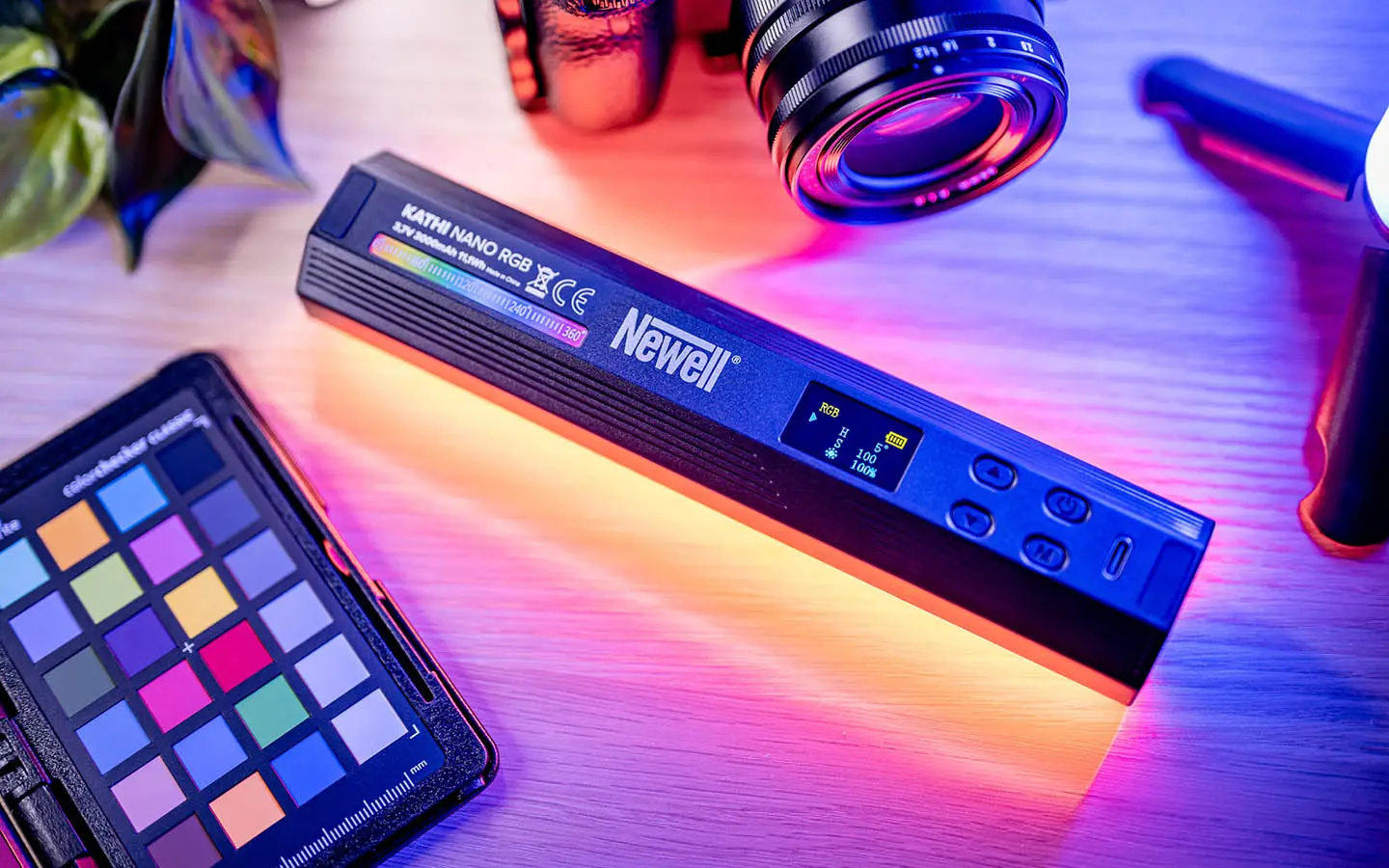
Many beginners try to solve low-light problems with camera settings, although a simpler and cleaner solution is often additional light. A small LED panel can significantly improve portraits, product photos, video calls, and content shooting indoors.
You do not necessarily need studio lighting right away. To start, a compact adjustable LED light with variable brightness and, preferably, color temperature is enough. If the main task is filming people at a table or in a home studio, the ability to mount the light on a tripod or camera will also matter. For travel, a small battery-powered panel is more convenient; for studio work, a more powerful solution with постоянный power supply is better.
Filters - only if there is a specific purpose
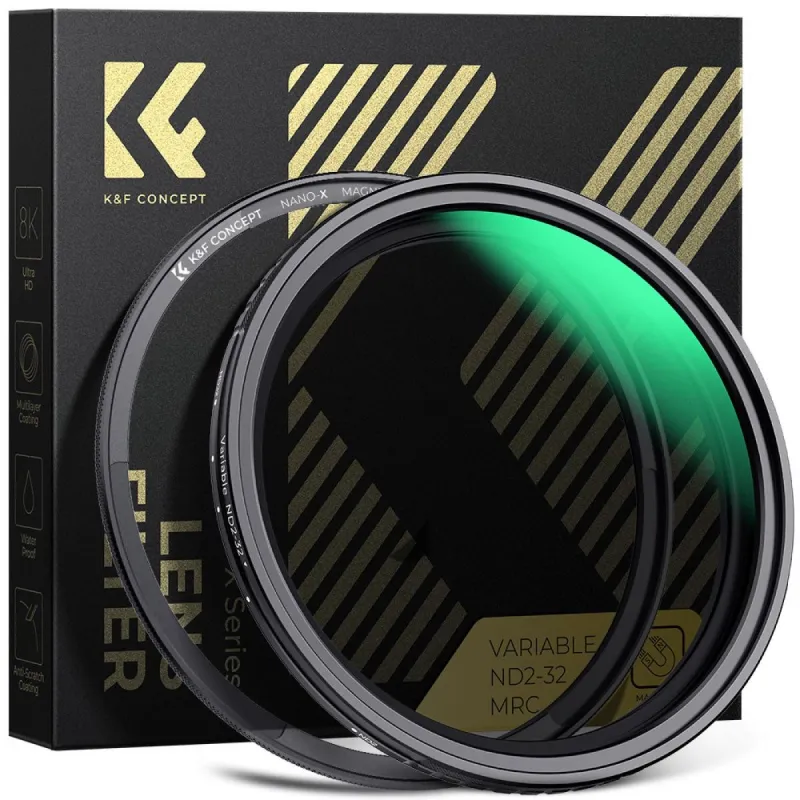
Beginners often buy filters too early. A UV filter as lens protection can be useful, but only if it is high quality and does not damage the image with reflections or loss of sharpness. A cheap filter on a good lens can have the opposite effect.
A more justified choice in practice is often a polarizing filter for landscapes, water surfaces, and reflection control, or an ND filter for video shooting in bright daylight. If you do not have such tasks, the filter purchase can be postponed. This is a good example of a situation where the usefulness of an accessory depends entirely on your shooting style.
How not to spend your budget in the wrong places
Among the best camera accessories for beginners, not all the most popular accessories need to be included. A good kit is one that fits your scenario. If the camera is intended for travel, a lightweight bag, a spare battery, and a compact tripod will make more sense. If the goal is video content, it is much more useful to invest in a microphone and light.
A common mistake is buying universally recommended accessories without considering your own needs. For example, an expensive gimbal stabilizer may seem like a logical purchase for a beginner, but in practice it is only relevant for certain video tasks. Meanwhile, a simple tripod and a good microphone will be used much more often.
Another practical principle - if you are not sure about a specific category, it is worth choosing a safe mid-range option at first rather than the very cheapest one. This especially applies to tripods, cards, batteries, and audio accessories. In these categories, a too-cheap purchase often means compromises that become noticeable within the first month of use.
What to buy first
If we create a priority order, then for a photo user the first kit is usually a spare battery, memory card, bag, and tripod. For a video user, a microphone and light are added to this list very quickly. These are not just extras - they affect how often and how well the camera is used.
If you need equipment for a specific project or want to understand what exactly will suit your camera and working style, a sensible solution is often to compare several categories before buying or consider renting. This can help avoid a situation where an accessory that is theoretically correct does not fit your usage habits in practice. This approach is especially useful for tripods, audio equipment, and lights, where ergonomics and application are just as important as technical specifications.
Properly chosen accessories do not turn a beginner into a professional in one day, but they very quickly remove technical obstacles that get in the way of learning and working confidently. That is why the best starter purchase is often not the loudest or most modern one, but the one that lets you use the camera more often, more safely, and with predictable results.
Frequently asked questions
How important is the original battery compared with third-party batteries?
The original battery usually provides more accurate charging control and compatibility with camera functions. Third-party batteries may be cheaper, but they can be less stable and in some cases cause compatibility issues.
Is it better to buy one large memory card or several smaller ones?
The article recommends choosing two medium-capacity cards because it reduces the risk of data loss and lets you keep working if one card fills up or fails. One large card may seem more convenient, but the loss will be greater if it fails.
How do you choose a tripod for a beginner?
Choose a tripod that is light enough to carry, but stable enough for the weight of your camera/lens. Check the maximum load, working height, and head type — for photo work, a ball head is often enough, while for video a video head is better.
Is an external microphone really that big of an upgrade for video?
Yes — viewers are more likely to forgive small visual imperfections, but bad sound immediately creates an unprofessional impression. An external microphone or clip-on mic significantly improves speech intelligibility and reduces the impact of surrounding noise.
When does it make sense to buy filters?
Filters make sense when there is a specific purpose — a polarizer for landscapes or an ND filter for filming in bright daylight. An UV or cheap protective filter without quality assurance can worsen the image, so assess the need before buying.
How do you avoid spending your budget on the wrong things?
Start with the basic priorities that solve the most common problems: battery, card, bag, tripod. If you are unsure about a specialized accessory, choose a mid-range solution or consider renting before investing.
Useful links
- Tripods - The tripod category matches the article's recommendation for a stable tripod for beginners and allows comparing models.
- LED VLOG light - The article mentions a compact LED light as a quick solution to low-light problems for home and vlog filming.
- Audio equipment - The audio equipment section is useful for choosing and comparing external microphones and helps find directional and clip-on microphones.
- ND neutral density filters - The article recommends an ND filter for filming in bright daylight — this category helps choose the right filter.
- Tenba lens pouch - The article mentions the importance of a bag for protecting equipment; the Tenba pouch is an example of a compact accessory solution.