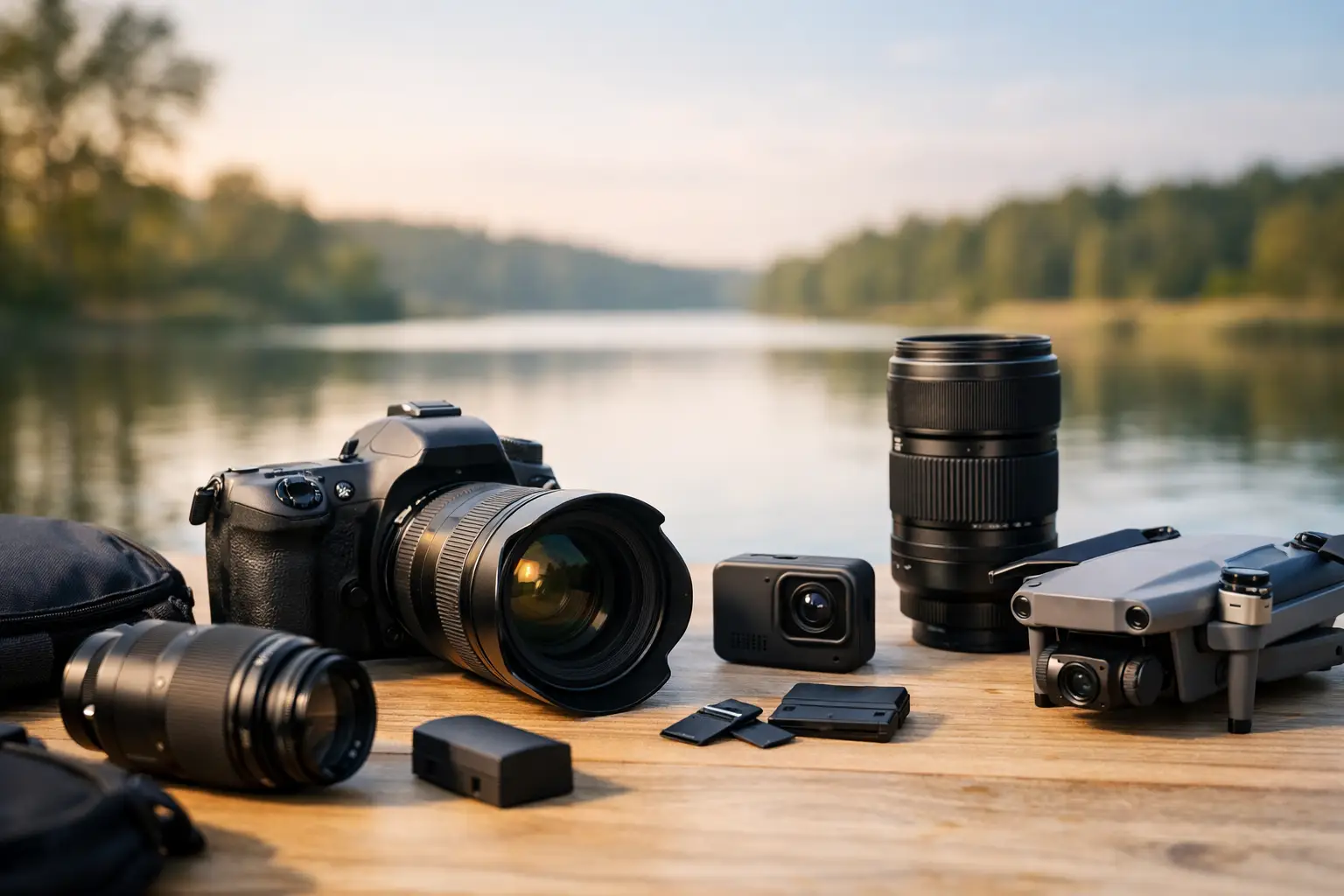
If a camera is needed for a specific project rather than for everyday work, renting a camera is usually a more rational decision than an immediate purchase. This applies not only to professional shoots, but also to events, interviews, travel, real estate content creation, and short-term commercial tasks. In many cases, the most important thing is not ownership of the equipment, but access to exactly the configuration that delivers the needed result at that moment.
In brief
- Rental is cost-effective when a camera is needed occasionally or for a specific project, not for everyday work.
- Evaluate the full kit — body, lenses, memory cards, batteries, and accessories — not just the camera model.
- Book well in advance and check file workflow requirements (card, media, computer performance).
What to choose for different tasks
| Task | Solution | Why |
|---|---|---|
| Wedding or large event photography | Rental in addition to the body — a spare body and suitable lenses | Reduces risk in case of hardware failure and allows quick switching between focal lengths |
| Advertising or product photography | Short-term access to specialized optics (macro, tilt‑shift) or a high-resolution camera | Specialized optics deliver professional results without a long-term investment |
| Interviews or video with high video requirements | Rent a video-oriented body with the required audio connections and stabilization | Video requirements often exceed standard photo camera features, so short-term access helps preserve the budget |
| Travel or one-time family project | Short-term mirrorless or compact camera with a lightweight kit | Gives better image quality than a phone without long-term expense and heavy gear |
| Multi-camera event recording | Rent multiple compatible cameras and matching lenses | Consistent color rendering and aligned post-processing reduce work time and the risk of errors |
| Pre-purchase testing | Rent a specific model for a few days or a project | Hands-on work reveals ergonomics, autofocus behavior, and file workflow requirements that are not visible from specifications alone |
Frequently asked questions
When is it better to choose rental instead of buying?
Rental is more cost-effective when a camera is needed occasionally or when projects require different technical configurations. If equipment is used regularly every week, buying may be more economical in the long run.
What must be checked before renting a camera?
Be sure to evaluate the task requirements — ISO performance, burst rate, video codecs, and recording limits. Also check lens availability, memory card speed, and the need for extra batteries.
How should you prepare for the file workflow if you rent a 4K or 10‑bit video camera?
Check the performance of your computer, memory cards, and backup drives so you can handle large files. If needed, plan for faster cards and extra disk space, because problems often arise in post-production, not in the camera.
How far in advance should equipment be booked?
During peak seasons and around popular dates, booking later may not be possible, so it is recommended to reserve after the project is defined. The more specific the model or the more complete the video kit, the earlier the reservation should be secured.
Can rental help choose the right kit?
Yes — a consultation before renting reduces the risk of choosing the wrong setup, because similar models can behave differently in practice. A specialized partner can recommend the optimal combination of body, lenses, and accessories according to the final goal.
Useful links
- Lenses - Selecting additional optics and suitability for different tasks
- Microphones - Audio solutions for interviews and video projects — important to plan together with the camera
- Memory cards - Memory cards with the appropriate recording speed are critical for 4K and 10‑bit video recording
- Tripods - Stability and multi-camera setups often require suitable tripods
- Video lights - Lighting rental options are essential in advertising and interview filming
In photo and video equipment, the costs are not only made up of the camera body. Often equally important are lenses, memory cards, batteries, tripods, microphones, lights, and stabilization. That is why a rental model makes it possible to manage the budget more flexibly while working with equipment that matches the complexity of the task.
When camera rental is the best solution
Camera rental works especially well in situations where equipment use is occasional. If you shoot one advertising project a month or photograph a few paid events per season, buying expensive equipment may not pay off quickly enough. In such cases, renting helps avoid large upfront investments and allows you to choose equipment based on the requirements of a specific job.
It is also useful when a higher technical level is needed than in everyday use. For example, a compact mirrorless camera may be enough for daily content, but a major client project may require a full-frame camera with a higher dynamic range, 10-bit video recording, or more reliable autofocus. Buying such a camera for a single project is usually not economically justified.
Rental is also a practical way to test equipment before buying. Specifications and reviews help understand the theory, but real work reveals nuances - ergonomics, menu logic, autofocus behavior, file processing load, and battery life. These details often determine whether a camera will suit your working style.
What to pay attention to when choosing a camera for rent
The right choice starts not with the brand, but with the task. If the priority is event photography in low light, the sensor’s capabilities at higher ISO, burst shooting speed, and reliable autofocus will matter. If interviews or advertising videos are planned, video quality, codecs, recording limits, overheating control, and audio connections become important.
Lens availability also needs to be assessed. A camera by itself does not solve all tasks. Portraits, events, architecture, and video work will require different focal lengths and light-gathering capability. That is why, in practice, it is important to think in terms of a kit, not just a body.
Another essential factor is the shooting environment. Filming in a studio, at weddings, at a sports event, or outdoors in winter means different requirements for batteries, weather resistance, weight, and body ergonomics. A lighter kit will be more convenient for mobile work, while a larger body sometimes offers better cooling, more buttons, and more comfortable control during longer sessions.
Camera rental for photography tasks
In photography, rental demand is often related to events, portrait sessions, commercial tasks, and seasonal workload. For example, during wedding season, a second camera body is not a luxury, but a safety necessity. If you normally work with one camera, renting an additional body reduces risk and allows more flexible work organization with two lenses.
In product and advertising photography, rental is often chosen not only for the camera, but also for specific optics. A macro lens, a tilt-shift solution, or a high-resolution camera may be needed only for certain projects. In such a situation, rental helps maintain a professional result without permanent costs for equipment that would otherwise sit unused.
Rental is also justified for enthusiasts. If you are planning one important trip or a family event and want better image quality than a phone provides, a short-term camera can be a more sensible option than an impulsive purchase.
Camera rental for video projects
In video work, equipment requirements are usually higher, and differences between models are felt sooner. Here, not only resolution matters, but also recording formats, color depth, log profiles, stabilization, monitoring options, and connectivity with audio equipment. That is why camera rental is often chosen for specific tasks - interviews, commercials, podcasts, live streams, or social media content.
In some cases, one camera is not enough. If a multi-camera interview or event recording is planned, compatibility between cameras, similar color interpretation, and easier post-production become important. Rental makes it possible to assemble several cameras from one system for a single shooting day, instead of maintaining such a setup in everyday use.
It should also be noted that video projects rarely come down to just the camera body. In practice, you need at least a suitable lens, a memory card with sufficient recording speed, additional batteries, and often a tripod, gimbal, or external microphone. That is why it is sensible to plan the full working kit right away.
Rental or purchase - how to make the right decision
There is no universal answer, because everything depends on frequency of use, the type of work, and financial planning. If a camera is needed regularly, buying it may become more cost-effective over time. This especially applies to professionals who work every week and use one system long term.
On the other hand, rental is advantageous when needs change. One month you need a compact camera for travel content, the next month a full-frame model for events, later a video-oriented body with specific recording capabilities. In such situations, flexibility is more valuable than ownership.
You also need to account for technological obsolescence. The camera market is developing rapidly, and models that are in high demand today may lose part of their market value in a few years. Rental reduces this risk, because the user pays for access to functionality, not for an asset whose value declines over time.
How to prepare for camera rental
To make the rental experience effective, it is important to define the project in advance. The more precisely you know what you will be filming or photographing, what environment you will be working in, and what final result you need, the easier it will be to choose suitable equipment. An unclear request usually ends with either an overly expensive or insufficient kit.
It is also worth checking the file workflow in advance. If you plan 4K 10-bit recording or high-resolution RAW photos, you need to understand whether your computer, cards, and backup drives have enough performance. Sometimes the problem is not the camera, but the post-production stage.
It is practically important to reserve equipment in advance, especially during the season when demand increases. Event dates, commercial shoots, and holiday periods affect availability. If you need a specific model or a full video kit, last-minute booking may not always be possible.
Why consultation before renting is valuable
Technically similar models can behave differently in practice. One camera will have better autofocus in video mode, another - more convenient color processing, a third - more stable performance during long recordings. That is why professional consultation before booking helps reduce the risk of a wrong choice.
This is especially relevant for clients who know the end goal but are not completely sure about the configuration. For example, a company’s marketing team may know that an interview needs to be filmed, but it is not always clear whether one camera is enough, which lens would be more suitable for the space, and whether additional lighting is needed. In such cases, the value lies not only in equipment availability, but also in the right configuration.
That is precisely why a specialized partner that works in both sales and rental can often recommend a more accurate solution. Master Foto’s advantage here is practical market understanding and a broad range of equipment in one place.
Camera rental is not a compromise between desire and opportunity. In many cases, it is a professionally justified choice that allows you to work with suitable equipment when it is really needed. If the choice is based on the project rather than impulse, the result is usually both technically better and financially more thoughtful.