
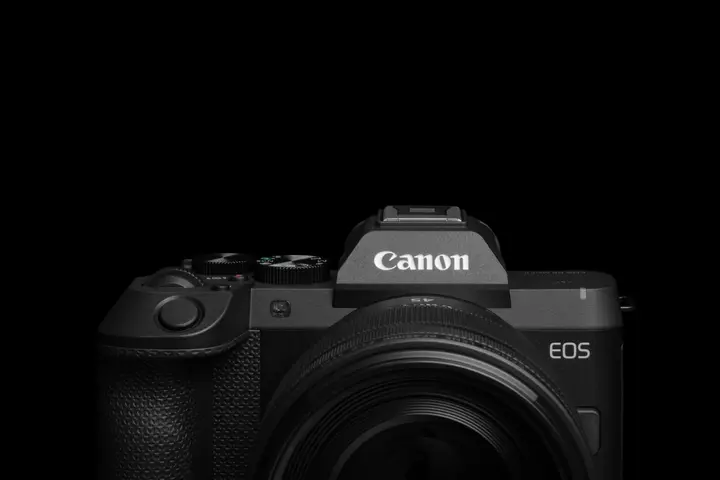
The Canon EOS R8 Mark II is a compact full-frame mirrorless camera with 24.2 megapixel resolution, in-body image stabilization, and a very fast continuous shooting mode. It is not just an EOS R8 with a new name. Canon has added features that are immediately noticeable in everyday use: more reliable handheld shooting, pre-capture burst shooting, more convenient controls, and a larger buffer.
The camera is designed for photographers who want the advantages of full frame in landscape, travel, portrait, and low-light photography, but do not want to carry a large professional body. The EOS R8 Mark II also offers serious video capabilities, including 4K 60p with 6K oversampling, 10-bit recording, and Canon Log 3.
What is new in the EOS R8 Mark II
The most important difference from the EOS R8 is five-axis in-body image stabilization. With a compatible lens, stabilization of up to 7.5 stops in the center of the frame and up to 7 stops at the periphery is claimed. This does not guarantee a sharp shot at any long exposure, but it significantly expands handheld shooting possibilities in the evening, indoors, while traveling, and for smoother video recording.
The camera uses a 24.2 megapixel full-frame CMOS sensor and a DIGIC X processor. This resolution is the same in the EOS R8, EOS R8 Mark II, and EOS R6 Mark II, so moving to the Mark II does not mean a major increase in detail count. The main benefit is speed, stabilization, autofocus, and more convenient handling.
Speed that helps capture the right moment
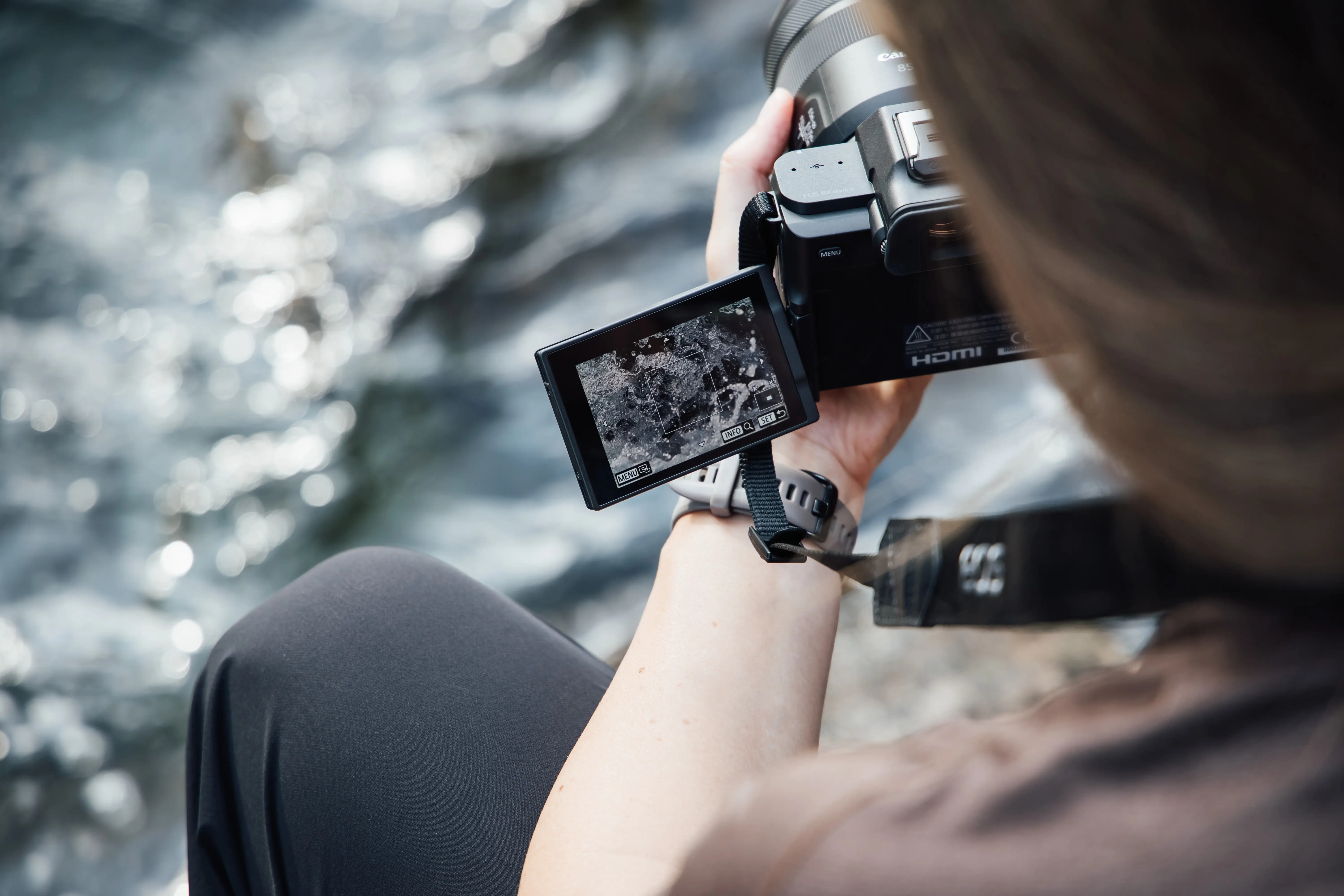
The electronic shutter allows shooting at up to 40 frames per second. In H+ mode, the camera also supports pre-continuous shooting: it starts saving the burst before the shutter button is fully pressed. Up to 20 frames can be captured, which can be decisive when a bird takes off, a person turns, or an athlete suddenly starts moving.
A practical limitation should be noted: 40 frames per second is not a universal mode for every situation. The actual speed depends on the lens, shutter speed, aperture, lighting, shooting conditions, battery, and memory card. For maximum speed, Canon recommends compatible RF lenses and fast UHS-II cards.
The Mark II has a larger buffer than the EOS R8. According to Canon test data, with the electronic shutter the camera maintains its speed for up to 190 JPEG or 73 RAW frames. In travel, nature, and dynamic scenes, this means fewer interruptions after a short burst.
Autofocus: useful beyond sports
Dual Pixel CMOS AF II recognizes and tracks people, animals, and vehicles. The camera tracks human eyes, faces, heads, and bodies, as well as dogs, cats, birds, horses, cars, motorcycles, airplanes, and trains.
The EOS R8 Mark II is rated for autofocus sensitivity down to -7.5 EV under certain test conditions, while the EOS R8 and EOS R6 Mark II are rated down to -6.5 EV. In practice, this is useful at dusk and indoors, where it is harder to separate the subject from the background. The result still depends on the lens, contrast, and the selected focusing mode.
Register People Priority and an improved tracking algorithm help in situations where there are multiple people in the frame. The selected person can remain the autofocus priority. This is convenient for family travel, reportage, and vlogging.
Video: a camera for the hybrid creator
The EOS R8 Mark II records 4K UHD video at up to 60 frames per second. In standard 4K mode, the image is created from 6K sensor data, helping deliver a more detailed result. In Full HD mode, shooting up to 180 frames per second is possible for slow-motion footage.
For color post-processing, 10-bit 4:2:2 recording, Canon Log 3, and HDR PQ are available. 10-bit footage provides more color gradation, while the Log profile preserves more latitude for later editing. Simpler modes can also be used for easy social media videos.
The camera has a 3.5 mm microphone input, headphone output, micro-HDMI, and USB-C. Via USB, connection to a computer, charging, video calls, and streaming are possible. This makes the Mark II a more versatile work camera for shooting outside the studio as well.
Color and ready-made visual style
The Mark II offers Picture Styles, Custom Picture, Look File (LUT) support, and Filmtone Colour Filters. The filters can be used for both photos and video, adjusting their intensity.
This is practical if you want to achieve a recognizable visual style directly in-camera, for example for travel stories, social media, or a personal project. RAW files at the same time retain the option for full editing later. Filters do not replace proper light and exposure, but they help achieve the desired mood more quickly.
Accessories for the Canon EOS R8 Mark II
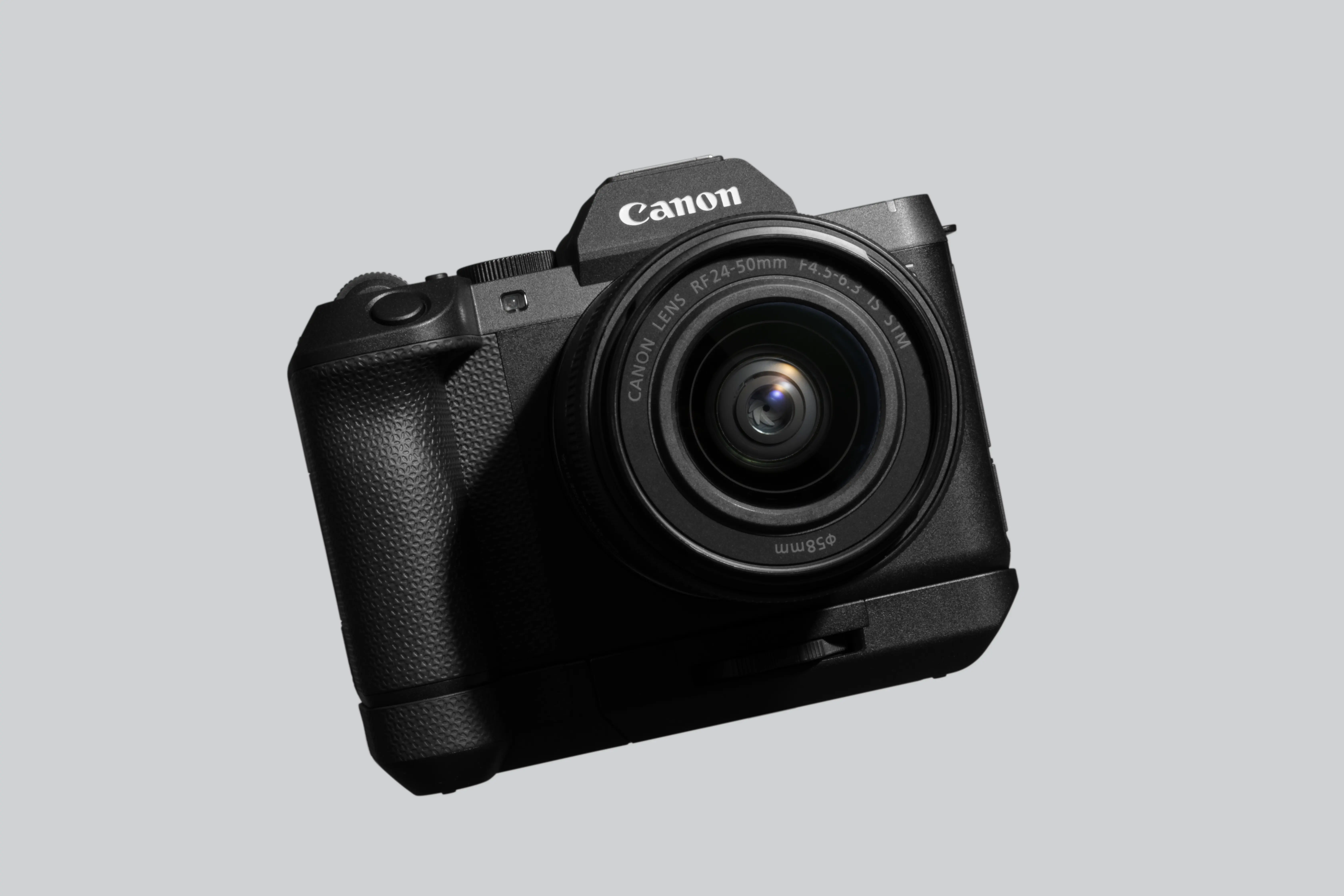
Canon highlights two new accessories in particular. The Extension Grip EG-E2 improves the camera grip, offers a separate tripod mount, and convenient access to the battery. It is useful if you use larger lenses or shoot handheld for long periods. The accessory is scheduled to go on sale in October 2026.
The Speedlite EL-5 (Ver.2) is a next-generation flash with a Multi-Function Foot. It allows control of up to 15 Speedlite flashes wirelessly at a distance of about 50 meters, and the flash head can be tilted up to 120° or rotated sideways for bounced light. This is a practical addition for portraits, events, and creative lighting setups. The launch date for this flash is also listed as October 2026.
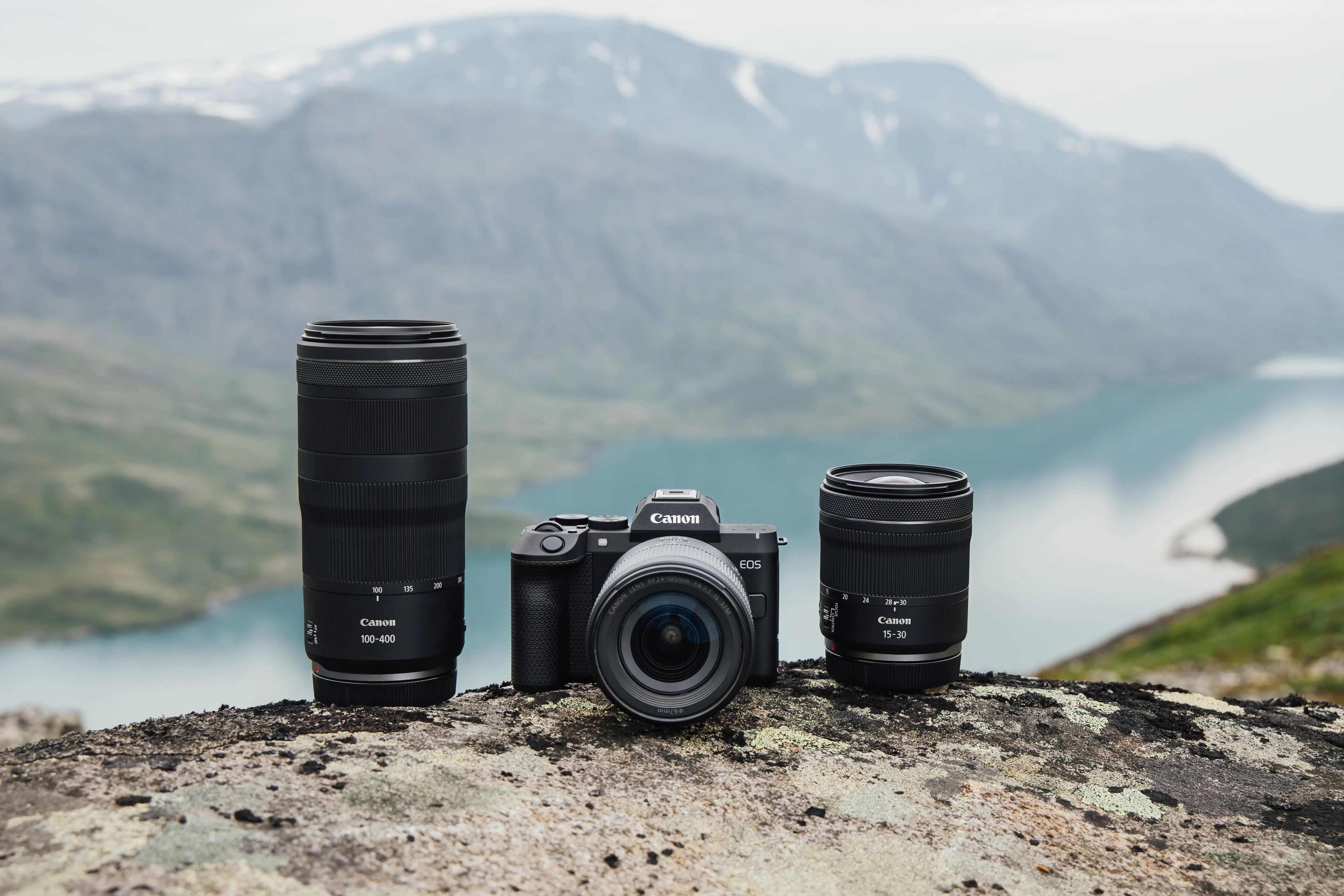
The camera is compatible with all Canon RF and RF-S lenses. EF and EF-S lenses can be used with the EF-EOS R adapter, so existing Canon DSLR optics do not have to be replaced immediately. Also compatible are Canon EL and EX series flashes, Speedlite transmitters, DM-E1, DM-E1D and DM-E100 microphones, HG-100TBR and HG-200TBR tripod grips, RS-80E3, RS-60E3, BR-E12 and BR-E22 remote controls, as well as AD-E1 and AD-P1 adapters.
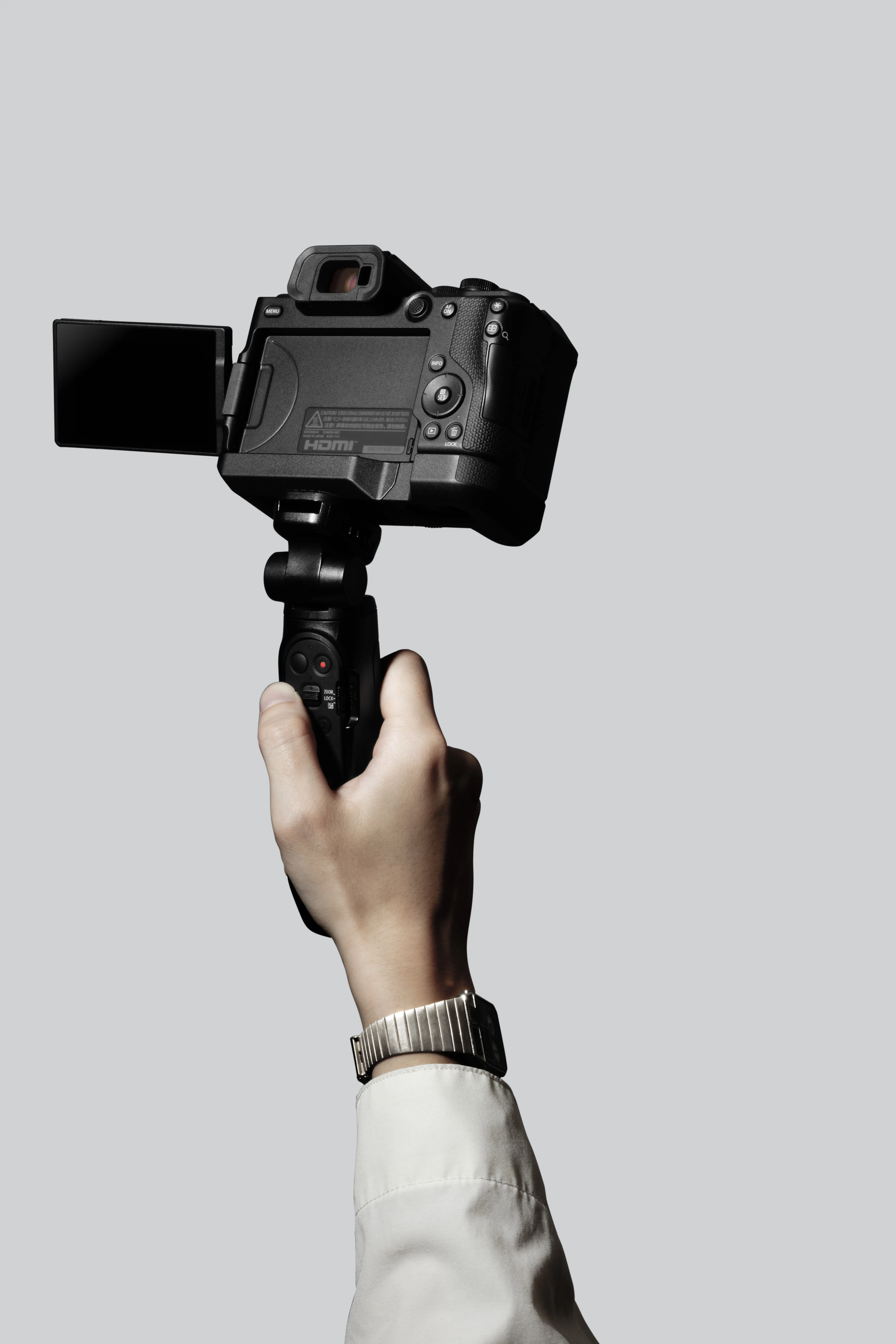
The LP-E17 battery is used for power. The LC-E17E charger, USB Power Adapter PD-E2, AC Adapter AC-E6N, and DC Coupler DR-E18 are available. Important for video work is that the camera has a 3.5 mm microphone input, headphone output, Multi-Function Shoe, and micro-HDMI connection.
The EOS R8 Mark II body kit includes the camera, ER-SC2 terminal cap, camera cap, ER-100G neck strap, LP-E17 battery, and user manual. The RF 24-105mm F4-7.1 IS STM lens is available in a separate kit, not in the body-only package.
EOS R8 Mark II compared with EOS R8 and EOS R6 Mark II
| Parameter | EOS R8 | EOS R8 Mark II | EOS R6 Mark II |
|---|---|---|---|
| Sensor | 24.2 MP, full frame | 24.2 MP, full frame | 24.2 MP, full frame |
| Stabilization | Movie Digital IS | 5-axis stabilization, up to 7.5 stops in the center / 7 stops at the periphery | Up to 8 stops with a compatible RF lens |
| Autofocus in low light | Down to -6.5 EV | Down to -7.5 EV | Down to -6.5 EV |
| Continuous shooting | 6 fps with electronic first curtain shutter, up to 40 fps with electronic shutter | 6 fps with electronic first curtain shutter, up to 40 fps with electronic shutter | Up to 12 fps with mechanical shutter, up to 40 fps with electronic shutter |
| Pre-capture burst | No | Up to 20 frames | Up to 20 frames |
| Video | 4K 60p, Full HD 180p | 4K 60p from 6K, Full HD 180p, Canon Log 3 / HDR PQ | 4K 60p, Full HD 180p, 6K RAW via HDMI |
| Viewfinder | 2.36 million dots, 0.39", up to 120 Hz | 2.36 million dots, 0.39", up to 120 Hz | 3.69 million dots, 0.5", up to 120 Hz |
| Wireless connections | Wi-Fi 2.4 GHz, Bluetooth 4.2 | Wi-Fi 2.4 / 5 GHz, Bluetooth 5.3 | Wi-Fi 2.4 / 5 GHz, Bluetooth 5.0 |
| Battery and CIPA performance | LP-E17, approx. 370 shots with LCD | LP-E17, approx. 340 shots with LCD | LP-E6N/LP-E6NH, approx. 760 shots with LCD |
| Size and weight | 132.5 × 86.1 × 70 mm, approx. 461 g | 131.4 × 90.0 × 79.7 mm, approx. 546 g with card and battery | 138.4 × 98.4 × 88.4 mm, approx. 670 g |
The comparison shows that the EOS R8 Mark II sits between the R8 and the R6 Mark II not only in price, but also in terms of usage philosophy. It is more functional than the R8, yet smaller and lighter than the R6 Mark II. In turn, the R6 Mark II’s advantages are intended for longer professional work: a larger battery, a bigger and more detailed viewfinder, mechanical burst shooting up to 12 frames per second, and 6K RAW output via HDMI.
Who the Canon EOS R8 Mark II is for
For travelers
This is one of the most logical use cases. The full-frame sensor delivers a wide view, expressive background blur, and good quality in challenging light, while the body is compact enough for long walks. With the RF 24-105mm F4-7.1 IS STM lens, you can shoot street scenes, architecture, portraits, and landscapes.
For nature and dynamic scene photography
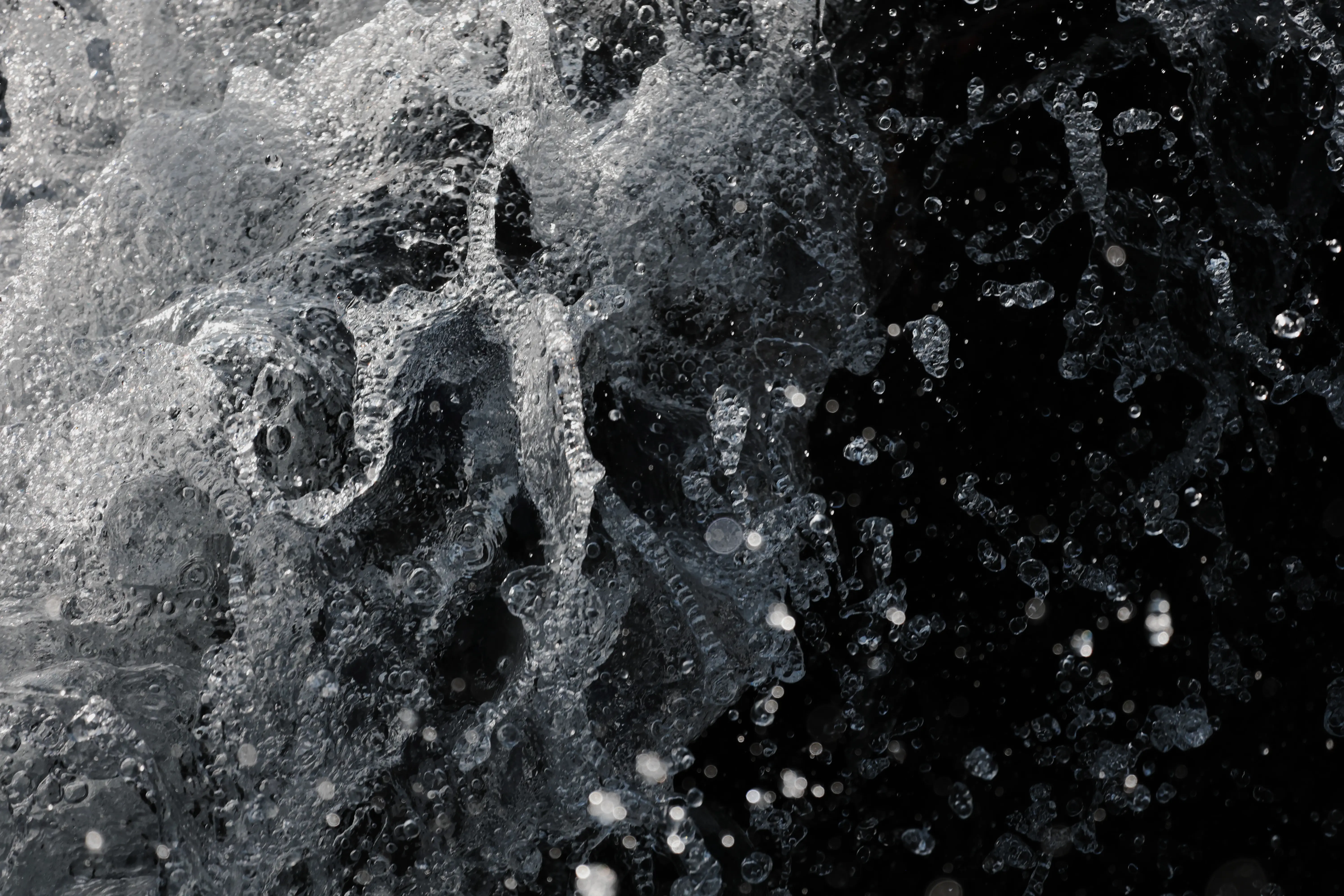
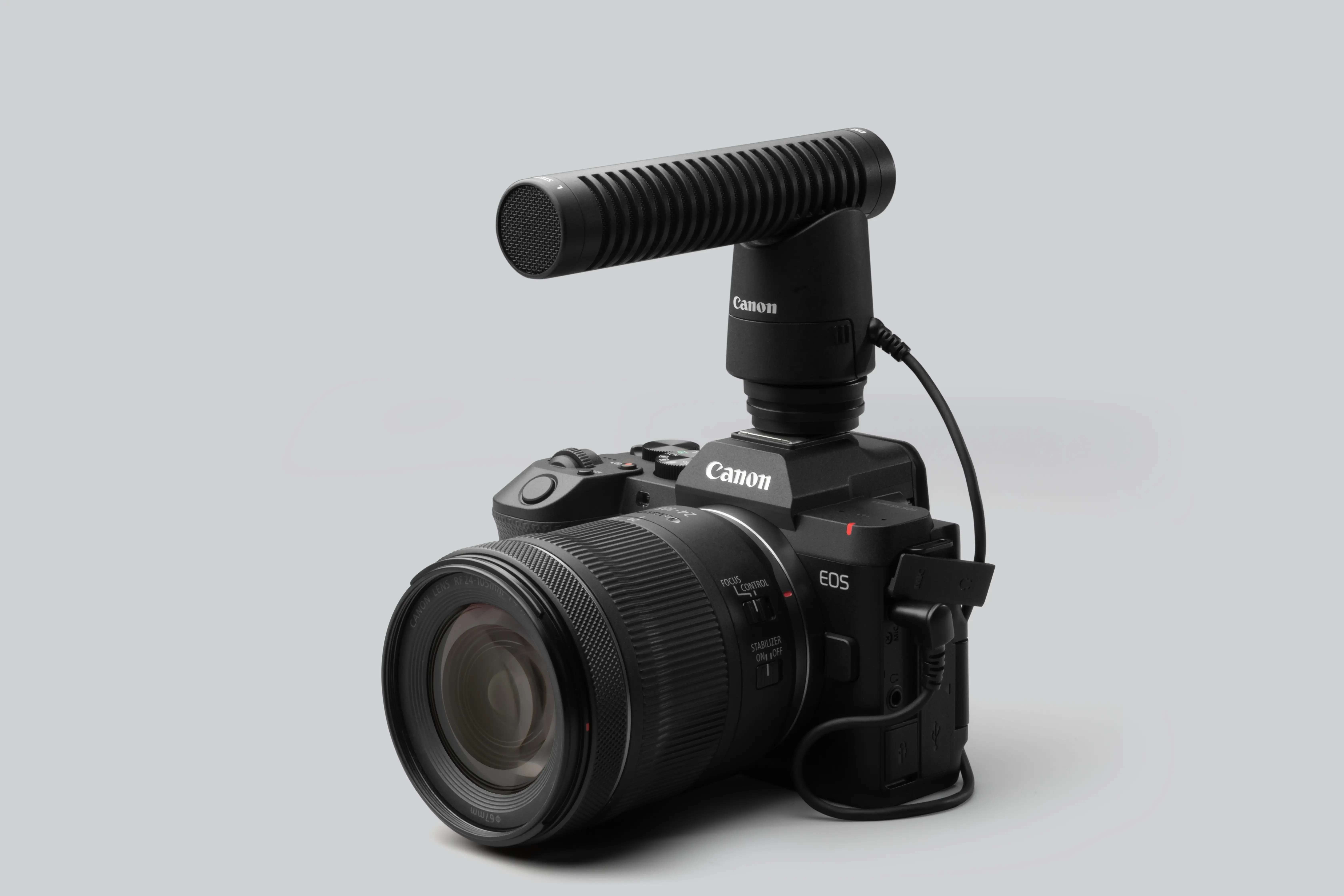
40 frames per second, pre-capture burst, and animal recognition make the camera interesting for photographing birds, animals, water motion, and unpredictable moments. For serious sports work, the limitations of the electronic shutter should be considered and a lens that supports the maximum speed should be chosen.
For a creator who shoots and films
Stabilization, 4K 60p, 10-bit recording, Canon Log 3, microphone input, headphone output, and USB streaming allow the Mark II to be used as a universal photo and video camera. It is suitable for travel videos, short documentary stories, reviews, interviews, and social media content.
For Canon DSLR system users
The camera works with RF and RF-S lenses, while EF and EF-S lenses can be used with the EF-EOS R adapter. EF-M lenses are not compatible. Before purchasing, it is worth checking your existing optics, because the lens largely determines the system’s weight, balance, and overall cost.
When it is better to choose the EOS R8 or EOS R6 Mark II
The EOS R8 is still a sensible choice if the most important things are minimal weight, a more affordable system, and shooting without in-body stabilization. It has the same class of sensor and the same maximum electronic shooting speed — 40 frames per second — but lacks IBIS, pre-capture burst, and some of the Mark II improvements.
The EOS R6 Mark II is the better choice for long filming and shooting sessions, professional reportage, large lenses, and situations where a large battery and more comfortable viewfinder matter. It is a larger body, but the size provides additional comfort in intensive work.
Conclusion
The Canon EOS R8 Mark II is a camera for those who want the advantages of full frame without moving to a heavy professional body. Its strengths are stabilization up to 7.5 stops, speed up to 40 frames per second, pre-capture burst up to 20 frames, improved autofocus, 4K 60p from 6K, and modern color tools.
For EOS R8 owners, this is not an essential upgrade. However, if you miss in-body stabilization, more reliable subject tracking, a larger buffer, or more convenient control, the Mark II is a noticeable step forward. For a photographer seeking a balance between the EOS R8’s compactness and the EOS R6 Mark II’s professional reserve, it is a versatile choice for travel, nature, portraits, and hybrid photo and video shooting.
 ProductCanon EOS R8 Mark II Full-Frame Mirrorless Camera BodyView product