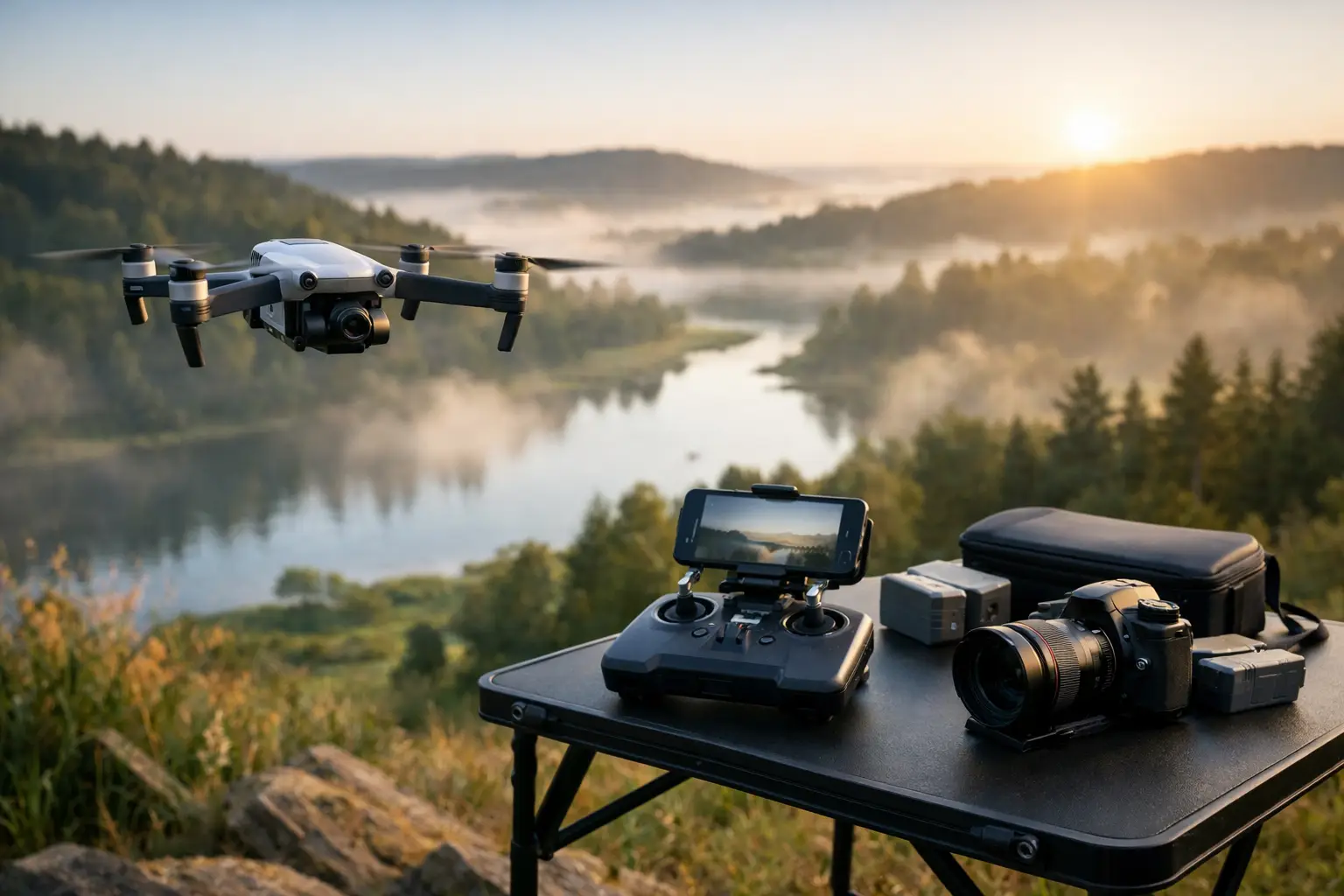
A mountain ridge, the edge of a lake in the fog, or a seashore at sunset looks impressive from the ground, but from the air the shot gains a completely different scale. That is exactly why a drone for landscape filming has become for many content creators not an accessory, but one of the main work tools. However, a good result depends not only on how new or expensive the model is - it is much more important to understand where and under what conditions you will film, what image quality you need, and how often the drone will be used.
What kind of work is a drone for landscape filming intended for
Landscape filming is not one specific task. One person needs a lightweight drone for hikes and travel, another - a stable platform for commercial video projects where high resolution, dynamic range, and reliable operation in windy conditions are important.
If filming happens irregularly, for example on nature trips or on vacation, a compact model that is easy to take in a backpack is often enough. For professional use, however, the requirements become stricter - a better sensor, more flexible color profiles, more precise control, and more stable flight behavior are needed. Here, compromises become more expensive, because they affect not only the frame quality but also the pace of work on the shooting day.
That is why before choosing, it is worth defining three things - how important image quality is, how important mobility is, and how critical flight safety is in more difficult conditions.
The camera matters, but it is not the only thing
The first thing buyers usually pay attention to is video resolution. 4K is already a practical minimum today if the material is intended not only for social networks, but also for advertising, company video, or broader post-production. But 4K alone is not enough.
Much more important is sensor size, bit depth, and the ability to film in flatter color profiles. A larger sensor usually provides better dynamic range, a cleaner image in lower light, and more natural tonal transitions in the sky, water, and shadows. In landscape filming, this is especially important because the frame often contains very bright and very dark areas at the same time.
If you film sunrises, sunsets, or high-contrast nature scenes, a drone with a higher-quality camera will give significantly more room for color correction. On the other hand, if the content is intended mainly for quick publishing and minimal editing, a smaller sensor does not yet mean a bad choice. It simply means you need to be aware of the limits.
When a compact camera is enough
Compact drones are very convenient for travel, hikes, and everyday content. They take off quickly, take up little space, and are usually easier to use. If priority is affordability and mobility, they are a logical starting point.
However, in landscape filming, a lighter drone will more often feel the wind, and a smaller camera may reach its limits faster in difficult lighting. That does not mean the result will be bad, but it may not always be enough for professional requirements.
When a higher-end solution is needed
If you film advertisements, tourist attractions, real estate, or brand videos where the material must withstand careful editing and color correction, it is worth looking at models with a larger sensor and broader video capabilities. In such cases, the drone becomes a full-fledged part of production equipment rather than just an auxiliary device for separate aerial shots.
Stability in wind often matters more than megapixels
Landscapes in Latvia are often filmed by the sea, in open fields, on water, or in higher terrain, where wind is a constant factor. Therefore, when choosing a drone, attention should be paid not only to maximum flight time, but also to wind resistance and gimbal stability.
The lighter the drone, the greater the chance that stronger gusts will be visible in the frame or the flight will become less safe. Sometimes users overpay for camera specifications but underestimate platform stability. In landscape filming, this is a risk, because a beautiful view without a smooth shot does not deliver the expected result.
If you plan to film by the sea, in forests above the treeline, or in windy weather outside the city, it is safer to choose a model with more convincing flight behavior. This reduces repeated takes and allows you to work more calmly.
Flight time in practice is not the same as in the specifications
The manufacturer’s stated flight time is almost always achievable in ideal conditions. In real landscape filming, you must take into account wind, movement, repeated framing, takeoff and landing, as well as a safe battery reserve for the return.
Therefore, if you see 30 to 40 minutes in the specifications, in practice the useful time in filming mode will be shorter. For this reason, a battery set is often no less important than the drone itself. One battery may be enough for a test or a short trip, but for more serious work it is usually not enough.
If you plan to go outside the city and film several locations in one day, the number of batteries directly affects the workflow. This is one of those purchases that almost always has to be supplemented later.
Sensors and safety features are not just for beginners
Obstacle sensors, return-to-home, precise positioning, and intelligent flight modes are sometimes perceived as convenience features. In fact, in landscape filming they can be very practical even for experienced users.
When filming over a forest, along a cliff edge, a riverbank, or more difficult terrain, additional sensors reduce risk and help maintain a smoother trajectory. Especially when you are simultaneously following composition, light, and direction of movement. Of course, no automation replaces piloting skills, but safety features can provide an important margin for error.
The opposite should also be considered - the more automation there is, the more important it is to understand how the system behaves in specific conditions. Fog, darkness, reflections over water, and thin branches are not always detected perfectly.
What to choose - buy or rent
Not every project immediately requires a purchase. If a drone for landscape filming is needed for one specific trip, an advertising shoot, or a test before buying, rental is often a more economically sensible solution. This especially applies to users who are still refining their requirements and do not want to make a mistake with a model that is either too simple or, on the contrary, too expensive.
Buying makes sense if the drone will be used regularly, commercially, or as part of the daily content creation process. Then it is important not only to consider the price, but also available batteries, spare propellers, bags, filters, and service support. In practice, this means looking at the whole system, not just the aircraft.
For those who want to compare several solutions before deciding, professional consultation or the option to evaluate a rental scenario is useful. This approach often helps save more than aggressively chasing the most popular model.
How not to overpay for features you will not use
A drone with extensive video capabilities looks convincing on paper, but not every feature will be needed by every user. For example, if you do not work with advanced color correction, highly specialized recording formats may remain unused. If you do not film dynamic commercial projects, complex tracking modes may be only a pleasant bonus, not a necessity.
On the other hand, there are things you should not economize on. For landscape filming, these are usually flight stability, reliable transmission, camera quality, and battery availability. These four factors affect the result much more directly than the extra features highlighted in marketing.
If you are choosing between a model with an impressive list of features and a model with a better camera and a more stable platform, in landscape filming the second option often wins.
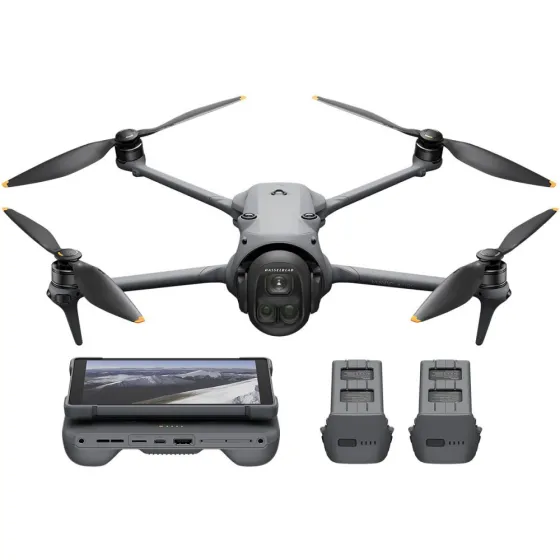 ProductDJI Mavic 4 Pro 512GB Creator Combo (DJI RC Pro 2)View product
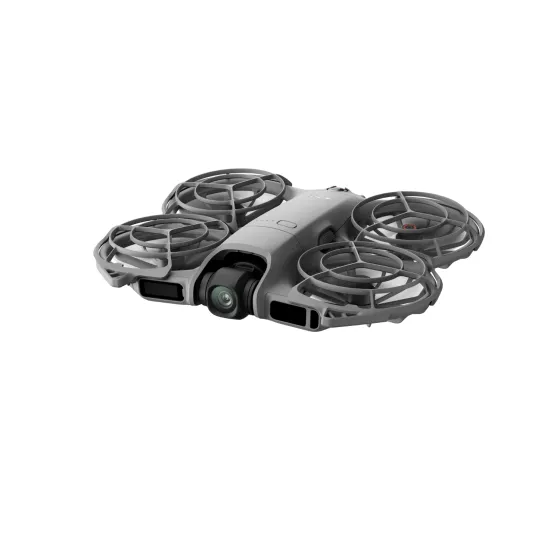 ProductDJI DRONE NEO 2 drone onlyView product
A practical approach to choosing
If you are a beginner, look for a compact drone with good 4K video, a stable gimbal, and sufficiently safe control. This will allow you to learn to fly and understand your habits without excessive costs.
If you film regularly and the material is used for client work, it is worth aiming immediately for higher image quality, better performance in wind, and more flexible video settings. If maximum mobility is needed, some compromises in stability or sensor size will have to be accepted. If quality is the priority, the drone will usually be larger, heavier, and more expensive.
This is exactly where not theoretical comparisons, but a clear understanding of your own use case helps most often. Master Foto's approach in such cases is practical - to evaluate the choice based on a real filming scenario, not just a specifications table.
A good drone for landscape filming is not necessarily the most expensive model in the category. The right choice is the one that matches your shot, your workflow, and the environment in which you will actually film. If you define that precisely from the start, the result in the air usually becomes much more convincing.