
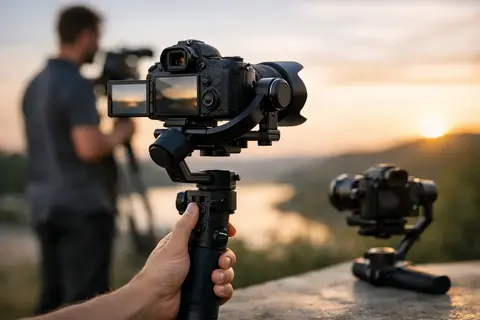
If every hand movement is visible in the frame, the viewer notices it immediately. That is exactly why a gimbal for filming with a camera in many projects is no longer an extra accessory, but a working tool that directly affects the quality of the final material. However, the right choice is not just a matter of price or brand - the most important thing is to understand what camera you use, how you film, and how long the stabilizer has to work in real conditions.
In brief
- Gimbals stabilize the camera on three axes — choose based on the total package weight, not just the body.
- Check the physical compatibility (lens length, cable routing) not just the maximum load capacity in the table.
- If you film for longer shifts, assess battery life and ergonomics together with weight.
- Compact stabilizers are more convenient for social media content; for professional setups, choose a more powerful gimbal with reserve capacity.
What to choose for different tasks
| Task | Solution | Why |
|---|---|---|
| Weddings and events | Mid-range handheld gimbal with quick balancing and good battery capacity. | Mobility and quick setup are essential, but it must be possible to add small accessories and operate for hours. |
| Advertising and commercial projects | Heavier-duty gimbal with higher payload capacity and compatibility with monitors and wireless audio. | Commercial projects often use more accessories and various lenses, so power reserve is necessary. |
| Social media reels, vlogs, quick clips | Compact stabilizer or smartphone gimbal — lightweight and quick to use. | In these tasks, speed, mobility, and convenience are more important than maximum load capacity. |
| Documentary / long-form reporting | Gimbals with longer battery life or the ability to quickly swap batteries, plus an ergonomic handle or support vest. | Long-term filming requires stability and operator comfort; otherwise, work efficiency decreases. |
| Product and real estate videos | Handheld gimbals with good balance adjustment and quick switching to a tripod base (quick release plate). | Precise panoramas and smooth movements plus the ability to quickly move the camera on the tripod speed up the work. |
| Interviews in motion / talking-head shots | Compact handheld gimbal with a stable tracking mode and convenient button layout. | Need quick response to movement changes and simple control without complex configuration. |
Why a gimbal for filming with a camera is needed
A gimbal stabilizes the camera on three axes and compensates for the operator’s movements. In practice, this means smoother motion, cleaner panning shots, and more professional movement even when filming is done without rails or other bulky equipment.
However, do not expect any stabilizer to solve everything. A gimbal will not fix poor shot planning, incorrect focus, or chaotic operator work. It helps achieve stability, but the result still depends on camera balance, lens weight, movement technique, and the chosen mode.
For smaller teams and content creators, a gimbal often replaces a more complex filming system. In professional work, it speeds up work on location - especially at events, commercial shoots, real estate videos, interviews in motion, and social media content.
How to choose a gimbal for filming with a camera
The most important parameter is payload capacity. If the camera with lens, microphone, or other accessories exceeds the supported weight of the gimbal, stabilization will be insufficient or the motor will be overloaded. This is a common mistake - the user chooses a model “for a camera” but forgets to calculate the full setup, not just the body.
Compatibility with the camera size is just as important. Sometimes the camera theoretically fits within the weight limit, but physically it is difficult to balance because the lens is too long, the body is too tall, or cables interfere with axis movement. That is why before purchase or rental it is worth looking not only at the weight listed in the technical table, but also at the practical configuration.
Battery life matters for those who film longer shifts. If you work at events or in a documentary style, 6-8 hours of operation may not be enough. On the other hand, in short commercial projects, smaller weight and faster setup may be more important than maximum battery life.
Attention should also be paid to ergonomics. The handle, button layout, screen visibility, and the ability to quickly switch modes affect work in practice more than it may initially seem. A technically powerful model is not always the most convenient for everyday use, especially if you film alone.
The camera and lens determine much more than the gimbal price
A lightweight mirrorless camera with a compact prime lens does not need the same stabilizer as a full-frame camera with a fast zoom lens. The heavier and more front-heavy the system, the greater the load on the motors.
If you often change lenses, choosing a model with a larger reserve is usually sensible. It gives flexibility in the future and reduces situations where you have to give up a particular lens simply because the gimbal can no longer be balanced.
Otherwise, you may end up overpaying for power you will not use. If filming is done with a lightweight camera, a more compact model will be more convenient to transport and less tiring during long work.
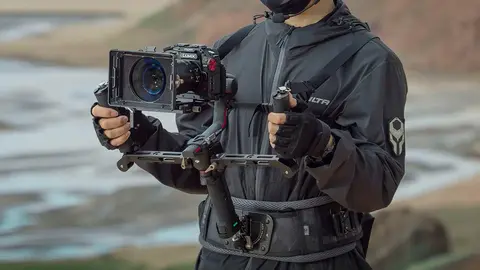
Main types of gimbals and their use
Handheld gimbals are the most common solution for hybrid users, videographers, and small teams. They are suitable for weddings, events, product videos, short commercials, vlogs, and social media content. Their advantage is mobility and relatively quick setup.
Heavier-class gimbals are intended for more professional camera configurations. They allow the use of larger lenses and more accessories, but the total weight and load on the operator increase. If filming lasts several hours, support vests, handles, or other additions often also need to be considered.
In some cases, compact stabilizers for small cameras or even smartphones are useful. They are not replacements for full-size systems, but for specific tasks - quick social media content, behind-the-scenes video, or travel footage - they can be a more practical solution than a large gimbal with a heavy camera.
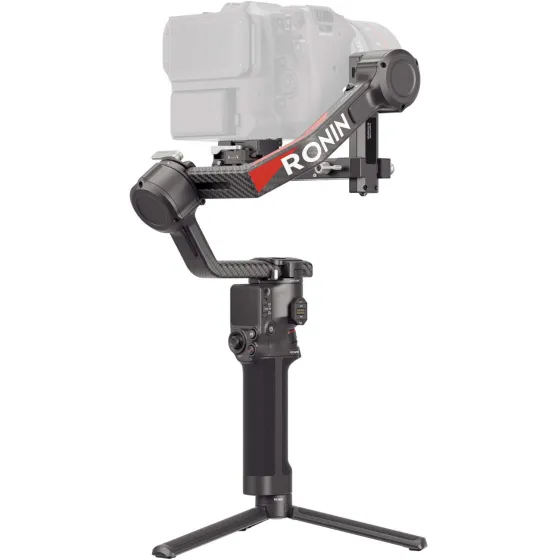 ProductDJI RS 4 Pro Camera Gimbal Stabilizer RS4View product
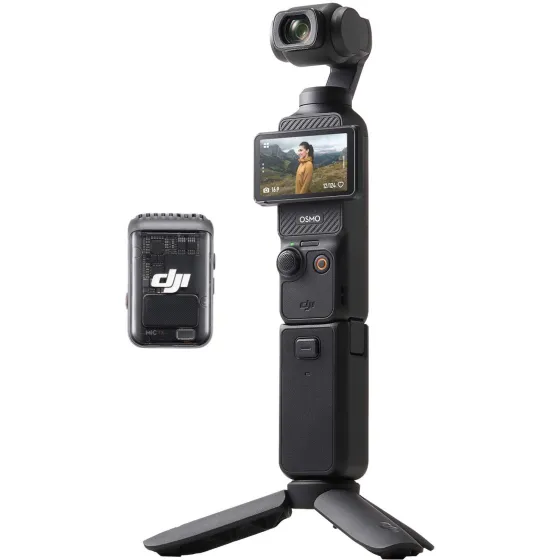 ProductDJI Osmo Pocket 3 Creator Combo 4K Vlogging Camera GimbalView product
When a compact model is enough
If you mainly film short clips, Reels, TikTok, behind-the-scenes content, or light talking-head shots in motion, you do not need the most complex solution on the market. In such a scenario, speed, mobility, and the ability to take the equipment with you without a separate bag just for the stabilizer are more important.
In commercial video work, however, where the camera is used with multiple lenses, ND filters, wireless audio, or an external monitor, compact models quickly reach their limits.
The most common mistakes when choosing a gimbal
The first mistake is choosing based on maximum payload while ignoring ease of use. A larger model is not always better. If it is tiring to work with, the operator will more often refuse to use it, and the investment loses its purpose.
The second mistake is not checking balancing possibilities with the specific lens. This especially applies to cameras with protruding screens, wide bodies, or heavier zoom lenses. Theoretical compatibility does not always mean convenient everyday work.
The third mistake is assuming that all functions will be equally useful. Follow focus motors, auto-tracking modes, vertical filming, timelapse, and app control can be valuable, but only if they truly match your workflow. Otherwise, motor stability, setup speed, and reliability are more important.
What to look at in the specifications
Payload capacity is only the beginning. A valuable indicator is the gimbal’s own weight, because you will feel it in every hour of shooting. For some users, a 300 or 500 gram difference seems small only until the first long filming day.
Axis locks for transport are important because they speed up setup and make moving between locations easier. A quick-release plate is also practically useful so the camera can be easily moved to a tripod or another mount.
If you work in a team, compatibility with additional handles, monitors, and wireless control solutions matters. For a solo content creator this may not be decisive, but in commercial or corporate video such details affect the pace of work.
Buy or rent
Buying is not the best decision in every situation. If a gimbal is needed for individual projects, for testing before purchase, or for a specific camera configuration, rental is often the more rational option. It allows you to check whether the specific model really matches the filming style and workload.
Buying makes more sense if the stabilizer is used regularly and becomes part of everyday work. This especially applies to videographers, agencies, event operators, and company content teams that need to work quickly and without depending on availability on a specific date.
This is exactly where the ability to receive not only the equipment, but also consultation on camera compatibility, work scenarios, and possible reserve capacity for future needs becomes important. In a specialized photo and video equipment center, this often saves more time than comparing specifications independently for a long time.
How to prepare a gimbal for work without unnecessary delay
Even a good stabilizer will not deliver the expected result if the camera is not properly balanced. Balancing must be done with the entire actual configuration - battery, memory card, lens, filter, and, if needed, microphone or other equipment. If you change the lens or add an accessory after balancing, the system must be adjusted again.
Another practical detail is the habit of saving the most frequently used configuration. If you regularly film with the same camera and lens, you can significantly shorten setup time between projects. This is especially useful in reporting and events, where reaction speed is important.
Movement technique is still essential too. Even with a gimbal, you need to move in a controlled way, with a smooth step and a predictable trajectory. The stabilizer smooths out vibrations, but it does not turn a hurried movement into a cinematic shot.
How to understand which model is right for you
If you are a hobby user or create content for social media, the most important things are usually ease of use, compact size, and a reasonable price. If you work on commercial projects, payload reserve, compatibility with different lenses, and reliable operation over a longer shift become more important than minimal size.
For professional use, it is worth thinking not only about today’s camera, but also about the next configuration. A gimbal is a tool that is often bought for several years, so a small power reserve may be justified. At the same time, an excessively large model can become a nuisance in everyday use.
If you are unsure between two options, the decisive question is usually not “which is more powerful,” but “which will actually be used more often.” The best gimbal for filming with a camera is the one that matches your camera, your workflow, and your specific tasks - not the one with the longest list of features.
A properly chosen stabilizer does not make filming more complicated. It removes technical obstacles and lets you focus on the frame, movement, and story - that is exactly where good video begins.
Frequently asked questions
How can I determine whether the gimbal will support my camera with all accessories?
Calculate the total weight of the full setup — camera body plus lens, batteries, microphone, and external accessories. Also make sure to check physical compatibility (lens length, body shape, and cable placement), rather than relying only on the maximum payload number.
How important are gimbal weight and ergonomics?
The gimbal’s weight directly affects the operator’s fatigue — even a difference of a few hundred grams can be significant during long shooting days. Ergonomics, button placement, and handle shape often determine how often the stabilizer will be used in everyday work.
Is it better to buy or rent a gimbal?
Renting is rational if a gimbal is needed for individual projects or for testing before purchase, because it allows you to verify real compatibility with the camera. Buying makes more sense if the stabilizer is used regularly and becomes part of everyday work.
Do all gimbals provide the same functions, such as automatic tracking or timelapse?
The range of functions differs between models — focusing motors, automatic tracking, timelapse, and vertical shooting may be available on different models. Choose the functions that match your workflow, as unnecessary features can increase the price without practical value.
How to properly prepare a gimbal for work to reduce setup time?
Balance the gimbal with all actual kit equipment and, if possible, preserve frequently used configurations. This will allow you to quickly restore settings between projects and reduce the time you spend balancing the camera.
Useful links
- Video stabilizers - A category where various gimbal models and solutions can be viewed according to the needs described in the article.
- Video filming equipment - A more detailed overview of video equipment — useful when assessing compatibility with monitors, stands, and other accessories.
- DJI gimbal RS 5 stabilizer RS5 - An example from the product range that illustrates the choice of professional-grade stabilizer solutions for larger camera configurations.
- DJI RS 4 Mini - An example of a more compact solution that may be suitable for lighter cameras and vlogging needs.