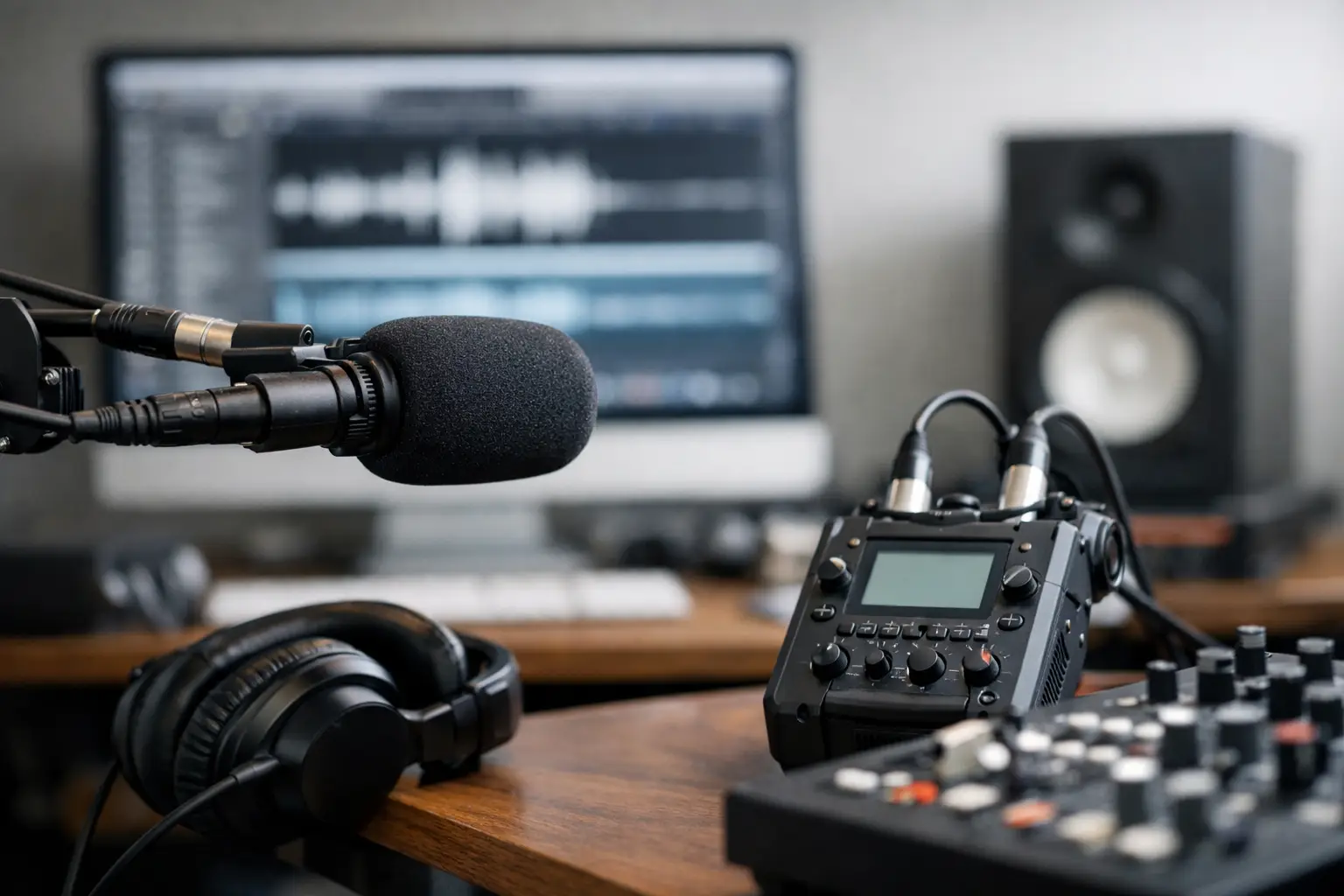
Viewers sometimes forgive poor image quality, but poor sound - almost never. That is precisely why the question of how to improve video audio recording is often more important in practice than choosing the next camera body or lens. If the voice sounds hollow, background noise overpowers speech, or the level keeps jumping, even high-quality video looks less professional.
The good news is simple: good audio rarely starts with complicated post-production. It starts at the moment of filming - with the right microphone, sensible placement, room control, and appropriate recording settings. Sometimes one correctly chosen accessory is enough for the result to sound noticeably better right away.
How to improve video audio recording without unnecessary gear
If you film with the camera’s built-in microphone, the limitations are usually predictable. It picks up not only the voice, but also the room, echoes, ventilation, street noise, and camera handling sounds. A built-in microphone is a convenient reference point, but rarely the optimal solution for interviews, vlogs, podcast videos, or commercial content.
The first real improvement is usually an external microphone. There is no single universal option for all scenarios. If one person is speaking to the camera and is relatively close, wireless lavalier microphones work very well. If you are filming a speaker from a short distance in a controlled environment, a directional microphone on the camera or a boom stand is useful. Meanwhile, in studio recordings or voice-over work, a condenser microphone with a separate audio recording chain is often better.
The main principle is simple: the closer the microphone is to the sound source, the cleaner the result. An expensive microphone far from the mouth will usually sound worse than a mid-range microphone in the right position. So improvement is not only a matter of model or brand, but also of working method.
Choosing a microphone by filming situation
Lavalier microphones are especially practical for interviews, presentations, social media content, and event filming. They help maintain a stable sound level even when the person moves. However, you need to account for the risk of clothing rustle and the need to mount the microphone correctly. If it is placed too low or under a thick layer of fabric, the voice will lose clarity.
Directional shotgun-type microphones are a good choice for documentary filming, reporting, and situations where a lavalier microphone is not convenient or visually desirable. They help focus on the sound source, but they are not a miracle solution for noisy environments. If the room is echoey or the microphone is too far away, the recording will still be problematic.
Wireless systems provide a lot of freedom, especially in dynamic projects. They are convenient for wedding videos, events, corporate videos, and on-location content creation. Here you should consider battery life, connection stability, and the possibility of a backup recording. In more professional systems, a built-in safety copy can save the situation if the radio signal is briefly interrupted.
If filming is irregular or each project requires a different configuration, a rental option is often more economically justified than an impulsive purchase. This especially applies to more complex audio systems that are not needed every day.
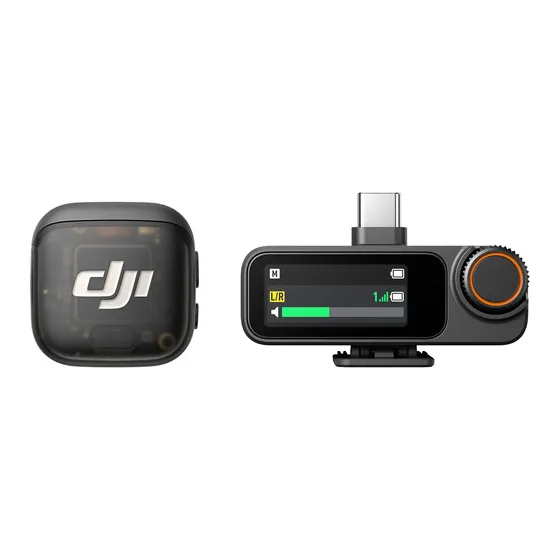 ProductDJI MIC 3 1TX+1RX/CP.RN.00000479.03 DJIView product
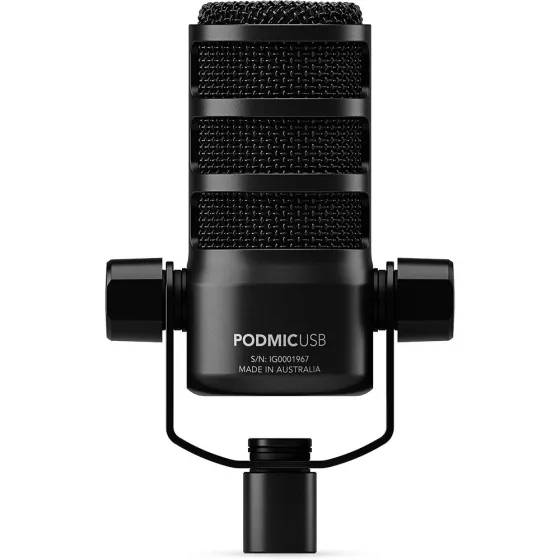 ProductRode microphone PodMicUSB PodMic USB Type-C + XLRView product
The room affects more than the microphone
One of the most underestimated factors is room acoustics. A hard floor, empty walls, glass surfaces, and high ceilings create echo that is difficult to fully fix later. Therefore, when thinking about how to improve video audio recording, it is worth starting not with post-production plugins, but with choosing the room.
A smaller, softer room often gives better results than a large, visually impressive location. Curtains, carpets, soft furniture, and even movable acoustic panels reduce echo. If you are filming in an office, sometimes it is enough to close the door, turn off the fan, and move away from the windows for the voice to become significantly more intelligible.
If the location is fixed and cannot be changed, compensate with microphone placement. In such rooms, the microphone should be even closer to the speaker. The more room sound enters the recording, the less controllable the final result will be.
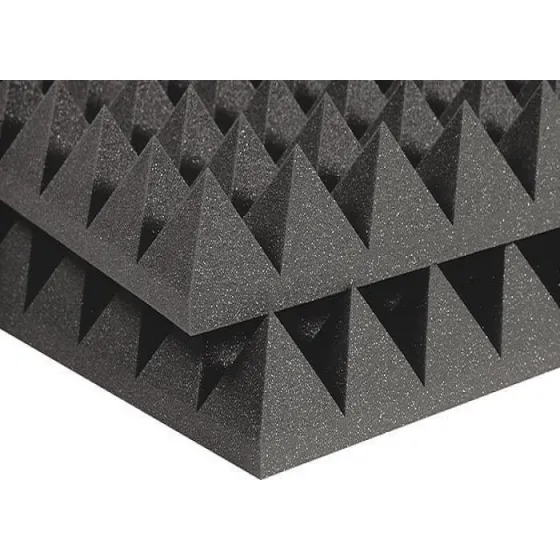 ProductAkustiskais porolons loksnēs PIRAMĪDA 2000x1600mmView product
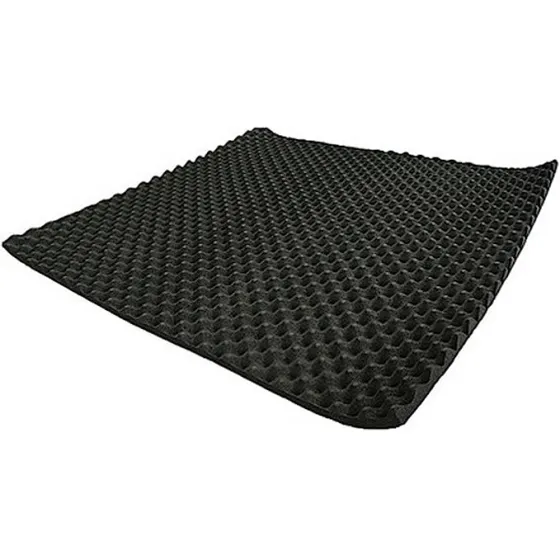 ProductAkustiskais porolons loksnēs OLU 2030x1630mmView product
What to check before recording
Before you start filming, listen to the room with headphones. It takes a minute, but it can save the entire filming day. Pay attention to air conditioners, refrigerators, computer fans, traffic, elevators, and room hum. Some of these noises seem insignificant on location, but become very intrusive in the recording.
A short test recording with the same speaking pace and volume as in the real shot is also useful. It helps you notice both an overloaded signal and a recording that is too quiet, as well as clothing noise.
Recording level and signal control
Even a good microphone will not deliver results if the recording level is wrong. A recording that is too quiet means that in post-production you will have to raise the volume together with the noise. A recording that is too loud, on the other hand, causes clipping - unpleasant digital distortion that cannot be fully repaired.
A safe working principle is to record with headroom. Speech peaks should not regularly reach the very highest level. If the camera or recorder allows it, use manual gain adjustment rather than relying entirely on automation. Auto mode can sometimes help in fast-moving situations, but it tends to raise background noise during pauses and react unevenly to changes in vocal dynamics.
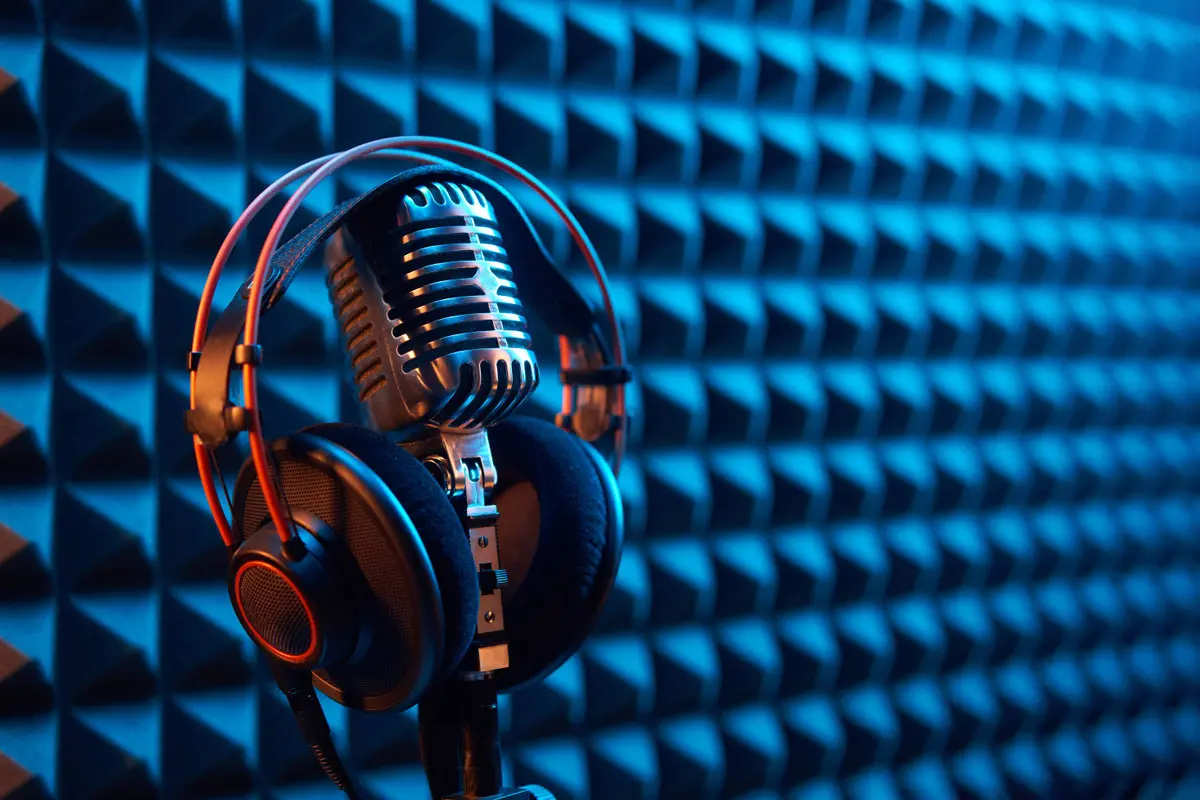
Headphone monitoring is not an extra accessory, but basic control. Looking only at level indicators is not enough. You can have a good level and at the same time a bad connection, radio interference, or a cable defect. You will notice that only by listening.
Accessories that have a bigger effect than they seem
A windscreen outdoors is mandatory, not optional. Even a light breeze can ruin an otherwise good recording. Depending on the microphone and conditions, a foam cover may be enough, but outdoor filming often requires a full furry windscreen solution.
Cables and connectors are also important. An unstable contact causes crackling and dropouts that are easy to confuse with a microphone or camera problem. If your audio chain includes adapters, splitters, or TRS-to-TRRS converters, check compatibility before filming, not during the shoot.
A boom stand, table stand, shock mount, and audio recorder are often not considered a priority, but these accessories are exactly what help stabilize the result. If the microphone is mechanically isolated and positioned precisely, the sound becomes cleaner without additional processing.
Post-production helps, but does not replace a proper recording
Noise reduction, equalization, compression, and de-essing can be very useful. However, their effect is best when the original recording is already sufficiently clean. If the voice is too far away, the room is too loud, or the signal is overloaded, post-production will only partially hide the problems.
In speech recordings, a small amount of background noise reduction, light low-frequency correction, and dynamic range leveling is often enough. Overdone processing creates an unnatural, metallic sound. This is especially noticeable in interviews and corporate videos, where a clear, trustworthy voice is the priority.
If the material is intended for social media, where the viewer listens on a phone or laptop, speech intelligibility is more important than an impressive low-end presence. In advertising videos, podcasts, or multichannel post-production, the requirements may be higher, and in those cases a separate audio recorder often pays off.
When a simple solution is enough and when you need the full setup
If you are filming Reels, TikTok, a talking-head YouTube format, or short product videos, a high-quality wireless microphone and proper monitoring are often enough. In such a scenario, stability and a fast workflow are more important than a complex audio chain.
If you are creating interviews with two people, training videos, advertising clips, or recordings in client premises, the needs increase. There you often need two microphones, backup recording, better wind protection, and a clear plan for handling different environments. In even more complex projects, separate recorders, XLR connections, and the presence of an operator or sound assistant become justified.
This is exactly where a specialized equipment center is useful, where you can not only compare microphone types, but also assess whether purchase or rental is more advantageous for a specific project. For Master Foto audiences, this is essential, because not every job requires the same setup.
Good video audio is not a mystery. It is a set of correct decisions - the right microphone, a controlled room, a safe signal level, and the discipline to check the recording before the first take. If you get these basics right from the start, the sound works for you instead of becoming a problem you later try to save in editing.