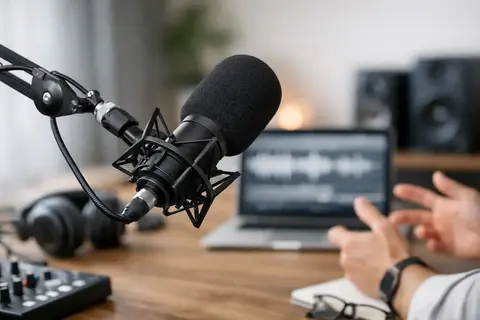
If a podcast voice sounds distant, hollow, or with room echo, the listener notices it right away. That is why the best microphone for a podcast is not just a question of price or a popular model - it is a question of what kind of room you record in, how many people speak at once, and how simple or flexible a system you want to build.
In brief
- The best microphone for a podcast depends on the microphone type, connection, recording environment, and workflow.
- A dynamic cardioid microphone is often a safe choice for home podcasts — it picks up less room echo and background noise.
- The USB microphone is the most convenient solo solution; the XLR system is more flexible and better for recording multiple speakers.
- Acoustics and microphone positioning (10–15 cm from the mouth) often affect the sound more than a more powerful microphone.
- For a beginner, investing in a complete kit (microphone + stand/boom arm + pop filter + headphones) is more rational than buying only an expensive microphone.
What to choose for different tasks
| Task | Solution | Why |
|---|---|---|
| Solo podcast for a beginner | Dynamic USB microphone, desk stand or boom arm, pop filter, and closed-back headphones. | Simple setup without an audio interface, good isolation from room noise, and a fast workflow. |
| Podcast with multiple speakers (in one room) | One microphone for each speaker (dynamic XLR cardioid), audio interface/mixer with multiple inputs, headphone monitoring. | Recording separate tracks allows for precise balancing of voices and reducing overlap between speakers. |
| Remote interviews and quick onboarding | USB microphone or plug-in lavalier with a computer; if needed — platform integration (Zoom/Teams). | Quick setup and mobility reduce technical hassle, which is important for remote guests. |
| Acoustically untreated room | Dynamic microphone with a narrow cardioid pattern, proper positioning, and simple acoustic elements (carpet, curtains, shelf). | Reduces room echo and the impact of background noise, often delivers better results than a sensitive condenser. |
Frequently asked questions
Is a USB microphone sufficient for a podcast?
Yes — a USB microphone is often sufficient for solo podcasts and a quick start, since it can be connected directly to a computer without additional equipment. It saves setup time and is a more economical solution, but it is less flexible if you plan to expand recordings in the future with multiple microphone channels.
When should you choose an XLR microphone over USB?
XLR is better if you need flexibility, more inputs for multi-speaker recordings, or more professional signal control through an audio interface. It requires additional hardware, but makes it easier to expand the system and provides better integration in a studio environment.
Will a condenser microphone be better than a dynamic one?
A condenser can provide a more detailed and open sound, but it is more sensitive to room acoustics and background noise. If you record in an acoustically treated room, a condenser can be an excellent choice; in an untreated room, a dynamic microphone is the safer option.
How important is microphone positioning?
Position is very important — a microphone 10–15 cm from the mouth usually produces a much better, warmer, and more intelligible voice than the same model placed far away. The right combination of angle and distance often improves the recording more than a more powerful device.
What accessories are essential for a podcast?
A pop filter, boom arm or stand, and closed-back headphones are essential accessories that improve recording quality and convenience. They help reduce plosive sounds, ensure a stable microphone position, and allow immediate sound monitoring.
Can acoustics damage a good microphone?
Yes — even a high-quality microphone cannot fully compensate for poor room acoustics; hard surfaces and an empty room will create echo and unpleasant resonance. Simple acoustic improvements (carpet, curtains, bookshelf) often provide a big payoff.
Useful links
- Podcast microphones - Category with microphones suitable for podcasts — useful for beginners looking for USB or XLR solutions.
- Microphones - A broader microphone category, where dynamic and condenser models can be compared.
- Microphone accessories - Accessories (stands, boom arms, pop filters) are mentioned as an essential part of the kit for podcast recording.
- Microphones Sound recording - Guidance on microphone rental and testing, useful before making a final choice or testing more complex systems.
When choosing podcast gear, the mistake is usually not a microphone that is too cheap or too expensive. More often, the mistake is choosing the wrong type of microphone for a specific use case. A person records in an untreated room with a sensitive condenser microphone and then tries to rescue the sound in post-production. Or they choose a simple USB model, but later realize they need a two- or three-speaker recording with separate track options.
What actually determines the best microphone for a podcast
In practice, the most important factors are four - microphone type, connection, recording environment, and workflow. It is this combination that determines whether a particular model will be convenient and whether the final result will sound professional.
A dynamic microphone is often the safest choice for a podcast, especially at home. It picks up less room echo, computer fans, and street noise. That is why it gives beginners and many experienced content creators a more predictable result.
A condenser microphone can sound more detailed and open, but it is more demanding of the room. If the recording takes place in an acoustically untreated office or living room, this advantage quickly turns into a disadvantage. The voice will not only be clear, but also carry the full character of the room, which is not always desirable in a podcast.
USB or XLR - which option is right
One of the most common questions is whether to choose a USB or XLR microphone. Both have their uses, and there is no single universal answer here.
A USB microphone is a practical solution for a solo podcast, remote interviews, and getting started quickly. It can be connected directly to a computer without an additional audio interface, setup is simpler, and the overall budget is usually lower. If you record alone, do not have complex hardware needs, and want minimal technical overhead, a USB microphone is often the logical choice.
An XLR microphone is a more flexible and professionally integrable solution. It requires an audio interface or mixer, but in return it offers broader possibilities - better multi-microphone configurations, easier system expansion, more precise signal control, and a smoother path to a higher level in the future. If you are creating a regular podcast with guests or multiple hosts, an XLR system usually pays off.
The best microphone for a podcast for a beginner
For a beginner, the most important thing is not the widest possible specification sheet, but a predictable result. Here, a dynamic USB microphone or a dynamic XLR model with a simple audio interface proves safest. The main goal is to get a sufficiently clean voice without unnecessary fighting with room noise.
If you record at a desk, it is better to choose a microphone that can be placed on a stand or boom arm closer to the mouth. A microphone positioned 10 to 15 centimeters away will almost always sound better than an expensive model placed too far away. It is often distance and positioning that provide a bigger improvement than moving to another price category.
A beginner’s kit usually includes a microphone, desk mount or stand, pop filter, and closed-back headphones for monitoring. If any of these elements are missing, the final recording can suffer even with a good microphone.
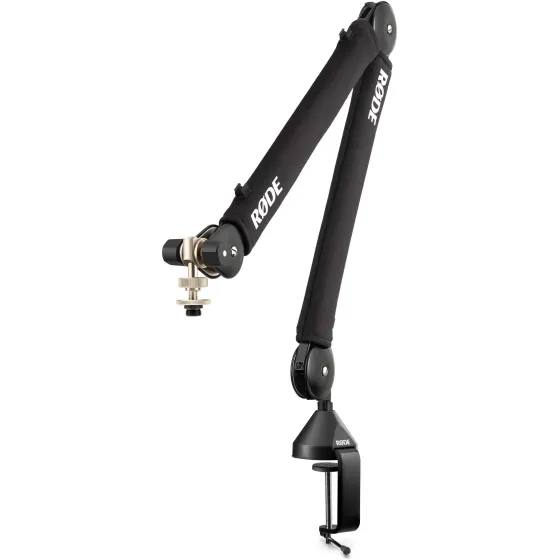 ProductRØDE PSA1+ Professional Studio microphone Arm or podcasters, streamers andView product
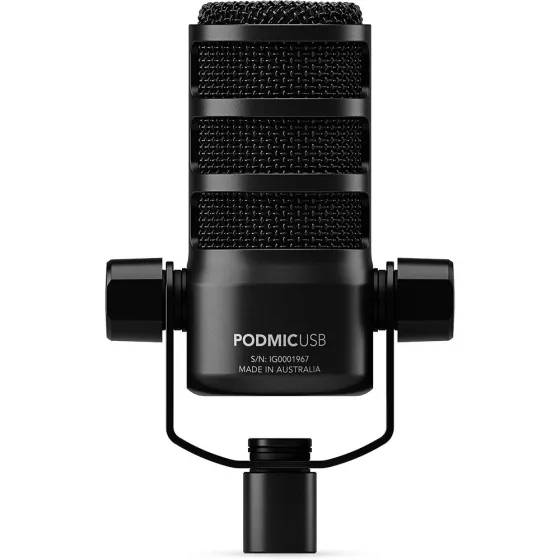 ProductRode microphone PodMicUSB PodMic USB Type-C + XLRView product
The best microphone for a podcast with two or more speakers
When two or more people take part in a podcast, the requirements change. One microphone in the middle of the room may be convenient, but it rarely delivers a professional result. Voices will sound uneven, room echo will be more pronounced, and editing will offer few options to correct the balance.
In such cases, the right approach is one microphone per speaker. That means thinking not only about the microphone, but also about the audio interface with the appropriate number of inputs, stands, cables, and headphone monitoring. That is why the question of the best microphone for a podcast in a multi-person format is really a question about the entire recording chain.
Dynamic cardioid microphones are a safe choice here because they better isolate each speaker’s voice. This helps reduce bleed between microphones and makes the recording cleaner. If the room is not studio-level, this solution will be much more practical than sensitive condenser models.
The room is often more important than the microphone
Many people try to find one model that will solve all sound problems. In reality, even the best microphone for a podcast cannot compensate for poor acoustics. Hard walls, an empty room, a window behind the speaker, and a desk that reflects sound will all be audible in the recording.
If it is not possible to set up a full studio, practical steps are enough. Soft surfaces, curtains, a carpet, a bookshelf, and proper microphone placement already help significantly. Sometimes moving from the kitchen to a smaller, quieter room gives a bigger improvement than upgrading to a higher-end microphone.
That is why, when choosing gear, it is worth thinking systemically. A microphone is not an isolated product - it works together with the room, stand, interface, headphones, and recording habits.
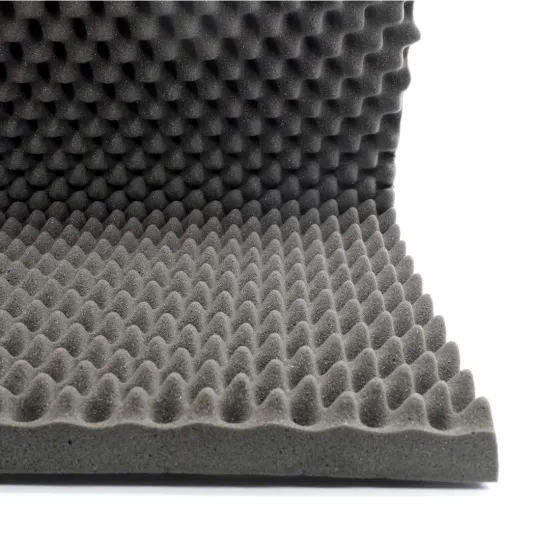 ProductSilent Coat Sound Absorber 35mm sheet 1.8 m2View product
Which specifications really matter
The specification list can look impressive, but not everything is equally important for a podcast. The polar pattern is one of the most practical parameters. A cardioid pattern is usually optimal for voice recording because it focuses on the speaker and picks up less sound from the sides and rear.
Sensitivity and frequency range are useful parameters, but they should be evaluated together with the use case. A very sensitive microphone is not always an advantage if you record in a regular office or at home. Likewise, a very wide frequency range does not automatically mean a better podcast voice. For the listener, what matters more is speech that is understandable, stable, and pleasant.
If you choose an XLR model, you should also pay attention to how much gain it requires. Some dynamic microphones need a more powerful preamp or an additional signal booster. Otherwise, the sound will be too quiet or you will have to raise the gain to the noise level.
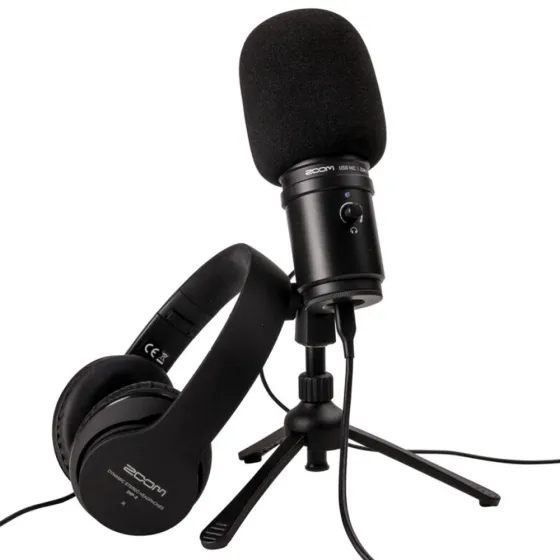 ProductZoom ZUM-2PMP USB Podcast Mic PackView product
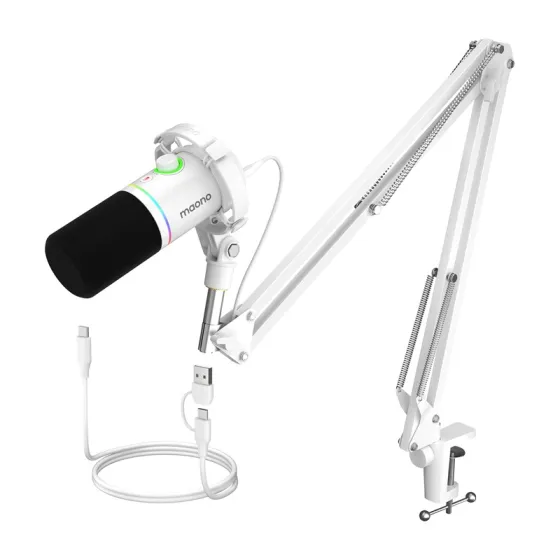 ProductMaono PD200XS microphone (white) PD200XS whiteView product
When it is worth buying a more expensive microphone
A more expensive microphone is a justified purchase when the rest of the chain does not hold it back. If the room is acceptable, recording discipline is good, and you know what kind of sound you are looking for, a higher-end model can provide an audible benefit. This is especially true for regular podcasts, commercial projects, and brands for which audio quality is part of their reputation.
If you are just starting out, it is often more rational to invest in a balanced setup rather than one expensive microphone. A mid-range microphone with a good stand, correct placement, and a well-arranged room will usually outperform a premium model used in unsuitable conditions.
This is where a specialized approach helps - not just comparing models, but understanding how they fit a specific task. This is especially important if you are also considering rental, testing or assembling the entire recording system in one place, as many content creators and studio clients in the Master Foto segment practically evaluate.
How to choose without unnecessary risk
The safest approach is to start with your scenario. Are you recording alone or with guests. Do you work in one room or remotely. Is mobility important, or is the recording done in a fixed location. Is this your first podcast, or an improvement to the quality of an existing format.
If the answers are clear, the choice becomes much easier. For a solo format, a quality USB microphone is often enough. For a podcast with two or more people, an XLR system is more suitable. For a noisier environment, a dynamic microphone is better. In an acoustically treated room, you can also consider a condenser model if you want a more detailed sound.
It is also important not to postpone accessories for later. A pop filter reduces plosive bursts, a boom arm helps maintain the correct position, and headphones let you notice problems immediately. These elements are not secondary - they are part of recording quality.
A good podcast microphone is not the one that looks impressive in a specification table, but the one that records your voice clearly, consistently, and without unnecessary complications. If the choice is based on real use rather than popularity alone, the result will be audible from the very first episode.