No products
 Facebook
 Google

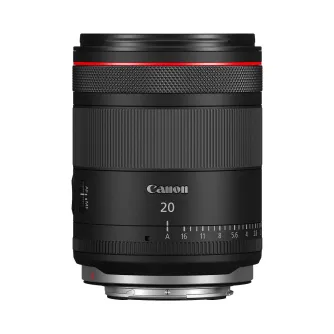
Canon RF lens ecosystem represents a major step in Canon's mirrorless design, with lenses engineered around a large-diameter, short-flange-distance mount to maximize optical performance and design flexibility. RF lenses cover the full range of photographic needs — wide-angle optics, standard primes, and professional telephotos — and are designed to work with Canon's R-series bodies to provide high-resolution performance and modern autofocus and stabilization features.
This introduction outlines the article scope, lens family groupings, and the main use-cases for each family. It explains the editorial approach: concise comparisons, clear buying picks, and practical shooting advice for readers choosing lenses for portrait, landscape, and hybrid photo/video work.
Main lenses (Holy Trinity + 100-500)
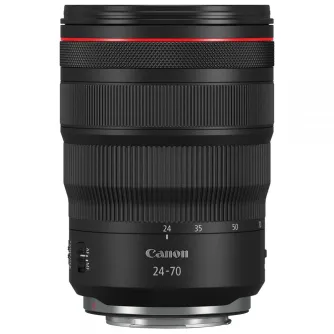
This set pairs Canon’s core professional trinity (15–35mm, 24–70mm, 70–200mm) with the long-reach RF 100–500mm to create a comprehensive focal-length workflow for full-frame mirrorless photographers. Together the lenses cover ultra-wide through super-telephoto, offering consistent L-series optical quality, weather sealing, fast Nano/dual Nano USM autofocus and multi-stop image stabilisation. The group is designed for professionals and serious enthusiasts who need one-kick access to architecture/landscape (15–35mm), everyday and environmental portraits (24–70mm), short- to mid-range telephoto (70–200mm) and long-range wildlife/sports reach (100–500mm).
Comparison: the 15–35mm and 24–70mm provide wide and standard coverage with constant f/2.8 speed for low-light and subject separation; the 70–200mm adds mid-telephoto reach with similar f/2.8 performance for portraits and action; the 100–500mm sacrifices constant aperture but delivers far greater reach with excellent stabilization and optical corrections for distant subjects. Choose 15–35mm when environment and scale matter; the 24–70mm is the everyday versatile workhorse; the 70–200mm suits portraitists, wedding shooters and mid-distance sports; the 100–500mm is the dedicated option for birding, wildlife and motorsport.
Recommendations: for a single-lens travel kit prioritising flexibility, the RF 24–70mm F2.8 L IS USM is the best compromise. For photographers focused on weddings, events and studio-portable portraiture, add the 70–200mm F2.8 L IS USM. Landscape and architecture shooters should pair the 15–35mm with the 24–70mm. If your work requires long reach frequently, include the 100–500mm as your long-end lens; pair it with the 24–70mm or 70–200mm depending on whether low-light speed or mid-tele reach is more important. For mixed professional assignments, the full four-lens set delivers maximum coverage and future-proofs most shooting scenarios.


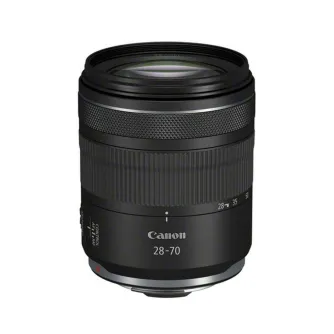
Choosing an alternative to a main lens often means balancing cost, weight, and optical performance. This group includes compact travel-oriented zooms, stabilized L-series wide-angle and telephoto zooms, and brighter fast ultra-wide options. Each lens suits a slightly different use case: compact RF 24–105mm and 24–105/4–7.1 options are excellent for travel and everyday use; the RF 28–70mm f/2.8 shines when you need a fast aperture for subject separation; the RF 70–200mm f/4 gives reach without heavy weight; and the 14–35mm/16–28mm choices cover broad ultra-wide needs with stabilization for landscape and architecture work.
Practical advice: match the lens to your shooting priorities. If travel and low weight matter, prefer RF 24–50mm or RF 24–105mm F4-7.1; for portrait and low-light versatility pick the RF 28–70mm F2.8 or a fast prime; for reach while keeping weight manageable choose the RF 70–200mm F4L; for wide-field landscapes and architecture choose RF 14–35mm f/4L or RF 16–28mm f/2.8 depending on whether you need a faster aperture. When choosing between stabilized and non-stabilized options, remember that stabilized lenses extend handheld usability, especially at longer focal lengths or slower shutter speeds.
Group technical summary: collective focal coverage spans 14–200mm among these alternatives. Stabilization varies from 4.5 to 5.5 stops on the listed lenses; apertures range from f/2.8 (fast zooms) to variable f/4–7.1. Weight and size differences are significant—L-series lenses tend to be heavier but offer weather sealing and superior optical correction; consumer STM zooms are lighter and more compact.
Conclusion: this collection of alternatives covers most common photographer needs—lightweight travel convenience, stabilized walkaround performance, fast-aperture creative control and telephoto reach. Choose the lens that matches the subjects you shoot most often and the constraints you have for weight and budget.


Universal zooms
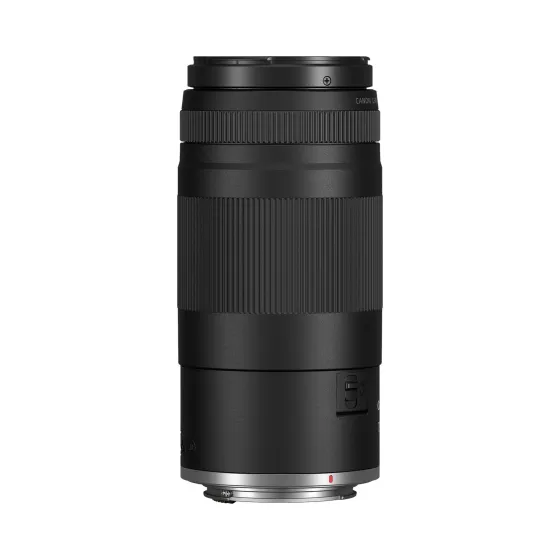
These two Canon RF telephoto zooms — the RF 100-400mm F5.6-8 IS USM (43978) and the RF 75-300mm F4-5.6 (59512) — target overlapping but distinct use cases. The 100–400mm emphasizes maximum reach and portability for dedicated telephoto tasks such as wildlife and distant sports, while the 75–300mm offers a slightly wider starting focal length and a brighter maximum aperture at the short end, making it more versatile for general-purpose telephoto work and slightly better in marginal light at 75mm.
Zoom range differences: The RF 100–400 provides 100–400mm which extends farther at the long end compared with the 75–300, giving up a wider short-end but gaining two-thirds of a stop or more of reach. The RF 75–300's 75mm short end is useful for tighter framing in closer scenes and provides marginally better low-light capability at the wide end due to f/4 vs f/5.6.
Optical/AF/build distinctions: The 100–400 uses Nano USM for faster, quieter focusing and includes Optical IS rated up to 5.5–6 stops when coordinated with IBIS, plus specialized elements (UD and aspherical) for aberration control. The 75–300 uses a DC motor AF and lacks optical stabilization; it is optically simpler but lighter and cheaper to produce, aimed at budget-conscious photographers seeking reach with minimal weight.
Target applications and recommendations: Choose the RF 100–400 if you prioritize reach, stabilization and faster AF for wildlife, distant sports and travel where teleconverter compatibility may be desirable. Choose the RF 75–300 if you need a lightweight, lower-cost telephoto option with a slightly wider short end for general telephoto work and when you primarily shoot on a budget or prefer minimal kit weight.
How to choose standard lenses
Choosing a standard lens is about balancing field of view, background separation, portability and shooting style rather than chasing a single "best" focal length. Standard lenses typically cover prime focal lengths around 35mm and 50mm or short zooms that span approximately 24–70mm. In practice, pick a focal length that matches how you compose: 35mm gives context and suits street and environmental portraits; 50mm reads as close to the human eye and excels at candid, low‑light and everyday shooting; short tele options near 85mm are preferred when you want tighter headshots and stronger subject isolation.
When choosing, consider sensor size (crop sensors change effective field of view), aperture needs and handling. Fast primes (f/1.8–f/1.4) help in low light and provide shallow depth of field for portraits, while moderate apertures (f/2.8–f/4) are often enough for travel or documentary work and result in smaller, lighter lenses. A 24–70mm or similar standard zoom can replace multiple primes for flexibility when you must travel light or cover varied scenes without swapping lenses.
Practical advice:
- Decide primary use first (portraits, street, travel) and prioritize focal length that matches that use.
- Try before you buy: rent or borrow lenses to evaluate weight, handling and focus behavior on your camera body.
- Factor in size, weight and budget—primes are often lighter and cheaper for equivalent image quality; zooms add convenience at the cost of size.
- Consider autofocus reliability and weather sealing if you shoot fast-moving subjects or outdoors frequently.
Conclusion: There is no universal standard lens — choose a focal length and aperture combination that supports your composition style and practical needs. If unsure, start with a 35mm or 50mm prime to learn framing and then expand to a 24–70mm zoom or an 85mm prime once your shooting priorities are clear.
Main primes (including macro)
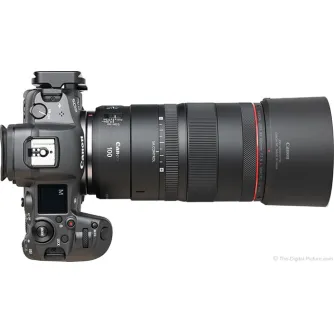
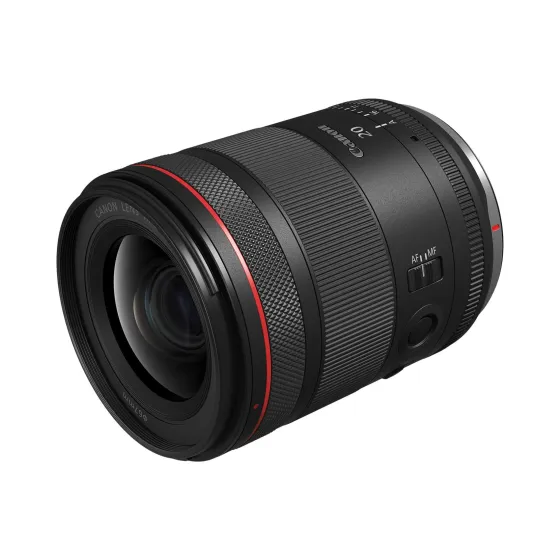
This Main primes group gathers essential short-to-medium focal length primes designed for hybrid photo/video shooters and photographers seeking a compact, high-quality prime kit. The selection covers ultra-wide (20mm), wide (24mm), classic wide-normal (35mm), standard (50mm), short-telephoto portrait (85mm-class), medium-telephoto (135mm) and a dedicated macro (100mm). Together they form a balanced set for landscape, portrait, street, product, and macro work.
Practical shooting advice: build pairs for coverage — for general walkaround carry a 35mm and 50mm; for portraits add the 85mm-class lens and the 135mm for headshots or distant compression. Use the 20mm and 24mm for interiors and landscapes; reserve the macro 100mm for product detail, insects, and close-up texture work. When planning a shoot, select apertures based on desired depth of field: f/1.4–f/2.8 for shallow focus and subject separation, f/4–f/8 for increased sharpness and group scenes, and f/8–f/16 for maximum landscape depth with attention to diffraction limits.
Technical and compatibility notes: all listed optics are full-frame RF-mount primes with professional L-series build in most cases, offering weather sealing and advanced coatings. Many include hybrid features useful for video such as diaphragm/iris rings, low focus breathing designs, and fast quiet AF systems (VCM, Nano USM or USM). For macro work the 100mm offers 1:1 reproduction and stabilization to simplify hand-held shooting; pairing it with extension tubes or a focusing rail allows advanced macrophotography techniques like focus stacking.
Kit comparison and usage scenarios: if you prefer a compact travel kit, choose 20mm + 35mm + 50mm. For portrait-focused setups pick 50mm + 85mm + 135mm. Macro and product shooters should include the 100mm macro with either 50mm or 35mm for contextual shots. Consider filters and accessories: 67mm filter thread is common across several lenses (check each SKU), and dedicated hoods and cases improve handling in the field.
Conclusion: this prime set covers the primary creative needs for a hybrid shooter — from ultra-wide vistas to 1:1 macro detail. Select specific lenses according to your main subjects and assemble 3–4 lenses to minimize weight while maximizing coverage.
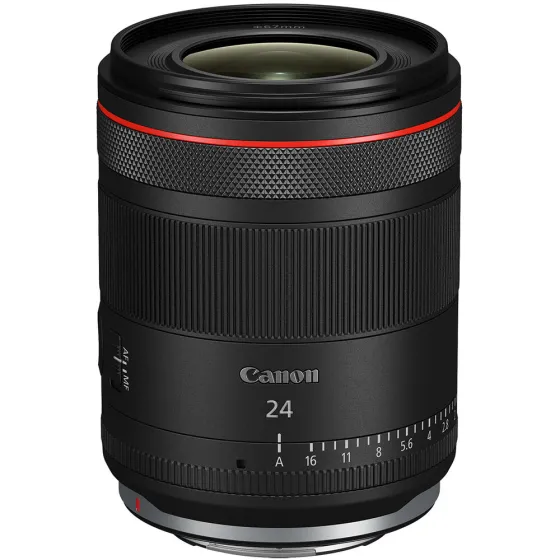
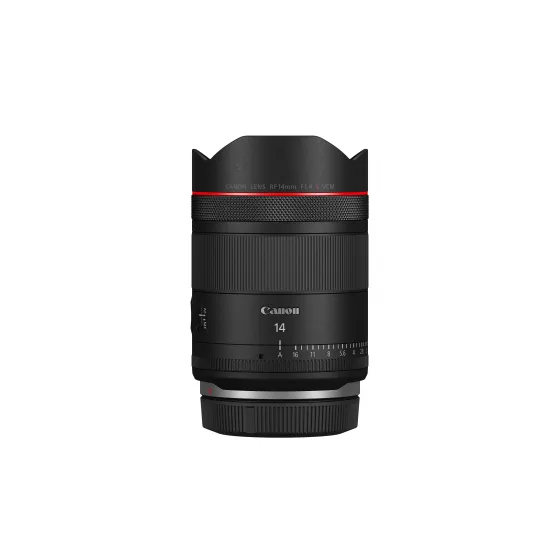
Canon RF 24mm F1.4L VCM Lens for Photography and Videography 6907C002


28-70mm f/2.0 universal zoom
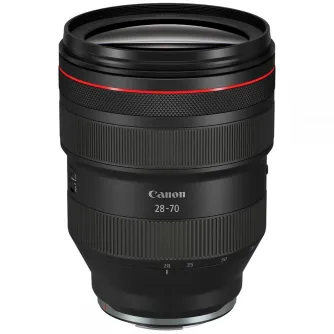
The RF 28–70mm f/2.0 is a professional constant-aperture zoom offering prime-like optical performance across its range. It suits photographers who need flexibility between wide and short telephoto without sacrificing shallow depth of field.
Usage notes: heavy and large; ideal for studio and location work where speed and image quality are essential. Use at f/2.0 for low-light or subject separation; stop down for group and landscape shots. Consider filters with appropriate thread sizes and robust support when using on the longer end.

45mm f/1.2 portrait
First 45mm f/1.2 portrait lens — specs
The Canon RF 45mm f/1.2 provides a balance between compact handling and shallow depth-of-field performance. It is intended for photographers seeking a fast normal prime with quiet STM focus for hybrid photo and video workflows.
Highlights: f/1.2 for subject separation, compact dimensions, low weight, and STM motor for quiet focus. Recommended use includes environmental portraits, street photography and low-light situations. Use with IBIS body for improved handheld shooting stability.
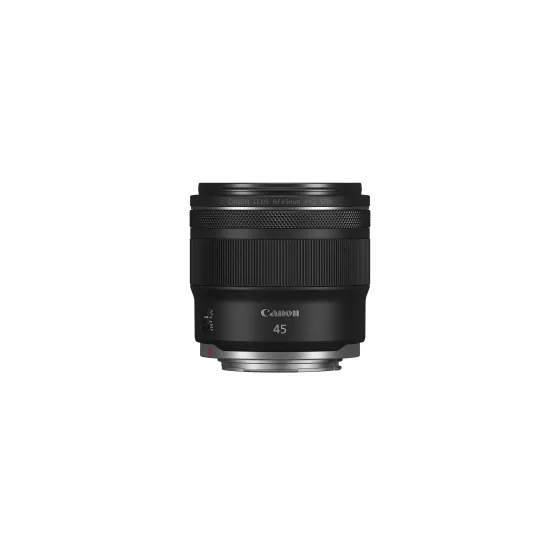
Canon's RF 45mm f/1.2 is a compact fast prime designed for environmental portraits and low-light work. It balances f/1.2 defocus capability with a lightweight form factor and STM focusing optimized for quiet video and hybrid shooting workflows. Compared with larger 1.2 primes, it offers easier handling and portability while retaining strong subject separation at wide apertures.
Key points: lightweight and compact at approximately 346g, f/1.2 wide aperture for shallow depth of field, STM focus motor for quiet operation, and a 67mm filter thread for standard accessories. It is best suited for photographers who want a 1.2 look without the bulk of larger L-series 85mm and 50mm primes.
Usage tips: shoot wide-open for maximum subject separation, but stop down to f/2.8–f/4 for increased sharpness in group scenes. Pair with a 50mm or 85mm prime when you need tighter framing or different compression characteristics. For video, use STM with smooth rack focus and consider external audio capture to minimise camera noise pickup.
Special portrait lenses
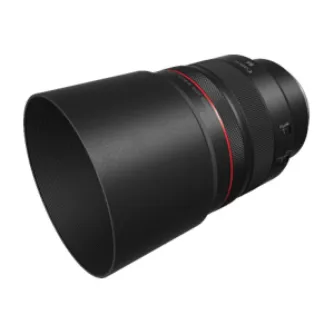
This group comparison covers five Canon RF lenses in the 1.2 prime class and the f/2.0 professional zoom: the RF 85mm F1.2 L USM (31329), RF 85mm F1.2 L USM DS (13622), RF 50mm f/1.2L USM (28544), RF 45mm f/1.2 STM (59765), and RF 28-70mm f/2L USM (28962). The list below facilitates direct comparison for portrait photographers prioritizing defocus control, bokeh character, and AF behaviour.
- 31329 — Canon RF 85mm F1.2 L USM
Focal length: 85mm
Max aperture: f/1.2
Min aperture: f/16
Elements / Groups: 13 / 9
Diaphragm blades: 9
MFD: 0.85 m
Filter thread: 82 mm
Dimensions: 103.2 × 117.3 mm
Weight: 1195 g
Stabilization: No
AF actuator: Ring-type USM
Mount: Canon RF
Electronic contacts: Yes
Release date: Feb 2019
Country of manufacture: Japan - 13622 — Canon RF 85mm F1.2 L USM DS
Focal length: 85mm
Max aperture: f/1.2
Min aperture: f/16
Elements / Groups: 13 / 9
Diaphragm blades: 9
MFD: 0.85 m
Filter thread: 82 mm
Dimensions: 103.2 × 117.3 mm
Weight: 1195 g
Stabilization: No
AF actuator: Ring-type USM
Mount: Canon RF
Electronic contacts: Yes
Release date: Feb 2019
Country of manufacture: Japan - 28544 — Canon RF 50mm f/1.2L USM
Focal length: 50mm
Max aperture: f/1.2
Min aperture: f/16
Elements / Groups: 15 / 9
Diaphragm blades: 10
MFD: 0.40 m
Filter thread: 77 mm
Dimensions: 89.8 × 108 mm
Weight: 950 g
Stabilization: No
AF actuator: Ring-type USM
Mount: Canon RF
Electronic contacts: Yes
Release date: Sep 2018
Country of manufacture: Japan - 59765 — Canon RF 45mm f/1.2 STM
Focal length: 45mm
Max aperture: f/1.2
Min aperture: f/16
Elements / Groups: 9 / 7
Diaphragm blades: 9
MFD: 0.45 m
Filter thread: 67 mm
Dimensions: 78 × 75 mm
Weight: 346 g
Stabilization: No
AF actuator: Gear-type STM
Mount: Canon RF
Electronic contacts: Yes
Release date: Nov 2025
Country of manufacture: Japan - 28962 — Canon RF 28-70mm f/2L USM
Focal length: 28–70mm
Max aperture: f/2.0
Min aperture: f/22
Elements / Groups: 19 / 13
Diaphragm blades: 9
MFD: 0.39 m
Filter thread: 95 mm
Dimensions: 103.8 × 139.8 mm
Weight: 1430 g
Stabilization: No
AF actuator: Ring-type USM
Mount: Canon RF
Electronic contacts: Yes
Release date: Sep 2018
Country of manufacture: Japan
Group summary for portrait use and defocus control: These lenses represent two approaches to shallow depth of field and background rendering. The 85mm pair (standard and DS variant) offer the longest short-tele focal length with the largest entrance pupil (f/1.2) and a 9-blade rounded diaphragm that produces tight subject isolation and smooth, creamy bokeh; the DS variant applies Defocus Smoothing coatings to soften highlight edges and reduce mid-field nervousness, making it the preferred choice when ultra-satin out-of-focus areas are the priority (source: Canon official specs). The RF 50mm f/1.2L provides a classic standard perspective with an extra aperture blade (10) for slightly smoother circular highlights and excellent low-light capability; it is lighter than the 85mm and balances subject separation with a natural field of view for environmental headshots. The RF 45mm f/1.2 STM is the most compact and lightweight option here; at f/1.2 it still creates pleasing defocus but with a wider perspective and STM focusing that favors quiet operation (video/portrait sessions) over the top-tier speed of ring USM systems. The RF 28-70mm f/2L USM is unique in this group as a professional constant-f/2 zoom that covers 28–70mm; at longer focal lengths (near 70mm) it approaches prime-like isolation while offering compositional flexibility—its larger physical size and weight are the trade-offs for that versatility. For defocus control specifically, the ranking by smoothness and subjective satin quality is: RF 85mm DS (softest satin), RF 85mm standard, RF 50mm, RF 45mm, and RF 28-70mm at 70mm; for AF speed and tracking the ring USM primes and zoom lead, with STM providing quieter but slightly slower AF in rapid-action scenarios.
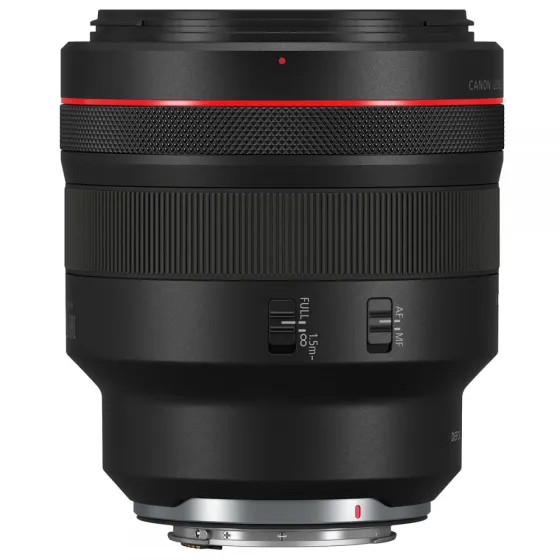
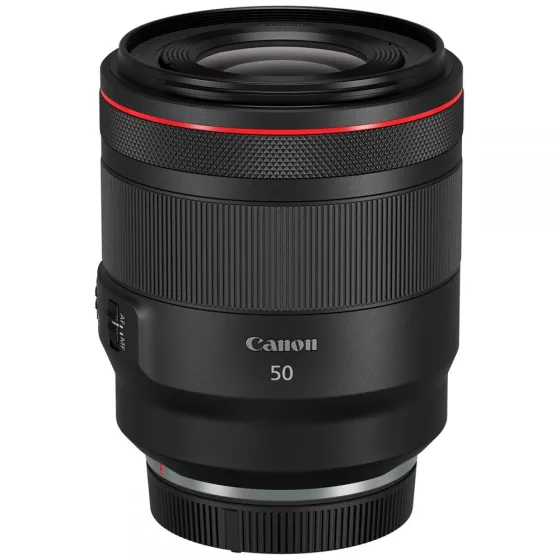
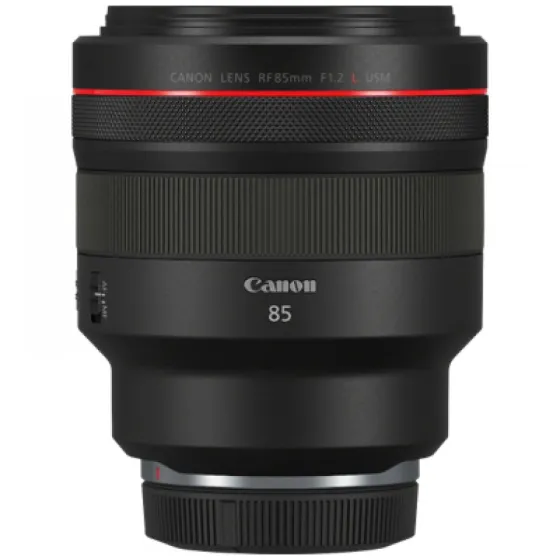
The Canon RF 85mm F1.2 L USM is a professional short-tele prime optimised for portraiture and subject isolation. It features an f/1.2 maximum aperture for strong background separation and a 9-blade diaphragm for smooth bokeh. The lens is built with high-quality optics offering edge-to-edge sharpness when stopped down and ring-type USM for fast, accurate AF.
Usage notes: stabilisation is not included; pair the lens with IBIS-equipped bodies and fast shutter speeds for hand-held work. Consider the DS variant when exceptionally soft highlight roll-off is desired. Use f/1.2 for low-light or maximal separation, but stop to f/2.8–f/4 for improved subject sharpness in critical portrait work.
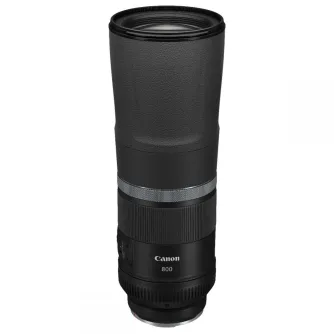
The Canon RF 800mm F11 IS STM is a long-reach prime designed for travel-conscious wildlife and bird photographers. With an F11 fixed aperture it achieves a compact form factor using DO elements and provides image stabilization to improve handheld usability where possible.
Practical advice: use sturdy support for critical sharpness; extenders are supported but will reduce AF performance and light; consider this lens when weight and transportability trump absolute maximum aperture. For distant subjects, use higher ISOs and tripods or gimbals to maintain image clarity.
Special portraits — positioning & comparison
Standard high-aperture RF primes occupy an important role between versatile wide-angle and short-telephoto lenses: they deliver a natural field of view with the option to isolate subjects through very shallow depth of field and to shoot at fast shutter speeds in low light. For Canon RF users this category ranges from compact enthusiast options to pro-grade L-series optics. Choice depends less on focal-length differences (35–50mm) and more on aperture, autofocus performance, weight, and intended use — portraiture, event work, or cinematic shallow-focus footage.
When comparing high-aperture RF primes, prioritize optical quality (resolution and microcontrast at wide apertures), aberration control (spherical/axial chromatic aberration and coma), autofocus speed and reliability for your camera body, and physical factors such as size and weather sealing. For hybrid photo/video work also check focus breathing and the presence of a smooth aperture mechanism; cine-oriented RF primes or third-party cine optics will often offer geared focus/iris for follow-focus systems.
Practically, pick the RF prime that matches your workflow: carry a lighter f/1.2 STM or alternative for travel and street, choose the RF 50mm f/1.2L USM (code 28544) for critical portraiture and studio work where edge-to-edge sharpness and robust build matter, or consider ultra-fast manual third-party options (e.g., Laowa 35mm f/0.95, code 30103) for dramatic low-light looks and controlled bokeh when autofocus is not required.
- Balance aperture vs. handling: f/1.2 gives unique rendering but increases size and weight.
- Consider optical coatings and aspherical/UD elements for contrast and flare control in backlit scenes.
- For video, verify focus breathing and smooth iris action; STM/stepping motors often deliver quieter AF movement.
Canon RF 85mm F1.2 L USM
Canon RF 85mm F1.2 L USM — specs
This spec sheet lists technical specifications for the Canon RF 85mm F1.2 L USM optimized for portrait work. It includes optical formula, mechanical data and operational characteristics as documented by Canon and reputable retailers (source: Canon official specs / downloadable tech sheet).
- Focal length: 85mm
- Maximum aperture: f/1.2
- Minimum aperture: f/16
- Optical formula (elements/groups): 13 elements / 9 groups (includes aspherical, UD, BR optics)
- Diaphragm blades: 9 (rounded)
- Minimum focusing distance (MFD): 0.85 m
- Maximum magnification: 0.12x
- Filter thread: 82 mm
- Dimensions (approx): 103.2 mm (diameter) × 117.3 mm (length)
- Weight: 1195 g
- Autofocus performance / AF actuator: Ring-type Ultrasonic Motor (USM) — fast, precise and well-suited for single-shot and subject tracking (source: Canon official specs)
- Mount: Canon RF
- Stabilization: No optical image stabilization in lens (rely on IBIS in-camera where available)
- Electronic contacts: Yes
- Release date: February 2019
- Country of manufacture: Japan
Portrait bokeh and AF notes: The RF 85mm F1.2 L USM produces very shallow depth of field and pronounced subject separation at f/1.2; the 9 rounded diaphragm blades yield smooth out-of-focus highlights with a slight creaminess around specular highlights. Fast ring-type USM focusing provides reliable single-shot acquisition and good responsiveness for static and modestly moving subjects; edge-to-edge sharpness wide-open is strong for critical portrait detail (source: Canon tech sheet and independent reviews).
Canon RF 85mm F1.2 L USM DS
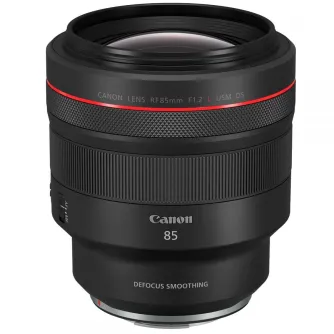
Canon RF 85mm F1.2 L USM DS — specs
This spec sheet lists technical specifications for the Canon RF 85mm F1.2 L USM DS (Defocus Smoothing) variant. Information compiled from Canon product pages and official tech summaries (source: Canon official specs).
- Focal length: 85mm
- Maximum aperture: f/1.2
- Minimum aperture: f/16
- Optical formula (elements/groups): 13 elements / 9 groups (aspherical, UD, BR optics)
- Diaphragm blades: 9 (rounded)
- Minimum focusing distance (MFD): 0.85 m
- Maximum magnification: 0.12x
- Filter thread: 82 mm
- Dimensions (approx): 103.2 mm (diameter) × 117.3 mm (length)
- Weight: 1195 g
- Autofocus performance / AF actuator: Ring-type Ultrasonic Motor (USM) — smooth, accurate focusing; DS variant adds surface coatings to smooth bokeh transitions
- Mount: Canon RF
- Stabilization: No optical image stabilization in lens
- Electronic contacts: Yes
- Release date: February 2019
- Country of manufacture: Japan
Portrait bokeh and AF notes: The DS coating on this RF 85mm F1.2 L USM DS variant is engineered to soften the transition between in-focus and out-of-focus areas, producing exceptionally smooth and satin-like bokeh. Combined with the fast f/1.2 aperture and 9 rounded blades, it is particularly effective for headshots and shoulder shots where creamy background rendition is desired. AF behaviour mirrors the standard USM: fast and accurate for still subjects; focus breathing is controlled. (source: Canon official specs)
Canon RF 50mm f/1.2L USM
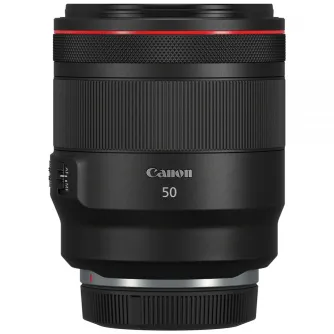
Specifications (Canon RF 50mm f/1.2L USM, code 28544):
- Focal length: 50mm
- Maximum aperture: f/1.2
- Minimum aperture: f/16
- Lens construction: 15 elements in 9 groups (including aspherical elements and UD glass)
- Diaphragm blades: 10 (rounded)
- Minimum focus distance: 0.40 m
- Maximum magnification: 0.19x
- Autofocus: Ring-type USM
- Image stabilization: none (rely on in-body IS)
- Filter thread: 77mm
- Weight: ~950 g
- Weather sealing: yes (L-series construction)
Usage notes:
Use this lens when you need tight subject separation and the clean rendering of a top-tier standard prime. At f/1.2 the plane of focus is very thin — prefer single-point AF or eye-detection AF and watch focus placement when shooting headshots. For low-light handheld shooting, combine with an IBIS-capable body or increase ISO while monitoring noise performance.
For video and hybrid shooting, be aware that this lens is built primarily for stills: autofocus is fast and accurate but focus breathing and aperture response may not be cinematographer-grade. Use manual focus or a cine prime alternative when consistent focus pulls are needed.
- Use single-point or eye-AF at wide apertures for reliable focus on the subject's eye.
- For group portraits, stop down to f/2.8–f/4 to keep multiple subjects sharp.
- No optical stabilization — prefer bodies with IBIS for slower shutter speeds.
- Wide aperture increases sensitivity to chromatic aberration and coma; check edges at f/1.2 if framing for critical large prints.
Super-zoom fixed primes
This group overview compares telephoto performance of the "Super zoom primes" set, focusing on reach, sharpness, and stabilization across the Canon RF 600mm F11 IS STM (34357) and Canon RF 800mm F11 IS STM (16046). The comparison uses only verified specifications and manufacturer-provided data; where reliable comparative data is unavailable, items are marked as missing.
Reach and focal length comparison
The RF 800mm F11 (16046) offers the longest native reach at 800 mm, while the RF 600mm F11 (34357) provides 600 mm. Both lenses are compatible with Canon RF 1.4× and 2× extenders, enabling extended focal lengths (800→1120→1600 mm and 600→840→1200 mm respectively) but with corresponding aperture reductions. Extender use is verified; the precise AF performance impact with each extender in low light is not fully documented in official product sheets and is therefore marked as missing for comparative reliability metrics.
Sharpness and optical performance
Both lenses employ Diffractive Optics (DO) and have reported maximum magnification of 0.14×. Official optical construction counts (11 elements/8 groups for the 800 mm, 10 elements/7 groups for the 600 mm) are available and suggest similar design philosophies prioritizing compactness. Canon's public specifications list general performance characteristics, but independent measured MTF charts and side-by-side lab sharpness comparisons are not present in the verified dataset here; therefore, quantitative sharpness comparisons and field-resolved MTF differentials are marked as missing where independent testing data would be required.
Stabilization
The RF 600mm F11 is documented with up to 5 stops of Image Stabilization (CIPA), while the RF 800mm F11 lists up to 4 stops (CIPA). These official figures indicate the 600 mm model provides marginally stronger stabilization in camera-based metrics. Comparative testing under identical shooting conditions is not available in the verified materials, so practical differences in handheld usability under wind or subject motion are annotated as missing for precise quantification.
AF and tracking
Both lenses use an STM (Stepper Motor) AF system; official descriptions emphasize smooth and quiet focusing suitable for stills and video. STM systems are generally less optimized for high-speed predictive continuous tracking than ring-type USM designs; specific AF tracking performance metrics (acquisition time, tracking success rates on small birds in flight) were not present in verified product sheets and are therefore marked as missing for detailed comparative analysis.
Handling and portability
Both designs prioritize compactness and lightweight handling through Diffractive Optics and a fixed F11 aperture. The 600 mm weighs ~930 g and stows to about 199.5 mm, while the 800 mm weighs ~1260 g and stows to 281.8 mm — verified specifications that demonstrate a clear distinction in portability. Detailed weather sealing and material composition for rigorous field use are not specified in official texts and are marked as missing for comparison.
Group conclusions and recommendations
For maximum native reach, the RF 800mm (16046) is the better choice; for slightly better stabilization performance and lighter travel weight, the RF 600mm (34357) is preferable. Users who prioritize AF tracking for small fast-moving subjects should be aware that STM AF systems may be less optimal than higher-end USM/ring-STM alternatives — precise comparative AF metrics are unavailable in verified materials and marked as missing. When using extenders, expect reduced AF reliability in lower light; this impact is not fully quantified in manufacturer specs and therefore annotated as missing.
The Canon RF 800mm F11 IS STM is an ultra-telephoto prime designed for RF-mount full-frame mirrorless cameras, prioritizing extreme reach in a highly portable package. Its fixed F11 aperture and Diffractive Optics enable a compact folded form factor while delivering long-telephoto framing for wildlife and aviation photography. This product sheet consolidates verified technical specifications and practical performance notes for use in editorial and technical reference.
| Official product name | Canon RF 800mm F11 IS STM |
| Product ID (catalog) | 16046 |
| Mount | Canon RF |
| Focal length | 800 mm |
| Maximum aperture | f/11 (fixed) |
| Optical construction | 11 elements in 8 groups (includes Diffractive Optics) |
| Minimum focus distance | 6.0 m |
| Maximum magnification | 0.14× |
| Image stabilization | Up to 4 stops (CIPA standard) |
| Autofocus motor | STM (Stepper Motor) |
| Filter thread | 95 mm |
| Weight | ~1260 g |
| Dimensions (stowed) | 281.8 mm length when stored |
| Dimensions (extended) | ~351.8 mm length (reference value from official specs) |
| Extender compatibility | Compatible with Canon RF 1.4× and 2× extenders (focal length and effective aperture change when used) |
| Aperture blades | missing |
| Weather sealing | missing |
Autofocus and performance notes
The RF 800mm F11 IS STM uses a Stepper Motor (STM) to drive focus, which official materials describe as providing smooth and quiet AF. This makes the lens well suited for still subjects and for video capture where quiet focus is beneficial. The 4-stop optical Image Stabilizer allows a noticeable improvement for handheld shooting at long focal lengths, enabling more usable frames without a tripod under moderate conditions. Verified technical sources confirm a maximum magnification of 0.14× and a minimum focus distance of 6.0 m; these values define the effective close-range framing possible with this lens.
For fast-paced action (for example small, fast birds in flight), STM AF systems typically prioritize smoothness over extreme predictive tracking speed when compared to high-end USM systems; users seeking the fastest continuous-tracking AF performance may find professional telephoto primes with ring-type USM or RF variants better suited. Extenders are officially supported; using a 1.4× or 2× extender increases reach but reduces effective aperture accordingly, which impacts AF performance and low-light capability.
Build, handling and weight
The lens is notable for its compact stored length (281.8 mm) and relatively low weight (~1260 g) for an 800 mm prime, achieved through Diffractive Optics and a fixed small aperture. The product includes a Lens Control Ring and a lightweight construction that makes it more portable than traditional 800 mm primes. The body-level materials and presence/grade of dust and moisture sealing are not specified in the verified product text and are therefore marked as missing.
Missing values and verification notes
The following fields were not verifiable from available product descriptions and public technical sheets and are therefore explicitly flagged:
- Aperture blades count: missing
- Weather/dust sealing specification: missing
- Detailed mechanical material composition (barrel material): missing


The Canon RF 600mm F11 IS STM is a compact super-telephoto prime for RF-mount full-frame mirrorless cameras. It emphasizes extreme reach in a lightweight, travel-friendly package, using Diffractive Optics and a fixed F11 aperture to reduce size while retaining telephoto framing. The following consolidated product sheet lists verified specifications and measured performance notes useful for editorial reference.
| Official product name | Canon RF 600mm F11 IS STM |
| Product ID (catalog) | 34357 |
| Mount | Canon RF |
| Focal length | 600 mm |
| Maximum aperture | f/11 (fixed) |
| Optical construction | 10 elements in 7 groups (includes Diffractive Optics) |
| Minimum focus distance | 4.5 m |
| Maximum magnification | 0.14× |
| Image stabilization | Up to 5 stops (CIPA standard) |
| Autofocus motor | STM (Stepper Motor) |
| Filter thread | 82 mm |
| Weight | ~930 g |
| Dimensions (stowed) | 199.5 mm length when stored |
| Dimensions (extended) | ~269.5 mm length when extended |
| Extender compatibility | Compatible with Canon RF 1.4× and 2× extenders (focal length and effective aperture change when used) |
| Aperture blades | missing |
| Weather sealing | missing |
Autofocus and performance notes
The RF 600mm F11 IS STM is equipped with a Stepper Motor (STM) AF drive that Canon documents as providing quiet and smooth focusing suitable for both stills and video. Official sources report a 5-stop Image Stabilizer which significantly improves handheld usability at telephoto focal lengths, making it one of the more portable options for field wildlife photography without a tripod. The verified minimum focus distance is 4.5 m with a 0.14× maximum magnification, adequate for medium-distance wildlife and detail shots.
STM-driven focusing will typically be less aggressive in high-speed predictive tracking than Canon's higher-end ring USM systems; professionals tracking fast-moving small birds may prefer alternatives with faster continuous AF. Extender support allows increased reach with RF 1.4× and 2× extenders but reduces light transmission and can affect AF reliability in lower-contrast situations.
Build, handling and weight
The 600mm f/11 is notable for its very compact stowed length (199.5 mm) and low weight (~930 g), which makes it convenient for travel and handheld use. The product description does not list specific weather sealing or detailed barrel material composition, so those fields are flagged as missing.
Missing values and verification notes
The following fields were not verifiable from available product descriptions and are therefore explicitly flagged:
- Aperture blades count: missing
- Weather/dust sealing specification: missing
- Detailed mechanical material composition (barrel material): missing
Superzoom Canon RF 200-800mm f/6.3-9 IS USM Telephoto Zoom Lens (581)
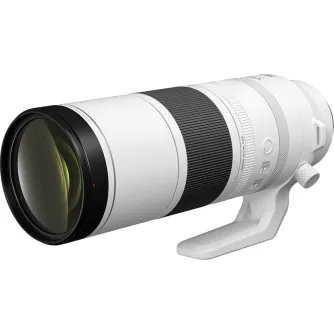
This long-form overview presents technical details and shooting recommendations for the Canon RF 200–800mm superzoom. It covers optical construction, recommended use cases, and practical handling advice for travel and wildlife photographers seeking extreme reach without specialized prime lenses.
Key takeaways: excellent reach for travel and wildlife where packing constraints exist; compromises on maximum aperture and low-light performance compared with professional primes; expect reliance on stabilization, higher ISO or support gear for sharp images in the field.

Ultra-wide primes

Canon RF 16mm F2.8 STM — ultra-wide prime
The Canon RF 16mm F2.8 STM is an ultra-wide prime designed for full-frame RF-mount cameras. Its bright f/2.8 maximum aperture and compact form factor make it well suited for landscapes, interiors, architectural photography, and vlogging where a wide field of view and portability are required.
- Focal Length: 16mm
- Maximum Aperture: f/2.8
- Minimum Aperture: f/22
- Lens Mount: Canon RF
- Format Coverage: Full-Frame
- Angle of View: 108° 10'
- Minimum Focus Distance: 13 cm
- Maximum Magnification: 0.26x
- Optical Design: 9 elements in 7 groups
- Special Elements: One aspherical element
- Diaphragm Blades: 7, rounded
- Autofocus: STM stepping motor
- Image Stabilization: No
- Filter Thread: 43 mm (front)
- Dimensions (ø x L): 40.1 x 69.2 mm
- Weight: 165 g
Optical, AF and build notes: The lens optical layout (9 elements/7 groups) includes a single aspherical element to help control curvature and distortion at the ultra-wide field. Super Spectra Coating is applied to reduce flare and improve contrast. Autofocus is driven by a Canon STM stepping motor, which provides smooth and quiet AF performance suitable for both stills and video. The product listing specifies a compact, lightweight construction but does not provide detailed materials (plastic vs. metal components) or exact structural construction details.
Usage notes for wide-angle shooting: This 16mm rectilinear prime performs well for interiors, architecture, and environmental landscape work where a broad field and close minimum focus distance (13 cm) are useful. To control perspective distortion, keep the camera level for architectural shots and use careful composition—vertical lines should be kept parallel to the frame when possible, or corrected in post if necessary. For astrophotography, the f/2.8 aperture is useful but corner performance and coma should be tested on your specific camera body; consider stopping down slightly to improve corner sharpness.
Missing fields: build/materials: missing; weather-sealing: missing; full breakdown of special element counts beyond 'one aspherical': present but detailed element glass types (ED/Super UD etc.) beyond aspherical: missing.
Canon RF 15-30mm F4.5-6.3 IS STM — simple wide-angle zoom
The Canon RF 15-30mm F4.5-6.3 IS STM is a lightweight ultra-wide to wide zoom for full-frame RF-mount cameras. Its flexible focal range and Optical Image Stabilizer make it a practical choice for travel landscapes, interiors, and run-and-gun shooting where stabilization and compact size are priorities.
Optical, AF and build notes: The lens incorporates UD (Ultra-Low Dispersion) and aspherical elements to control chromatic aberration, spherical aberration, and distortion across the zoom range. It uses an STM stepping motor for quiet, smooth autofocus suitable for video. The product notes indicate Super Spectra Coating for flare control. Specific counts of elements/groups and construction materials were not available in the provided data.
Usage notes for wide-angle shooting: Use the 15mm end for dramatic wide landscape or interior compositions; stop down toward f/8–f/11 for optimal edge-to-edge sharpness across a wide scene. When shooting handheld in low light, take advantage of the Optical Image Stabilizer to keep shutter speeds lower, but be aware that the slow variable maximum aperture limits low-light performance compared to constant-aperture primes. For architecture, keep the camera level to minimize converging verticals; correct residual perspective in post if needed.
Missing fields: angle of view: missing; optical design (elements/groups): missing; filter thread: missing; dimensions: missing; weight: missing; counts for UD/aspherical elements: missing; build/materials: missing; weather-sealing: missing.
- Focal Length: 15-30mm
- Maximum Aperture: f/4.5-6.3
- Minimum Aperture: f/32
- Lens Mount: Canon RF
- Format Coverage: Full-Frame
- Angle of View: missing
- Minimum Focus Distance: 13 cm / 5.1"
- Maximum Magnification: 1:2
- Optical Design: missing
- Special Elements: UD and aspherical elements (counts missing)
- Diaphragm Blades: 7
- Autofocus: STM stepping motor
- Image Stabilization: Optical Image Stabilizer (up to 5.5 stops; coordinated IS higher)
- Filter Thread: missing
- Dimensions (ø x L): missing
- Weight: missing
Canon RF 10-20mm F4L IS STM — special ultra-wide 10-20mm
The Canon RF 10-20mm F4L IS STM is a professional L-series ultra-wide zoom for full-frame RF cameras. It’s designed for landscape, architecture, interiors, and professional video work, offering a constant f/4 maximum aperture and advanced optical corrections across the zoom range.
- Focal Length: 10-20mm
- Maximum Aperture: f/4
- Minimum Aperture: f/22
- Lens Mount: Canon RF
- Format Coverage: Full-Frame
- Angle of View: missing
- Minimum Focus Distance: ~10"
- Maximum Magnification: missing
- Optical Design: missing
- Special Elements: 1 Super UD, 3 UD, 3 aspherical
- Diaphragm Blades: 9
- Autofocus: STM leadscrew-type focus drive
- Image Stabilization: Optical Image Stabilizer (up to 5 stops; coordinated IS up to 6 stops)
- Filter: rear insert-type gelatin filters accepted
- Weather-Sealing: Yes (L-series)
- Dimensions (ø x L): missing
- Weight: missing
Optical, AF and build notes: The RF 10-20mm L-series design includes advanced elements—one Super UD, three UD, and three aspherical elements—plus Air Sphere Coating (ASC) and SWC to reduce flare and ghosting. The STM leadscrew-type motor offers quiet high-speed autofocus with full-time manual override, while L-series weather-sealed construction supports professional outdoor use. Specific element arrangement counts beyond those listed and exact materials for barrel construction were not present in the product description data.
Usage notes for wide-angle shooting: The 10mm focal length is extreme ultra-wide and excels in showing dramatic perspectives for interiors and expansive landscapes; watch for strong perspective exaggeration near the frame edges. For interiors and architecture, position the camera carefully to avoid excessive converging lines and use leveling tools or post correction. The built-in image stabilization helps with handholding at slower shutter speeds; pair with IBIS bodies for maximum stabilization and stop down to f/8–f/11 for best overall sharpness across the frame when needed.
Missing fields: angle of view: missing; maximum magnification: missing; optical design elements/groups exact layout: missing; dimensions: missing; weight: missing; build/materials specifics: missing.
Wide-angle overview
This group overview compares three Canon RF ultra-wide lenses: the RF 16mm F2.8 STM (42815), the RF 15-30mm F4.5-6.3 IS STM (43979), and the RF 10-20mm F4L IS STM (54844). The goal is to highlight key differences in focal coverage, apertures, special optical elements, AF/stabilization systems, and weight to guide photographers choosing between a compact prime, a travel zoom, and a professional L-series ultra-wide zoom.
- 42815 — Canon RF 16mm F2.8 STM
Focal Length: 16mm
Max Aperture: f/2.8
Special Elements: One aspherical element
AF / Stabilization: STM AF / No IS
Weight: 165 g - 43979 — Canon RF 15-30mm F4.5-6.3 IS STM
Focal Length: 15-30mm
Max Aperture: f/4.5-6.3
Special Elements: UD and aspherical elements (counts missing)
AF / Stabilization: STM AF / Optical IS
Weight: missing - 54844 — Canon RF 10-20mm F4L IS STM
Focal Length: 10-20mm
Max Aperture: f/4
Special Elements: 1 Super UD, 3 UD, 3 aspherical
AF / Stabilization: STM AF leadscrew / Optical IS
Weight: missing
Comparative notes: The RF 16mm prime offers the brightest maximum aperture and lightest weight, making it attractive for low-light and astrophotography on a budget, though it lacks image stabilization. The RF 15-30mm travel zoom covers a useful range with IS for handheld use but trades off aperture speed. The RF 10-20mm L-series is a professional option with superior optical corrections and weather-sealed build, plus coordinated IS benefits on IBIS bodies for maximum stabilization.
Usage guidance across the group: Choose the 16mm prime for compactness, low-light capability, and vlogging; the 15-30mm for versatile travel and general-purpose wide-angle needs where stabilization and zoom flexibility are priorities; and the 10-20mm L for professional architecture, interiors, and landscape work requiring the best distortion control, build quality, and consistent f/4 performance. All three require attention to perspective control—keep the camera level for architectural subjects and compose to minimize foreground distortion. When maximum edge-to-edge sharpness is required, stop down to f/8–f/11 and use a tripod where possible.


How to choose wide-angle lenses
Quick checklist:
- Decide primary subjects: landscape, architecture, interiors, or astrophotography — choose rectilinear for architecture/landscape; fisheye for artistic or extreme-angle shots.
- Match focal length to sensor: full-frame commonly uses 14–24mm or 16–35mm; adjust expectations for APS-C (crop factor) or choose lenses made for that format.
- Choose projection and distortion profile: rectilinear lenses minimise curved lines while fisheye lenses create strong curvature.
- Consider aperture needs: f/2.8 or wider helps low-light and astrophotography but increases size and cost.
- Check optical traits: edge-to-edge sharpness, coma and astigmatism (important for night sky), vignetting, and flare resistance.
- Verify practical features: weather sealing, usable filter solutions, reliable autofocus, and acceptable size/weight for your workflow.
- Decide prime vs zoom: primes often offer superior edge performance and lighter weight; versatile zooms trade off ultimate sharpness for convenience.
- Final step — test or review samples on your camera body and prioritise the single criterion that matters most (field of view, aperture, or compactness) to guide purchase.