No products
 Facebook
 Google

RØDE podcast microphones — overview
This overview compares four RØDE microphones commonly used for podcasting, streaming and home-studio production. Each model balances sound character, connection options and on-board processing differently, so choosing between them depends on workflow (XLR vs USB), room acoustic control, and whether you need built-in DSP or a traditional broadcast chain.
Rode microphone PodMic dynamic broadcast livestreaming XLR (code 39498)
A robust broadcast dynamic mic designed for speech. The PodMic emphasizes a warm, controlled midrange, internal pop filter and internal shock mounting. Best paired with an audio interface or mixer and suitable for treated booths or console-based podcast studios.
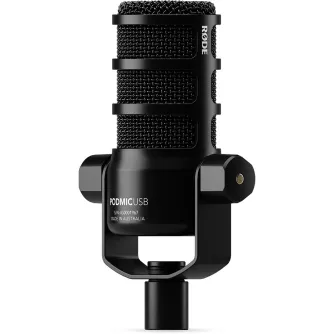
Rode microphone PodMicUSB PodMic USB Type-C + XLR (code 52416)
Same dynamic capsule as the PodMic but with both XLR and USB-C outputs. Includes RØDE’s Revolution Preamp and APHEX DSP on the USB path plus zero-latency headphone monitoring. Ideal when you want broadcast microphone character with the option to plug direct to a computer or to a console.
Rode NT-USB+ USB studio-grade condenser microphone ultra-low-noise, high-gain (code 43913)
A studio-grade condenser with a tight cardioid pattern, ultra-low-noise Revolution Preamp and APHEX processing via RØDE software. Suited for vocals, music and spoken word where higher sensitivity and greater detail are required. USB-C connectivity and software integration simplify multitrack recording and remote production.
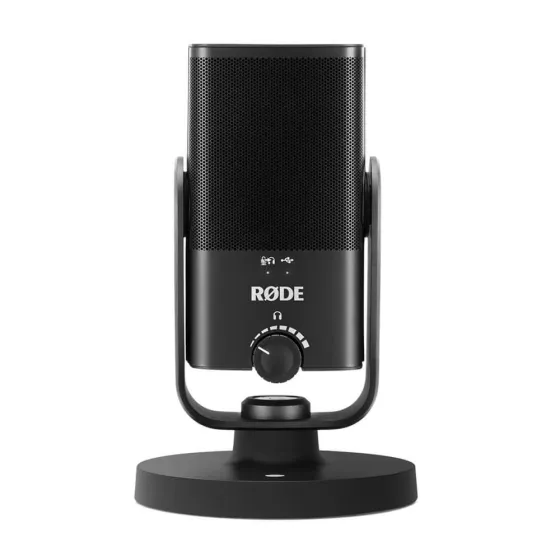
Rode RØDE NT-USB MINI compact studio USB microphone (code 54697)
Compact condenser mic with integrated DSP features, magnetic desk stand and class-compliant USB output. It focuses on ease of use and desktop ergonomics for streamers, remote podcasters and creators who need good sound without an external interface.
Comparison: dynamic vs condenser
Dynamics (PodMic, PodMicUSB) are less sensitive to room noise, tolerate loud sources and favour close-mic speech warmth; condensers (NT-USB+, NT-USB Mini) capture more detail and brightness but require quieter rooms and benefit from pop filtering and mild room treatment.
Comparison: XLR vs USB workflows
XLR workflows (PodMic on XLR) integrate with mixers, outboard processing and higher-fidelity converters—preferred in multi-mic studios. USB workflows (PodMicUSB on USB, NT-USB+, NT-USB Mini) offer plug-and-play convenience, on-board DSP and direct APHEX processing, ideal for solo creators and mobile setups. PodMicUSB bridges both approaches when flexibility is needed.
Practical positioning
Choose PodMic (code 39498) if you run a console/interface-based studio and want a traditional broadcast chain. Choose PodMicUSB (code 52416) if you need broadcast sound with plug-and-play USB and optional XLR. Pick NT-USB+ (code 43913) for studio-quality vocals and music capture with software DSP, and NT-USB Mini (code 54697) for compact desktop setups where space and simplicity matter.
PodMic family — comparison
- PodMic USB (code 52416): USB-C digital output for direct computer/mobile connection; also retains analog XLR output for hybrid setups. Ideal for solo podcasters, streamers, and mobile creators who value simplicity and onboard DSP.
- PodMic XLR (code 39498): Analog XLR-only workflow relying on external preamps or mixers. Preferred in multi-mic podcast studios, broadcast booths, and environments where hardware control and routing flexibility are required.
- Home podcasters, streamers, and creators who need fast setup, low-latency monitoring, and built-in processing—PodMic USB (code 52416) delivers an all-in-one experience that reduces the need for additional gear.
- Professional studios, radio, multi-guest podcast formats, and users who already have audio interfaces or mixers—the PodMic XLR (code 39498) offers dedicated analog performance and integrates into larger signal chains.
- Both units: broadcast-quality dynamic capsule, internal pop filter, internal shock mounting, rugged metal construction tuned for speech.
- PodMic USB (code 52416) specific: USB-C connectivity, 24-bit/48 kHz digital output, APHEX DSP, ultra-low-noise Revolution preamp, built-in headphone output with level control, and compatibility with RØDE software tools.
- 39498 | Rode microphone PodMic dynamic broadcast livestreaming XLR — microphone; user documentation (standard PodMic XLR package typically ships without external USB cable or WS14 pop filter).
- 52416 | Rode microphone PodMicUSB PodMic USB Type-C + XLR — PodMic USB; SC29 USB-C cable (3 m); WS14 external pop filter included.
For creators seeking a simple, versatile recording path with onboard DSP and direct computer compatibility, the PodMic USB (code 52416) is the more complete, plug-and-play choice. For setups that prioritize analog signal routing, multi-microphone flexibility, and integration with professional consoles or the RØDECaster Pro, the PodMic XLR (code 39498) remains the preferred option. Match the PodMic variant to your existing workflow: USB for mobile/single-operator convenience, XLR for studio-grade routing and multi-channel control.


Rode NT-USB+ USB studio-grade condenser microphone ultra-low-noise, high-gain

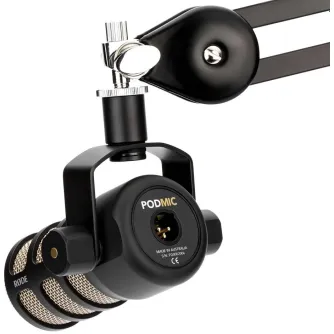
PodMic vs PodMic USB — comparison
- PodMic USB (code 52416): USB-C digital output for direct computer/mobile connection; also retains analog XLR output for hybrid setups. Ideal for solo podcasters, streamers, and mobile creators who value simplicity and onboard DSP.
- PodMic XLR (code 39498): Analog XLR-only workflow relying on external preamps or mixers. Preferred in multi-mic podcast studios, broadcast booths, and environments where hardware control and routing flexibility are required.
- Home podcasters, streamers, and creators who need fast setup, low-latency monitoring, and built-in processing—PodMic USB (code 52416) delivers an all-in-one experience that reduces the need for additional gear.
- Professional studios, radio, multi-guest podcast formats, and users who already have audio interfaces or mixers—the PodMic XLR (code 39498) offers dedicated analog performance and integrates into larger signal chains.
- Both units: broadcast-quality dynamic capsule, internal pop filter, internal shock mounting, rugged metal construction tuned for speech.
- PodMic USB (code 52416) specific: USB-C connectivity, 24-bit/48 kHz digital output, APHEX DSP, ultra-low-noise Revolution preamp, built-in headphone output with level control, and compatibility with RØDE software tools.
- 39498 | Rode microphone PodMic dynamic broadcast livestreaming XLR — microphone; user documentation (standard PodMic XLR package typically ships without external USB cable or WS14 pop filter).
- 52416 | Rode microphone PodMicUSB PodMic USB Type-C + XLR — PodMic USB; SC29 USB-C cable (3 m); WS14 external pop filter included.
For creators seeking a simple, versatile recording path with onboard DSP and direct computer compatibility, the PodMic USB (code 52416) is the more complete, plug-and-play choice. For setups that prioritize analog signal routing, multi-microphone flexibility, and integration with professional consoles or the RØDECaster Pro, the PodMic XLR (code 39498) remains the preferred option. Match the PodMic variant to your existing workflow: USB for mobile/single-operator convenience, XLR for studio-grade routing and multi-channel control.
PodMic USB vs PodMic XLR
This overview compares four RØDE microphones commonly used for podcasting, streaming and home-studio production. Each model balances sound character, connection options and on-board processing differently, so choosing between them depends on workflow (XLR vs USB), room acoustic control, and whether you need built-in DSP or a traditional broadcast chain.
Rode microphone PodMic dynamic broadcast livestreaming XLR (code 39498)
A robust broadcast dynamic mic designed for speech. The PodMic emphasizes a warm, controlled midrange, internal pop filter and internal shock mounting. Best paired with an audio interface or mixer and suitable for treated booths or console-based podcast studios.
Rode microphone PodMicUSB PodMic USB Type-C + XLR (code 52416)
Same dynamic capsule as the PodMic but with both XLR and USB-C outputs. Includes RØDE’s Revolution Preamp and APHEX DSP on the USB path plus zero-latency headphone monitoring. Ideal when you want broadcast microphone character with the option to plug direct to a computer or to a console.
Rode NT-USB+ USB studio-grade condenser microphone ultra-low-noise, high-gain (code 43913)
A studio-grade condenser with a tight cardioid pattern, ultra-low-noise Revolution Preamp and APHEX processing via RØDE software. Suited for vocals, music and spoken word where higher sensitivity and greater detail are required. USB-C connectivity and software integration simplify multitrack recording and remote production.
Rode RØDE NT-USB MINI compact studio USB microphone (code 54697)
Compact condenser mic with integrated DSP features, magnetic desk stand and class-compliant USB output. It focuses on ease of use and desktop ergonomics for streamers, remote podcasters and creators who need good sound without an external interface.
Comparison: dynamic vs condenser
Dynamics (PodMic, PodMicUSB) are less sensitive to room noise, tolerate loud sources and favour close-mic speech warmth; condensers (NT-USB+, NT-USB Mini) capture more detail and brightness but require quieter rooms and benefit from pop filtering and mild room treatment.
Comparison: XLR vs USB workflows
XLR workflows (PodMic on XLR) integrate with mixers, outboard processing and higher-fidelity converters—preferred in multi-mic studios. USB workflows (PodMicUSB on USB, NT-USB+, NT-USB Mini) offer plug-and-play convenience, on-board DSP and direct APHEX processing, ideal for solo creators and mobile setups. PodMicUSB bridges both approaches when flexibility is needed.
Practical positioning
Choose PodMic (code 39498) if you run a console/interface-based studio and want a traditional broadcast chain. Choose PodMicUSB (code 52416) if you need broadcast sound with plug-and-play USB and optional XLR. Pick NT-USB+ (code 43913) for studio-quality vocals and music capture with software DSP, and NT-USB Mini (code 54697) for compact desktop setups where space and simplicity matter.
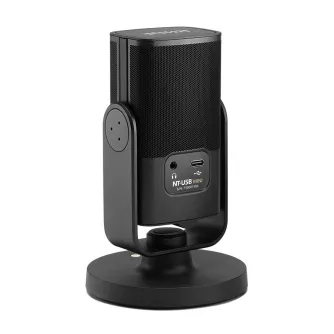
NT-USB+ vs NT-USB Mini — comparison
The following comparison focuses on two RØDE USB podcast microphones with different target users and feature sets: Rode NT-USB+ USB studio-grade condenser microphone ultra-low-noise, high-gain (code 43913) and Rode RØDE NT-USB MINI compact studio USB microphone (code 54697). This overview highlights sound profile, recording workflow, onboard DSP/features, form factor, practical use cases and positioning to help choose the right mic for desktop podcasting, streaming, and content creation.
Sound profile: The NT-USB+ (code 43913) is engineered around a studio-grade condenser capsule paired with an ultra-low-noise, high-gain Revolution Preamp™; it yields a clean, detailed capture with extended headroom suitable for singers, podcasters and near-field instrument recording. The NT-USB Mini (code 54697) emphasizes warmth and presence, tuned to deliver clear dialogue and vocal intelligibility out of the box; its cardioid pattern and inherent tonal shaping make it particularly forgiving in untreated rooms.
Recording workflow and monitoring: Both microphones are class-compliant USB devices that plug directly into computers and tablets. The NT-USB+ upgrades the workflow with USB-C connectivity, a high-resolution AD converter and a higher-power headphone output for serious monitoring at low latency. The NT-USB Mini is a compact plug-and-play option with a built-in pop filter, precision headphone amplifier and a 3.5mm zero-latency monitoring output that keeps setup fast and simple.
Onboard DSP and software features: The NT-USB+ exposes APHEX® audio processing and deeper preamp control when paired with RØDE software such as RØDE Connect and RØDE Central, enabling vocal processing, EQ and channel management for multi-host setups. The NT-USB Mini provides integrated digital signal processing—noise gate, compressor, APHEX Aural Exciter and Big Bottom—accessible via RØDE’s software, offering instant tonal enhancement and dynamics control aimed at single-operator streamers and podcasters.
Form factor and accessories: The NT-USB+ comes with a detachable pop filter and desktop stand and is built for more substantial desktop studios or fixed setups. The NT-USB Mini is notably smaller (approx. 89mm x 141mm), uses a detachable magnetic desk stand and a 360-degree swing mount for flexible placement on arms or desktop stands—ideal for tight spaces.
Use cases and practical positioning: Choose the NT-USB+ (code 43913) if you prioritize maximum headroom, lower self-noise and integration into multi-channel or semi-professional recording workflows where control over preamp and APHEX processing matters. Opt for the NT-USB Mini (code 54697) if you need a compact, easy-to-position microphone that delivers warm, broadcast-ready vocals with quick software DSP tweaks and minimal setup time.
Practical advice: For untreated rooms, the NT-USB Mini’s tonal shaping and compact cardioid design often produces more consistently good-sounding speech with minimal acoustic treatment. If you record louder sources or want finer control for music or multi-host podcasting, the NT-USB+’s higher-gain preamp and superior monitoring output will reduce the need for additional external gear. In multi-person remote podcasting, pair the NT-USB+ with RØDE Connect to manage levels and APHEX processing across channels; for single-host streams, use the NT-USB Mini’s onboard DSP as a fast path to polished audio.
Conclusion: Both microphones bring RØDE’s studio heritage to USB workflows but address different priorities—NT-USB+ (code 43913) leans toward studio-grade performance and deeper control for semi-professional setups, while NT-USB Mini (code 54697) focuses on compact convenience, immediate vocal presence and simple DSP-driven enhancement for creators on the go. Match choice to whether you need headroom and flexible monitoring (NT-USB+) or space-saving ease-of-use and instant tonal benefits (NT-USB Mini).
Rode NT-USB+ USB studio-grade condenser microphone ultra-low-noise, high-gain
RØDE microphones — grouped overview
This overview compares four RØDE microphones commonly used for podcasting, streaming and home-studio production. Each model balances sound character, connection options and on-board processing differently, so choosing between them depends on workflow (XLR vs USB), room acoustic control, and whether you need built-in DSP or a traditional broadcast chain.
Rode microphone PodMic dynamic broadcast livestreaming XLR (code 39498)
A robust broadcast dynamic mic designed for speech. The PodMic emphasizes a warm, controlled midrange, internal pop filter and internal shock mounting. Best paired with an audio interface or mixer and suitable for treated booths or console-based podcast studios.
Rode microphone PodMicUSB PodMic USB Type-C + XLR (code 52416)
Same dynamic capsule as the PodMic but with both XLR and USB-C outputs. Includes RØDE’s Revolution Preamp and APHEX DSP on the USB path plus zero-latency headphone monitoring. Ideal when you want broadcast microphone character with the option to plug direct to a computer or to a console.
Rode NT-USB+ USB studio-grade condenser microphone ultra-low-noise, high-gain (code 43913)
A studio-grade condenser with a tight cardioid pattern, ultra-low-noise Revolution Preamp and APHEX processing via RØDE software. Suited for vocals, music and spoken word where higher sensitivity and greater detail are required. USB-C connectivity and software integration simplify multitrack recording and remote production.
Rode RØDE NT-USB MINI compact studio USB microphone (code 54697)
Compact condenser mic with integrated DSP features, magnetic desk stand and class-compliant USB output. It focuses on ease of use and desktop ergonomics for streamers, remote podcasters and creators who need good sound without an external interface.
Comparison: dynamic vs condenser
Dynamics (PodMic, PodMicUSB) are less sensitive to room noise, tolerate loud sources and favour close-mic speech warmth; condensers (NT-USB+, NT-USB Mini) capture more detail and brightness but require quieter rooms and benefit from pop filtering and mild room treatment.
Comparison: XLR vs USB workflows
XLR workflows (PodMic on XLR) integrate with mixers, outboard processing and higher-fidelity converters—preferred in multi-mic studios. USB workflows (PodMicUSB on USB, NT-USB+, NT-USB Mini) offer plug-and-play convenience, on-board DSP and direct APHEX processing, ideal for solo creators and mobile setups. PodMicUSB bridges both approaches when flexibility is needed.
Practical positioning
Choose PodMic (code 39498) if you run a console/interface-based studio and want a traditional broadcast chain. Choose PodMicUSB (code 52416) if you need broadcast sound with plug-and-play USB and optional XLR. Pick NT-USB+ (code 43913) for studio-quality vocals and music capture with software DSP, and NT-USB Mini (code 54697) for compact desktop setups where space and simplicity matter.
Rode NT-USB+ USB studio-grade condenser microphone ultra-low-noise, high-gain
How to choose podcast microphones
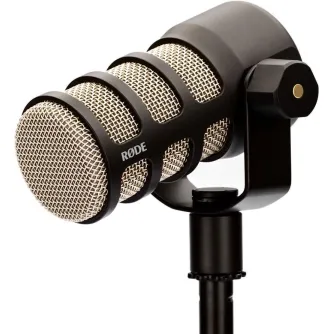
How to choose podcast microphones
Decide first where you record, how you connect the mic, and the sound character you want. In noisy or shared spaces, prefer a dynamic microphone for better background rejection. In quiet, treated rooms, choose a condenser for greater detail. For simple plug-and-play, USB microphones are convenient; XLR mics offer flexibility with audio interfaces, mixers and higher-quality preamps.
Key factors
- Recording environment: dynamics reject background noise better; condensers capture more detail but need a quiet room and pop filter.
- Connectivity: USB = easy direct connection to a computer; XLR = professional chain (interface, mixer, preamp) and easier upgrade path.
- Voice & content: spoken-word shows often benefit from warm, close-miked dynamics; vocals and music benefit from condenser clarity.
- Budget & growth: USB is cheaper to start; XLR systems scale and upgrade more easily.
- Accessories: boom arm, pop filter, shock mount and good cables improve results regardless of mic type.
Quick checklist
- If you record in a noisy or shared space → choose a dynamic XLR or a dynamic USB mic.
- If you have a treated room and want detailed capture → choose a condenser (USB or XLR depending on workflow).
- If you need instant portability and minimal setup → choose USB microphones.
- If you plan to expand to multi-mic production → invest in XLR microphones plus an interface or mixer.
Summary: prioritise noise rejection and ease of use for spoken-word podcasts; choose higher-resolution condensers for musicality or studio-grade capture.
Product examples:
- 39498 — Rode PodMic (dynamic, XLR)
- 52416 — Rode PodMicUSB (USB Type-C + XLR hybrid)
- 43913 — Rode NT-USB+ (USB condenser)
Rode NT-USB+ USB studio-grade condenser microphone ultra-low-noise, high-gain
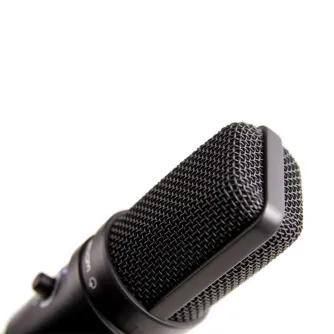
Zoom alternatives
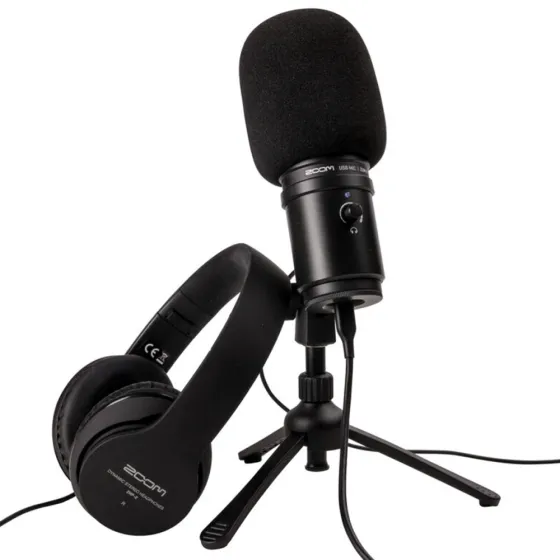
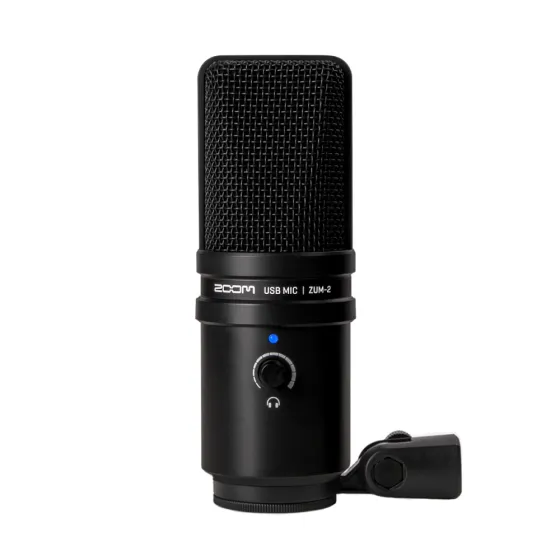
The following Zoom microphones are solid alternatives to Rode podcast solutions for creators who prioritize plug-and-play simplicity, integrated monitoring, and broadcast-oriented pickup patterns. Both items combine USB connectivity with design choices that favor voice clarity and noise rejection, making them practical for home studios, mobile podcast setups, and livestreaming. Zoom ZUM-2PMP USB Podcast Mic Pack (code 17692) offers a bundled approach: a ZUM-2 USB microphone with supercardioid pickup, closed-back ZHP-2 headphones, a TPS-4 tabletop tripod, foam windscreen, and a 2 m USB cable. The key reason to consider this pack as a Rode alternative is the included monitoring chain and stand—everything needed to start recording right away without buying accessories separately. Positioning note: recommended for podcasters and streamers who value an out-of-the-box kit with reliable isolation for voice recording and simple desktop workflow. Zoom ZUM-2 Dynamic Large Diaphragm USB Microphone (code 17757) focuses on the mic itself: a large-diaphragm design with a supercardioid pattern, built-in headphone output for zero-latency monitoring, and 24-bit/96 kHz resolution. The main reason it acts as an alternative to Rode gear is its broadcast-tuned tonal character and direct monitoring control, giving podcasters a warm, close-miked sound without needing an external audio interface. Positioning note: ideal for single-host shows and content creators who want a high-quality mic with direct monitoring and simple USB connectivity. Practical advice: choose the ZUM-2PMP pack if you need headphones and a stand included and prefer a ready-made desktop solution; choose the standalone ZUM-2 if you already own monitoring/headphone gear or plan to integrate the mic into a larger setup. Both units perform best in treated or moderately quiet rooms; use the supplied windscreen and mic placement (close, 10–20 cm) to reduce breath and room noise. In conclusion: these Zoom options provide cost-effective, user-friendly alternatives to Rode podcast solutions, trading some specialized features for immediacy and integrated monitoring that speeds up setup and recording.
PSA1+ vs PSA1 — mounts & arms
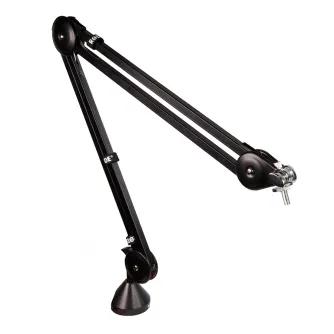
The RØDE PSA1+ Professional Studio microphone Arm (code 54696) and the RODE PSA1 Studio Arm (code 49294) share the same basic role: keep a microphone instantly accessible while freeing the user’s hands. The practical differences matter most in daily workflows. The PSA1+ uses a parallelogram spring design with fully damped internal springs and a neoprene arm cover for ultra-smooth, silent movement and consistent mic orientation during height adjustments. That design reduces mechanical noise and desk-transferred vibration, making the PSA1+ a reliable choice for regular streaming, podcasting, and broadcast work where repeatable positioning and low handling noise are priorities.
The PSA1 (code 49294) is a robust traditional boom arm with wide horizontal (820 mm) and vertical (840 mm) reach, full 360° rotation and a rated 2 kg load capacity. It includes Velcro cable stops and both clamp and insert mounting options. Its two-axis swivel attachment provides precise placement but relies on visible external springs and tension points that can require periodic retightening for heavy, frequent adjustment cycles.
Reach and stability: both arms offer wide reach and full rotation, but their load handling differs. PSA1’s higher nominal load capacity suits heavier shock mounts and broadcast hardware; PSA1+ supports a broad range of podcasting microphones (from very light up to around 1.2 kg) with steadier, damped movement that keeps the mic position stable without extra adjustments.
Cable management and convenience: PSA1+ integrates routing for USB and XLR cables along the arm for a neater setup and reduced snagging when moving the arm. PSA1 provides Velcro stops and traditional routing points which are effective but less concealed. Both include desk clamp and threaded mount options for flexible installation.
Practical positioning advice: for daily-use rigs where you reposition the mic frequently during live streams or record many short segments, the PSA1+ will save time—its parallelogram geometry keeps angle and reach consistent, so you rarely need micro-adjustments. If you run very heavy microphones or larger shockmount assemblies, the PSA1’s higher load rating provides extra margin.
Conclusion: for the typical podcaster, streamer or broadcaster seeking a quiet, repeatable, low-maintenance boom, the RØDE PSA1+ (code 54696) is the more reliable everyday choice. The original RODE PSA1 (code 49294) remains a strong option for setups that demand higher static load capacity or simpler mechanical design.
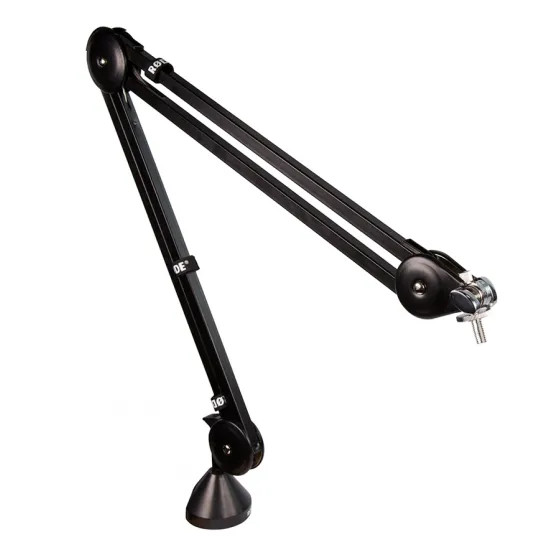

RØDE PSA1+ Professional Studio microphone Arm or podcasters, streamers and
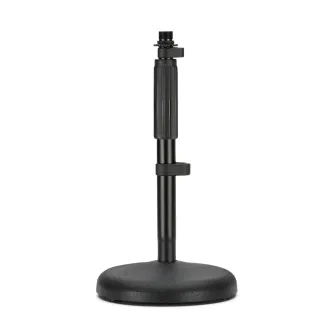
Tabletop stands
Rode Tripod 2 TRIPOD2 (code 19278)
- Compact three-position mini tripod that doubles as an ergonomic handheld grip when legs fold together.
- 1/4" thread with included 3/8" adapter; additional 1/4" thread inserts on legs for mounting accessories.
- Support capacity up to 2 kg, folded length about 20.5 cm; lightweight and portable.
- Best for tight desks or mobile setups where a small footprint and quick repositioning are priorities.
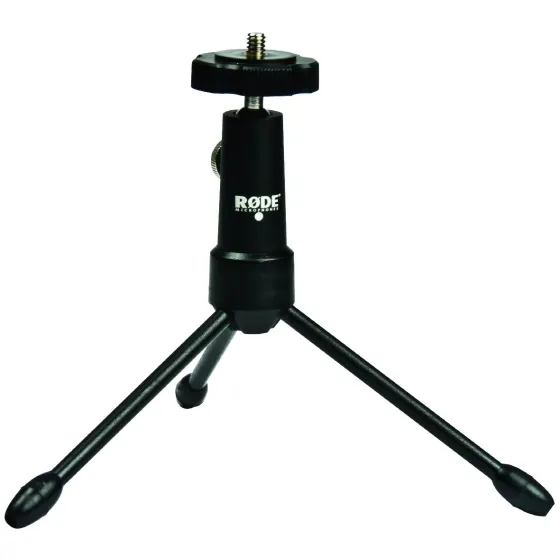
Rode mikrofona statīvs Tripod TRIPOD (code 34042)
- Basic collapsible tabletop tripod with rotating head and vertical adjustment for fine positioning.
- Supplies a standard 1/4" thread with 3/8" adapter compatibility; typically very lightweight (~185 g).
- Compact footprint when folded and suitable for small desktop workstations or on-location field recording.
- Recommended when the microphone or accessory is light and you prioritise extreme portability over maximum stability.
RODE DS1 Desk Stand - Desktop Microphone Stand MROD195 (code 41107)
- Weighted round-base desk stand with a vertical riser offering roughly 25–41 cm effective height range.
- Heavy base diameter around 147 mm and overall weight near 980 g, providing strong stability for larger microphones.
- 3/8"-16 thread and included adapters/cable clips improve compatibility and cable routing.
- Suited to podcasters or streamers using larger dynamic microphones or broadcast condensers where base stability is critical.
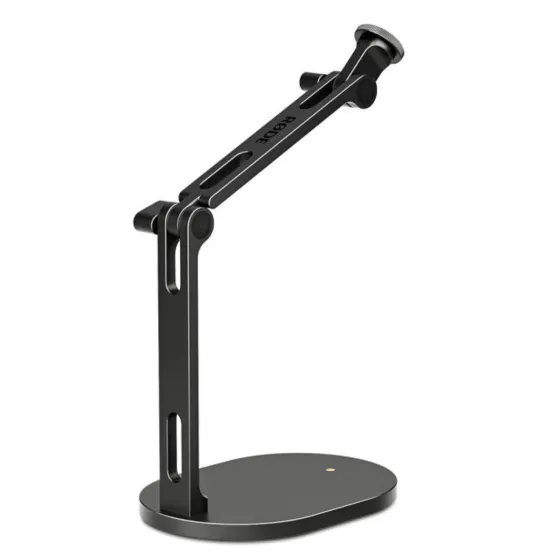
RODE DS2 Desk Stand - Desk Microphone Stand MROD196 (code 33887)
- Universal desktop tripod arm with two swivel joints, cable-guiding holes and a heavy base for tidy, adjustable setups.
- Maximum recommended load about 0.9 kg; dimensions and range make it flexible for microphones, small cameras, lights or phones.
- Includes 3/8" to 1/4" threaded adapter and large winged screws for quick position locking.
- Good choice where mid-range flexibility and tidy cable routing are needed for streaming desks or home studios.
Practical positioning and desk-footprint notes
- Small tripods (Tripod 2, Tripod) occupy minimal desktop area; place them slightly forward of the keyboard to keep the mic within 15–30 cm of the speaker for clear voice pickup while reducing desk noise.
- Weighted bases (DS1, DS2) need a stable flat surface and slightly more surface area — leave ~20–25 cm radius free around the base to avoid accidental knocks and to allow full swivel range.
- For heavier broadcast mics, prefer DS1’s heavy base or clamp-mounted boom arms. Tripod-style supports are best for lightweight USB mics or lavalier adapters.
- Use the 3/8"/1/4" adapters to match microphone clips or shock mounts; test balance with the microphone plus pop filter before final placement.
Typical use cases
- Tripod 2 TRIPOD2 — vlogging, mobile podcasting, quick field setups and desktop streaming when you may also want to hand-hold the unit.
- Tripod TRIPOD — compact desktop recording, interviews on location, or as a lightweight stand for USB microphones.
- DS1 — dedicated home or pro podcasting setups with larger dynamic or condenser microphones requiring stable weighted support and tidy cable management.
- DS2 — hybrid streaming and video setups where you need articulated positioning, cable routing and support for small lights or phone holders as well as microphones.
Conclusion: Choose tripod-style supports when portability and a minimal footprint are your priority (Tripod 2, Tripod). Select the DS1 for maximum base stability with heavier microphones, or the DS2 when you need articulated positioning and cable routing for compact studio/streaming workflows. Planning placement and checking thread compatibility before recording will ensure reliable performance and a clean, ergonomic desktop layout.
19278 | Rode Tripod 2 TRIPOD2 34042 | Rode mikrofona statīvs Tripod TRIPOD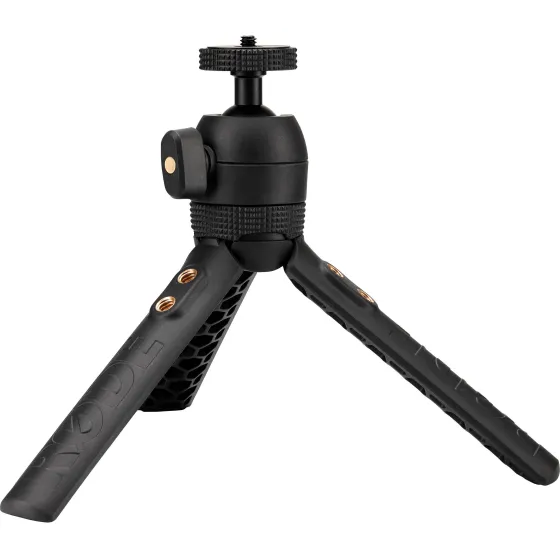
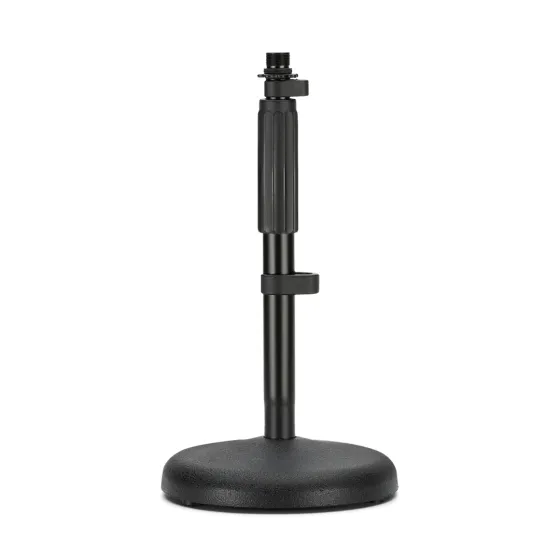
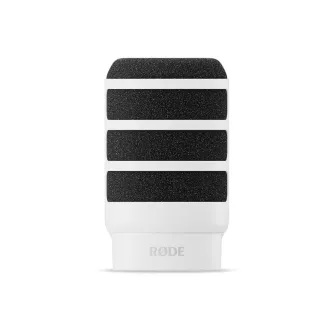
Rode WS14 colored covers for Podcast microphones
The WS14 colored covers are foam windshield accessories designed to fit the RODE WS14 microphone family for podcast and streaming setups. Beyond basic wind and plosive reduction, choosing a colored cover can help streamline visual branding, simplify multi-person setups, and make microphone assignments more visible on camera. Each color variant below is functionally the same in acoustic performance but offers distinct aesthetic and practical advantages when integrated into studio layouts.
- RODE WS14 Black vejsargs priekš Podcast mic, XLR un USB melns (code 50918) — classic, unobtrusive black for professional environments; blends with stands and dark backgrounds and remains low-profile on camera.
- RODE WS14 (Blue) - Podcast mic, XLR i USB,modr MROD8512 (code 50924) — clear, cool blue that reads well on-screen and helps mark a specific host or channel without clashing with common studio lighting.
- RODE WS14 (Green) - Podcast mic, XLR i USB,zelen MROD8516 (code 50927) — vibrant green useful for team color-coding and quick visual identification; works well when paired with neutral wardrobe choices.
- RODE WS14 (Orange) - Podcast mic, XLR i USB,oranžov MROD8513 (code 50929) — high-visibility orange for lively shows or to differentiate guest mics at live events.
- RODE WS14 (Purple) - Podcast mic, XLR i USB,fialov MROD8515 (code 50937) — deep purple for a stylized look that complements creative or entertainment-focused streams.
- RODE WS14 (Red) - Podcast mic, XLR i USB,červen MROD8511 (code 50943) — bold red for emphasis and easy scene contrast; useful for marking the primary host mic.
- RODE WS14 (White) - Podcast mic, XLR i USB,bl MROD8517 (code 50980) — clean white suited to modern minimal setups and higher-contrast looks under studio lights.
- RODE WS14 (Pink) - Podcast mic, XLR i USB, Pink MROD8514 (code 25039) — distinct pink for personality-driven shows or to support themed branding.
Practical advice: For multi-person recordings, assign a unique color to each participant to avoid confusion during live calls and post-production. When filming, test how each color appears under your lighting—some colors can shift visually depending on temperature and intensity. Use darker covers (black, purple, blue) to minimize reflections and attention when the mic should blend into the scene; choose brighter covers (orange, red, green, pink) for clear on-camera identification and to reinforce on-screen branding. Keep spare covers in matching colors to maintain consistency across sessions and to replace worn foam quickly.
Conclusion: The WS14 colored covers deliver the same basic wind and pop protection while providing a simple, low-cost way to organize, brand, and visually optimize podcast and streaming setups. Selecting covers by role, camera visibility, and brand palette improves workflow and on-air clarity without changing microphone performance.
50918 | RODE WS14 Black vejsargs priekš Podcast mic, XLR un USB melns 50924 | RODE WS14 (Blue) - Podcast mic, XLR i USB,modr MROD8512 50927 | RODE WS14 (Green) - Podcast mic, XLR i USB,zelen MROD8516 50929 | RODE WS14 (Orange) - Podcast mic, XLR i USB,oranžov MROD8513 50937 | RODE WS14 (Purple) - Podcast mic, XLR i USB,fialov MROD8515 50943 | RODE WS14 (Red) - Podcast mic, XLR i USB,červen MROD8511
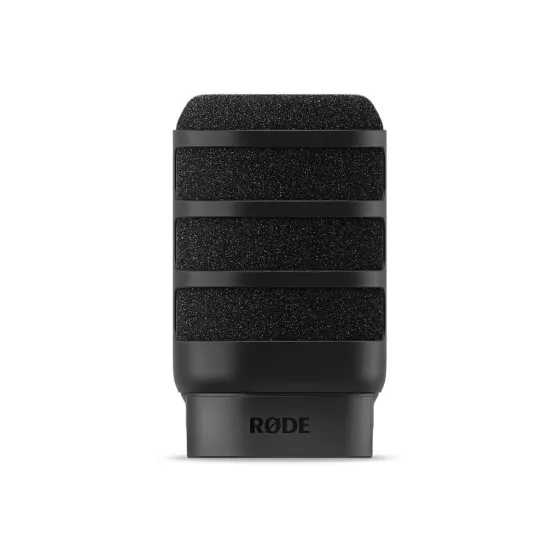
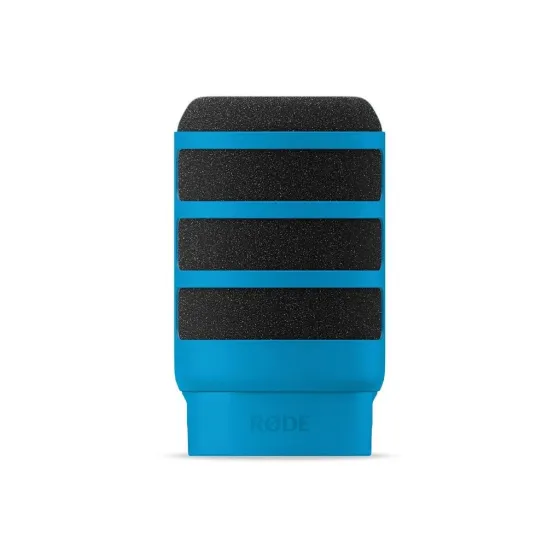
RODE WS14 (Blue) - Podcast mic, XLR i USB,modr MROD8512
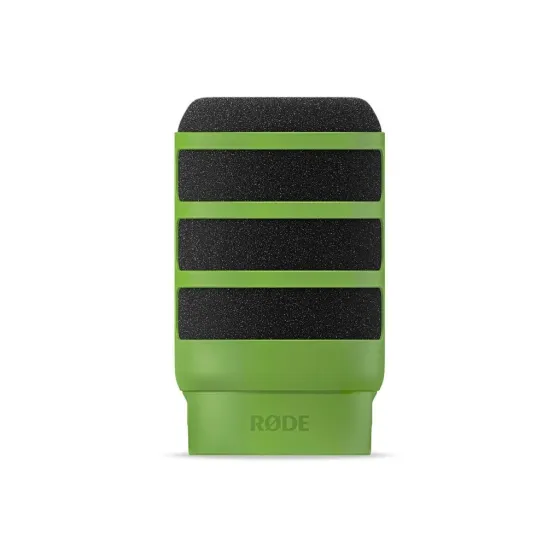
RODE WS14 (Green) - Podcast mic, XLR i USB,zelen MROD8516
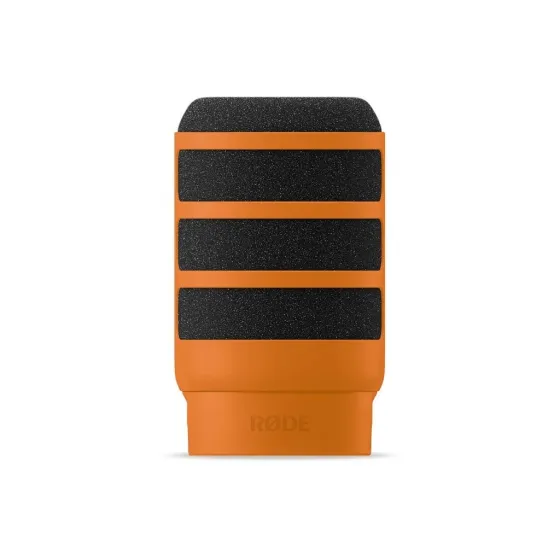
RODE WS14 (Orange) - Podcast mic, XLR i USB,oranžov MROD8513
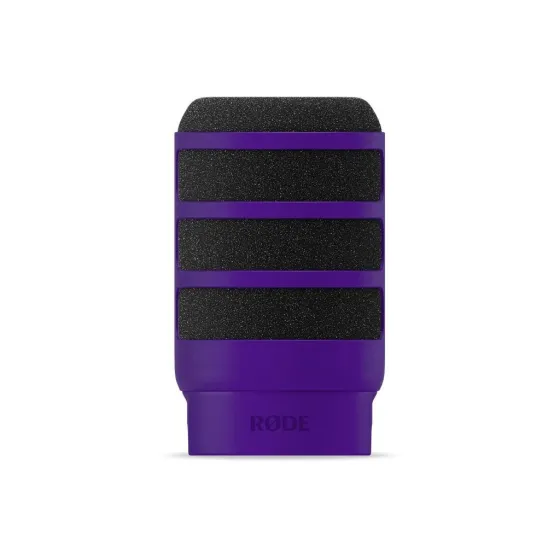
RODE WS14 (Purple) - Podcast mic, XLR i USB,fialov MROD8515
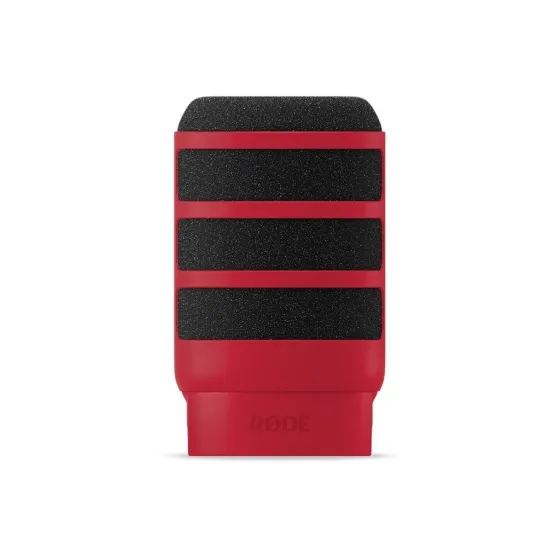
RODE WS14 (Red) - Podcast mic, XLR i USB,červen MROD8511
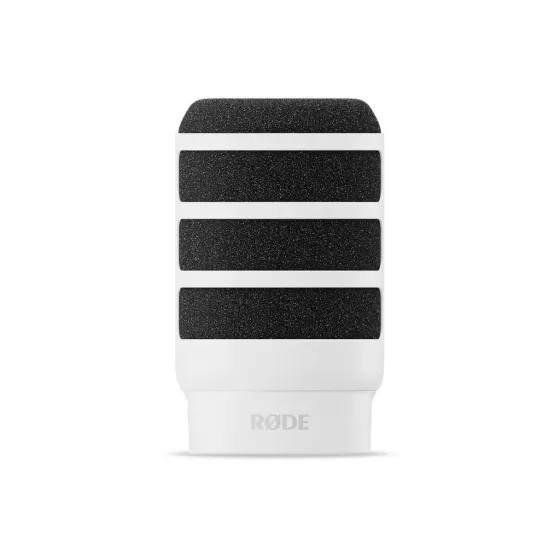
RODE WS14 (White) - Podcast mic, XLR i USB,bl MROD8517
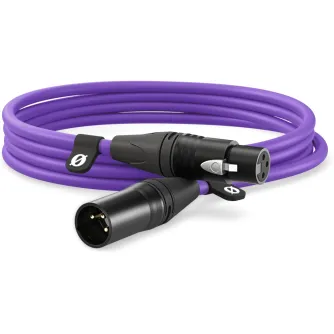
3m XLR cables
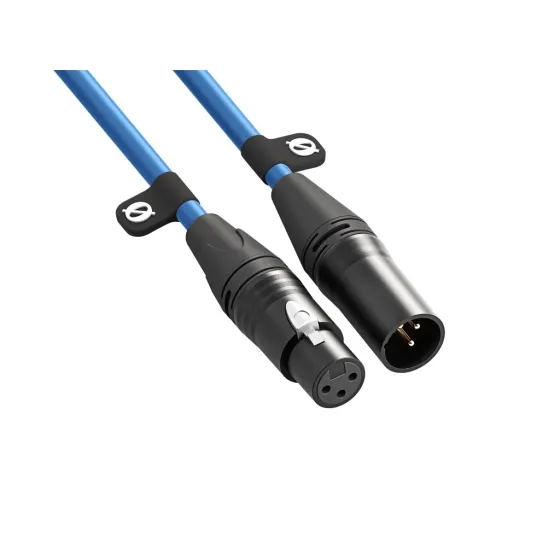
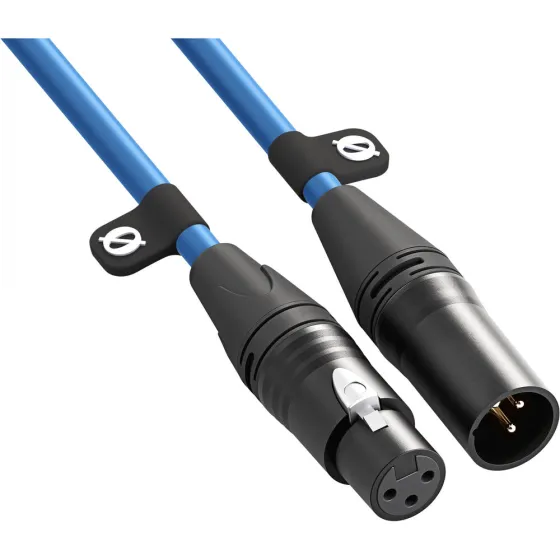
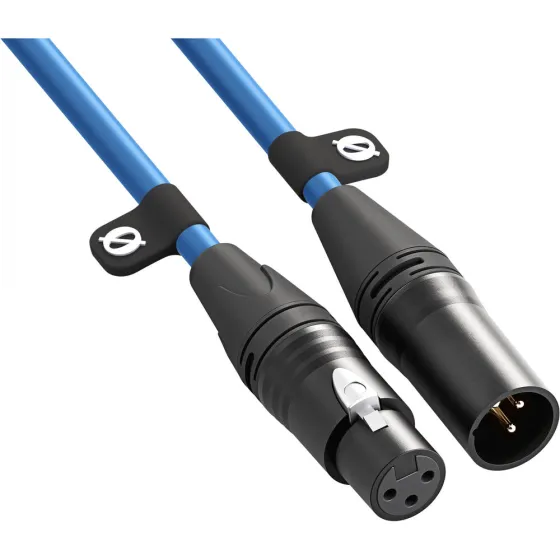
- RODE XLR Cable 3m Blue (code 59966) — 3m balanced XLR male-to-female cable in blue for quick visual routing on desk and small-studio setups.
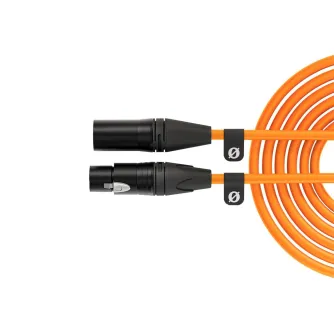
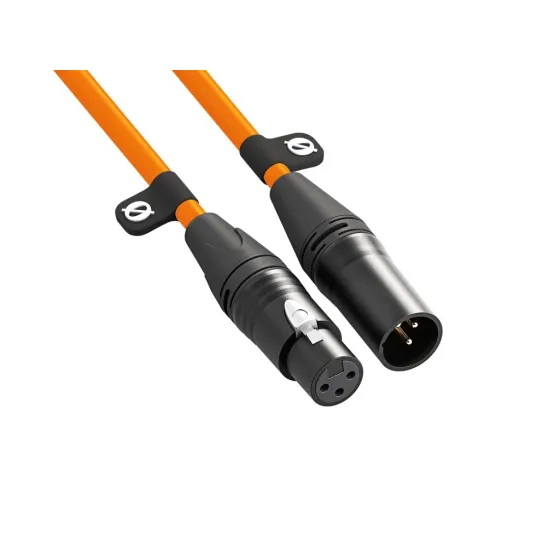
- RODE XLR CABLE-3m orange - XLR/XLR kabel MROD788-ORN (code 25698) — orange 3m XLR for easy channel identification in multi-mic sessions.
- RODE XLR CABLE-3m green - XLR/XLR kabel MROD788-GRN (code 25667) — green 3m XLR for instrumenting or guest mic routing.
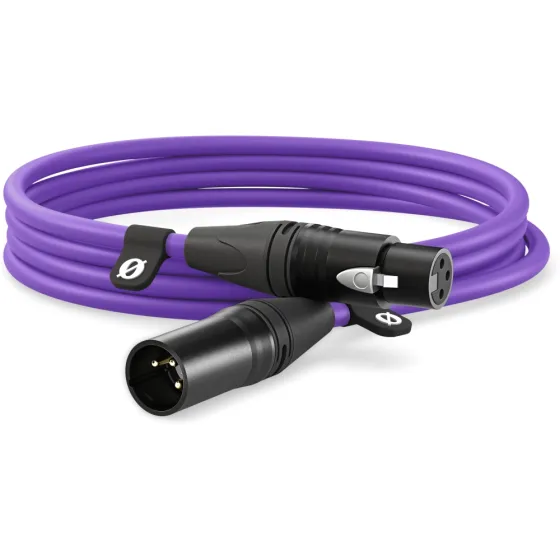
- RODE XLR CABLE-3m purple - XLR/XLR kabel MROD788-PPL (code 25701) — purple 3m cable, useful when color contrast is required in complex setups.
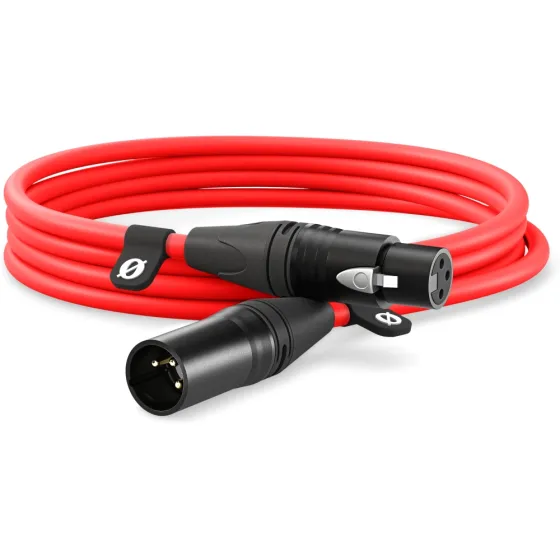
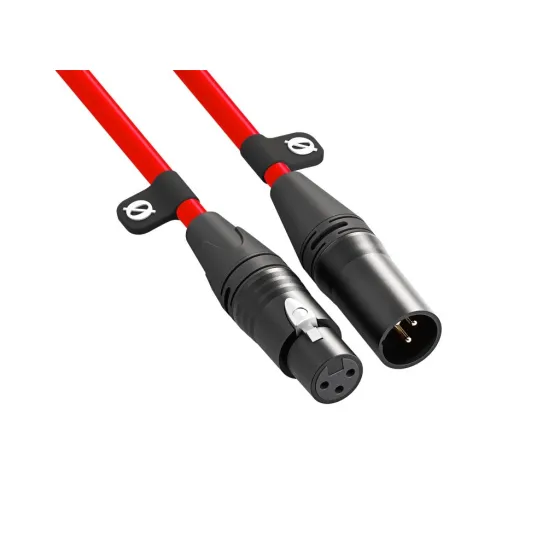
- RODE XLR CABLE-3m red - XLR/XLR kabel MROD788-RED (code 25703) — red 3m XLR for lead vocal or priority channel marking.
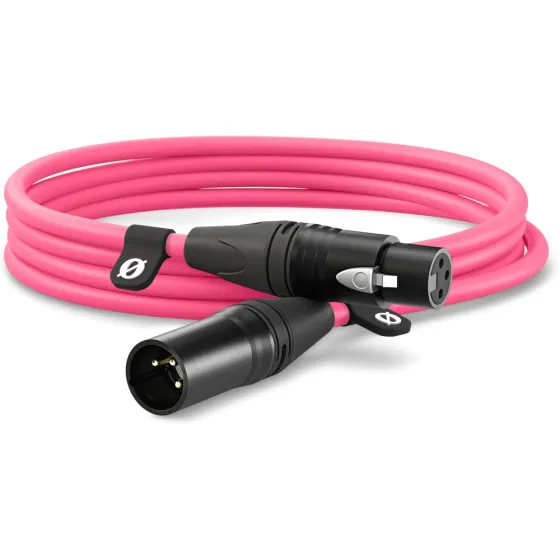
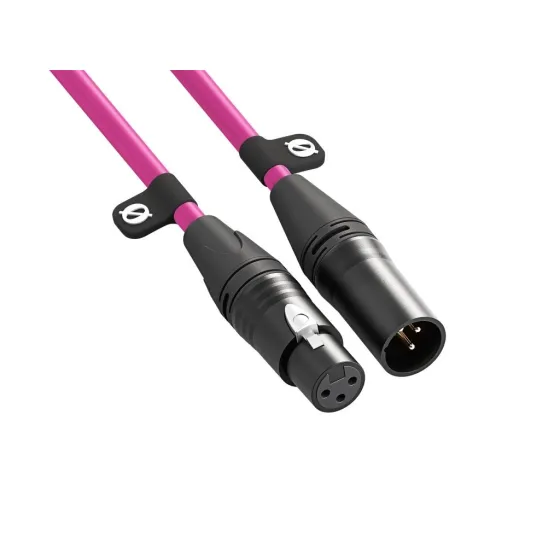
- RODE XLR CABLE-3m pink - XLR/XLR kabel MROD788-PNK (code 25700) — pink 3m cable for niche routing or brand/cohort color schemes.
- RODE RDE XLR/XLR CABLE-3m blue MROD788-BLU (code 41213) — alternate blue-coded 3m option for uniform desk routing where multiple blue runs are used.
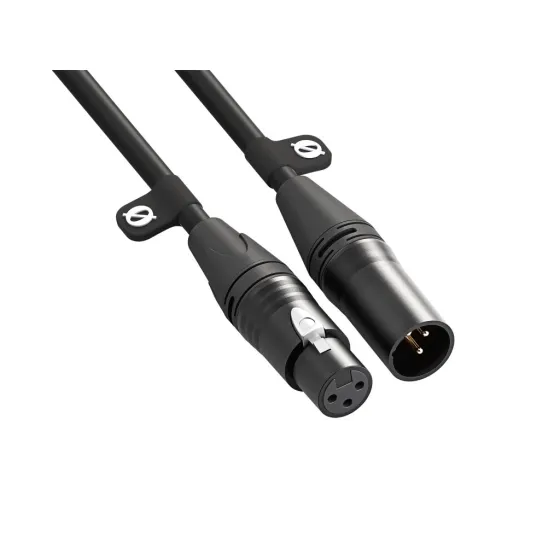
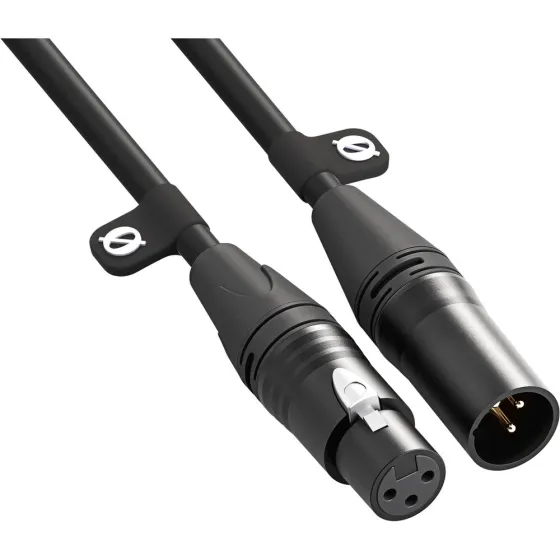
- RODE XLR CABLE-3m black - XLR/XLR cable MROD788-BLK (code 2984) — classic black 3m XLR for discreet installations and traditional studio setups.
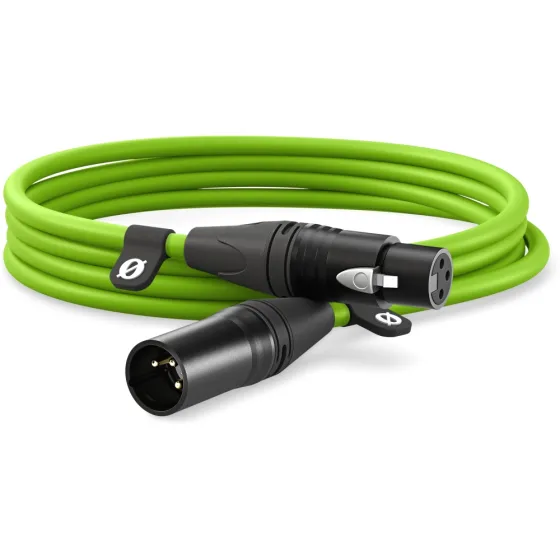
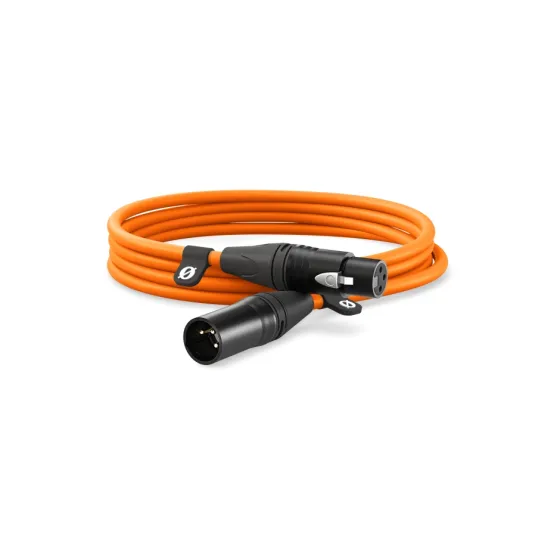
6m XLR cables
RODE XLR Cable 6m Blue (code 59905): A 6 m balanced XLR-to-XLR cable featuring Canare core and Neutrik connectors. The blue jacket provides quick visual identification for routing channels or matching input colours on Rode mixers and recorders.
RODE XLR Cable 6m Black (code 59919): Standard black finish for a discreet, professional look. Same Canare/Neutrik construction ensures low-noise microphone and line connections for studio desks and live setups.
RODE RDE XLR CABLE-6m pink MROD7895 (code 41100): Pink-sheathed 6 m cable designed for easy colour-coded routing in multi-mic productions. Uses durable Neutrik connectors and Canare cable for consistent signal integrity.
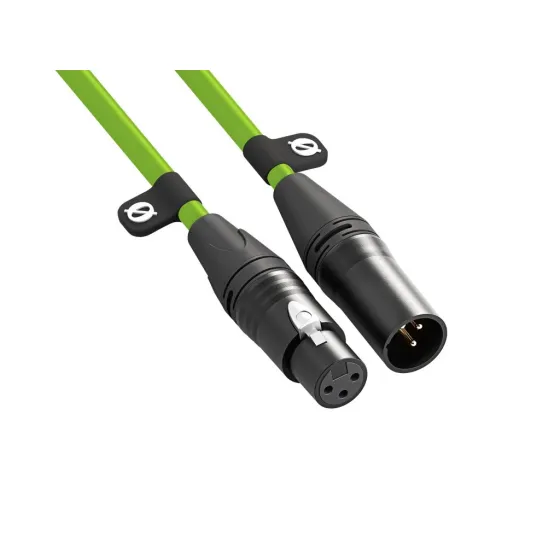
RODE RDE XLR CABLE-6m green MROD7893 (code 29210): Green 6 m XLR cable, ideal when tracking multiple channels or assigning fixed colours to specific microphones; balanced wiring preserves clarity over the full run.
RODE RDE XLR CABLE-6m orange MROD7894 (code 40626): Orange jacketed 6 m cable that stands out on stage or in complex rigs; premium connectors and cable core reduce handling noise and interference.
RODE RDE XLR CABLE-6m purple MROD7896 (code 2127): Purple 6 m option for easy channel mapping and tidy session organisation. Suitable for both broadcast desks and compact live sound use where a moderate run length is needed.
RODE RDE XLR CABLE-6m red MROD7897 (code 49849): Red 6 m cable for clear visual routing and identification. Balanced XLR construction preserves microphone dynamics and reduces hum on shared power stages.
RODE RDE XLR CABLE-6m black MROD7891 (code 56768): Alternate black version with the same professional internal components — recommended where a neutral appearance is preferred but a reliable 6 m reach is required.
RODE RDE XLR CABLE-6m blue MROD7892 (code 56769): Second blue variant matching Rode colour-coded ecosystems; use consistently across desks or portable rigs to simplify setup and troubleshooting.
Balanced XLR cables are the standard for low-noise microphone connections: they reject electromagnetic interference, preserve dynamic range, and keep phone and mains hum out of recordings. The 6 m length is a good compromise between mobility and signal integrity — long enough for flexible placement of recorders or interfaces, short enough to avoid unnecessary capacitance that can affect very long runs. Color coding becomes especially valuable in multi-microphone situations and shared studio environments: matching cable colour to channel labels on the RODE RDECaster family, mixers, or stage plots speeds setup and reduces routing errors.
Practical recommendations: use these 6 m cables for desk-based podcast setups where the host and guest positions are spread out, for small acoustic or electronic band stages, and when you need to place a recorder, mixer, or wireless receiver off the table. Keep cables neatly coiled and avoid tight kinks; secure with Velcro straps to prevent wear at connector ends. If longer runs are needed beyond 6 m, consider stepping up to heavier-gauge runs or active line-level solutions to maintain low noise.
Products in this group:
59905 | RODE XLR Cable 6m Blue 59919 | RODE XLR Cable 6m Black 41100 | RODE RDE XLR CABLE-6m pink MROD7895 29210 | RODE RDE XLR CABLE-6m green MROD7893 40626 | RODE RDE XLR CABLE-6m orange MROD7894 2127 | RODE RDE XLR CABLE-6m purple MROD7896 49849 | RODE RDE XLR CABLE-6m red MROD7897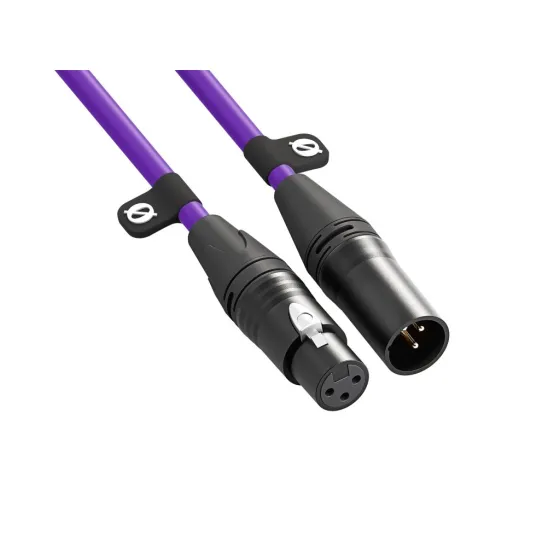
Rode podcast mixer & streamer RODECaster Pro II
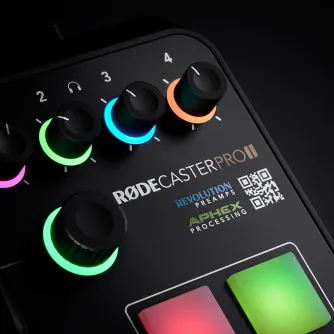
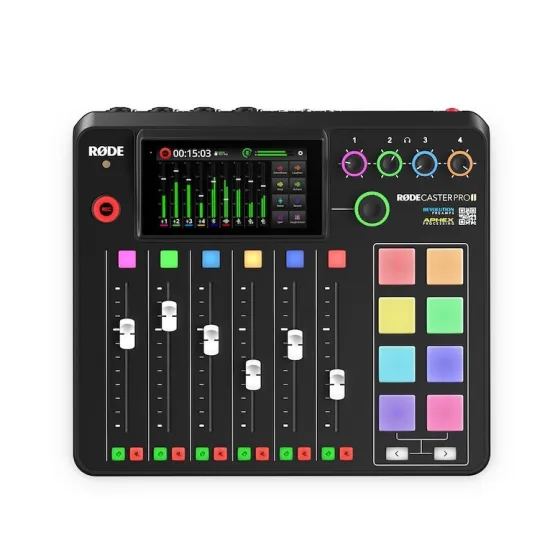
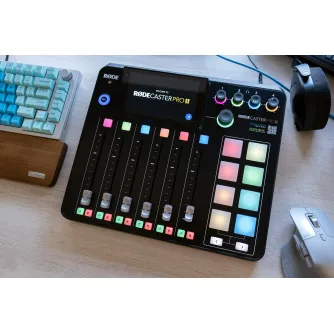
The RØDECaster Pro II is an all-in-one audio production studio built for creators who need broadcast-quality sound with streamlined operation. As a single control surface it combines low-noise Revolution Preamps, APHEX-powered processing, programmable SMART pads, and a high-definition touchscreen to speed setup and keep focus on content. Rode RODECaster Pro II streaming, gaming, podcasting, and music production (code 43264) sits at the center of a modern podcasting or streaming rig, replacing a stack of separate preamps, processors, and interface hardware.
Core role in podcasting and streaming: the unit provides professional mic preamps and per-channel processing (compressor, gate, EQ, de-esser, and APHEX emulations) so hosts get ready-to-broadcast audio without complex routing or external rack gear. Multichannel USB connectivity and dual USB-C ports let you connect two computers or devices simultaneously for live streaming, remote guests, or multitrack recording. On-board multitrack recording to microSD or USB storage lets teams capture clean stems for post-production or instant publishing.
Main workflow advantages: fast hands-on control via six physical and three virtual faders, a responsive touchscreen, and six to nine assignable channels reduces menu diving. SMART pads automate jingles, remote call handling, sound effects, and MIDI commands; customizable RGB pads and presets make repeatable show setups effortless. The built-in effects chain and per-channel presets shorten edit time and ensure consistent voice quality across episodes.
I/O and production context: four Neutrik combo inputs accept microphones, instruments, or line devices; four high-power headphone outputs and two balanced line outs support monitoring for hosts and producers; Bluetooth with wideband speech profile supports phone callers; Ethernet/Wi‑Fi and 24-bit/48kHz USB audio provide studio/streaming integration. Power is USB-C PD, and firmware updates add ongoing features.
Practical use cases: solo podcasters who need one-box simplicity and high quality; multi-host shows requiring multiple mic inputs and separate headphone mixes; live streamers combining game audio, music beds, and chat; remote interviews using one computer for streaming and another for call recording; small music productions capturing instruments and voices without a full studio rig. Its combination of tactile controls, comprehensive processing, and flexible I/O suits content creators who value both speed and sonic control.
Rode RODECaster Pro II streaming, gaming, podcasting, and music production
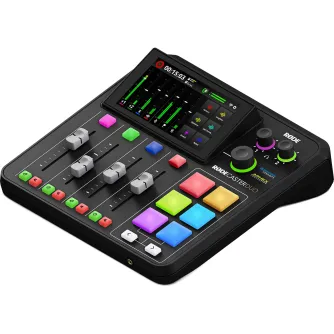
Rode compact podcast & streaming mixer RODECaster Duo
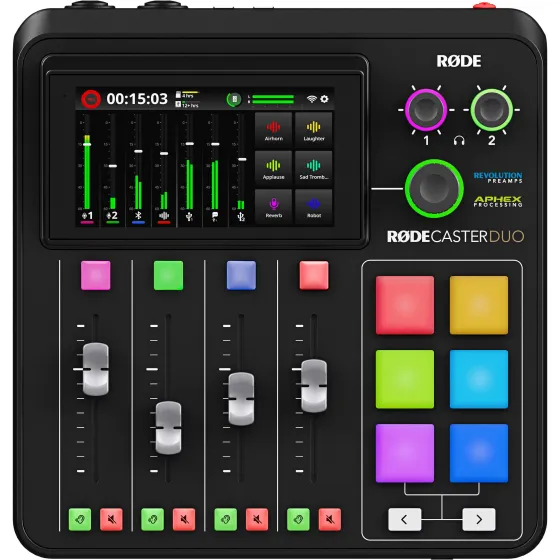
The RODECaster Duo integrated production studio RØDECaster Duo (code 54575) is a compact, travel-friendly all‑in‑one audio production mixer designed for podcasters, streamers, musicians, and content creators who need studio-quality sound with simplified hands-on control. It combines two high-performance Revolution mic/line/instrument preamps, a quad‑core audio engine, APHEX-style processing, and multitrack recording to microSD or USB so you can capture broadcast-ready audio without a complex computer setup. As a core tool for podcasting and streaming workflows, the Duo streamlines source management and live production. Four physical faders and an assignable 7‑channel mixer let you balance hosts, guests, music, callers, and sound pads quickly. Dual USB-C host ports and integrated Bluetooth allow two computers or mobile devices to be connected simultaneously for call integration, streaming, or backup recording. Mix‑minus, producer talkback, and two independent headphone outputs make remote interviews and co-hosted shows easy to manage while preventing echo and enabling clear monitoring for participants. Key I/O and production context:
- 2x XLR‑1/4" combo inputs with high‑gain, low‑noise preamps (mic/line/instrument)
- 2x 1/4" headphone outputs with separate level control
- 2x 1/4" line outputs for monitors or speakers
- microSD slot for onboard multitrack (WAV) or stereo recording; USB audio interface support at 24‑bit/48 kHz
- 6 programmable SMART pads for jingles, effects, MIDI, or mixer actions; bright color touchscreen for quick control
- Integrated Series IV wireless receivers compatible with Wireless GO II/Wireless ME; Bluetooth and Ethernet/Wi‑Fi for updates and integrations
Workflow advantages and practical recommendations:
- Use Show presets to switch between podcast formats and streaming setups instantly; save mic processing and pad mappings per show.
- Record multitrack to microSD while streaming via USB as a safety backup—set WAV for highest quality and MP3 when long duration or space is a concern.
- For spoken‑word clarity, enable APHEX Aural Exciter and gentle Compellor settings; use the built‑in EQ and de‑esser to tame sibilance before final editing.
- When using remote guests, enable mix‑minus on the relevant USB/Bluetooth channel and use producer talkback to coordinate without affecting the program mix.
- Link the two analog inputs for stereo sources (instruments or stereo mics) and keep headphone sensitivity at high or low depending on monitoring hardware to avoid clipping or low-level monitoring issues.
- Keep firmware updated via Ethernet or Wi‑Fi to receive new features and compatibility improvements; use dual USB ports to separate streaming/recording duties across devices.
Practical use cases:
- Solo podcasters who need a compact studio with hands‑on control and onboard processing.
- Two‑person shows or interview setups with dedicated headphone mixes for host and guest.
- Mobile field recordings or pop‑up livestreams where multitrack backup and wireless mics are required.
- Musicians or streamers who want direct instrument inputs alongside vocal mics and immediate performance‑ready effects.
Conclusion: The RØDECaster Duo delivers a focused balance of portable design and professional features—offering the essential I/O, processing, and workflow tools to produce consistent, broadcast‑quality podcasts and streams with minimal setup and strong monitoring and backup options.
RODECaster Pro II vs RØDECaster Duo — comparison
The RØDECaster Pro II (code 43264) and the RØDECaster Duo (code 54575) share RØDE’s Revolution preamps, APHEX processing, and a quad‑core engine, but they target different scales of production. The Pro II is a larger, more flexible production hub with four Neutrik combo inputs, six physical faders, nine assignable channels and four headphone outputs — suited to multi‑host podcasts, small live panels, or creators combining music production with streaming. The Duo pares this down to two combo inputs, four faders, two headphone outputs and a compact desktop footprint, aimed at solo creators, interview‑style podcasts with one guest, or mobile setups where space and portability matter.
Workflow differences are practical: the Pro II supports more simultaneous sources and complex routings (dual USB-C for two computers, expanded monitor outputs, and multichannel USB interface options), making it easier to run remote guests, call‑ins, and DAW overdubs without external routing. The Duo simplifies setup and excels when you need a fast show workflow — color‑coded channels, built‑in wireless receivers for RØDE transmitters, and fewer controls to manage during a live session.
Desk footprint and studio layout: expect the Pro II to occupy a larger desktop area and require more tabletop real estate for multiple hosts, while the Duo fits comfortably in tighter workspaces, portable desks, and field rigs. Channel scale considerations: choose Pro II for four or more mic sources and for frequent multitrack recording needs; choose Duo if your typical session uses one or two mics plus a remote caller or music input.
Creator use cases and buyer fit: the Pro II suits podcasters expanding to multi‑host shows, streamer/musician hybrids, and small studios that want hardware redundancy and expandability. The Duo fits solo podcasters, interviewers who travel, entry‑level studios, and creators who want integrated wireless reception without extra gear.
Practical advice: assess your typical session count and growth plans first. If you regularly host three or more people, record multitrack stems, or want separate headphone mixes for multiple guests, invest in the RØDECaster Pro II. If portability, simplified setup, and integrated wireless receivers matter more, the RØDECaster Duo is the more cost‑effective and space‑efficient choice. Consider cable routing, microphone selection, and whether you’ll rely on phone call/Skype integrations — both devices offer mix‑minus and Bluetooth, but the Pro II’s broader I/O simplifies hybrid workflows.
Conclusion: both consoles deliver broadcast‑quality preamps and processing; pick the RØDECaster Pro II (code 43264) for maximum channel count, monitoring flexibility and studio growth, or the RØDECaster Duo (code 54575) for streamlined, portable, and wireless‑friendly production setups.
Rode RODECaster Pro II streaming, gaming, podcasting, and music production
Rode video mixer and streaming console for 4+ cameras and 2+ microphones
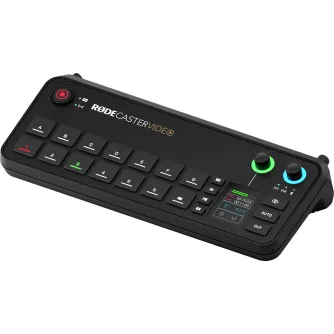
RODECaster Video
- Single-operator live show: set up two or three camera angles on HDMI, assign scenes and overlays, and use the intelligent auto-switching to trigger camera cuts based on active microphones so the presenter can stay hands-free.
- Hybrid remote interviews: combine local XLR microphones with guests connected via Bluetooth or wireless receivers, record isolated audio tracks and a program video ISO to USB for post-production edits.
- Compact studio and desktop streams: use the console’s Wi‑Fi or Ethernet for direct-to-platform streaming while recording separate tracks to USB for repurposing clips and podcasts.
- Core inputs: 3 HDMI (1080p), 1 USB-C, 2 Neutrik combo XLR/jack.
- Wireless & mobile: Dual internal RØDE Series IV receivers, Bluetooth, Dual Cam iOS support via RØDE Capture.
- Audio processing: APHEX suite (EQ, Compressor, Aural Exciter, Big Bottom).
- Recording & streaming: Direct USB ISO recording, Wi‑Fi 802.11ac and 1 Gb Ethernet for streaming.
- Prefer wired Ethernet for stable platform streaming; reserve Wi‑Fi for mobile or backup scenarios.
- Record ISO audio and program video to a fast USB drive to simplify editing and clip repurposing after the live session.
- Use the intelligent auto-switching and scene presets during rehearsals to fine-tune mic-trigger thresholds and transition timing before going live.
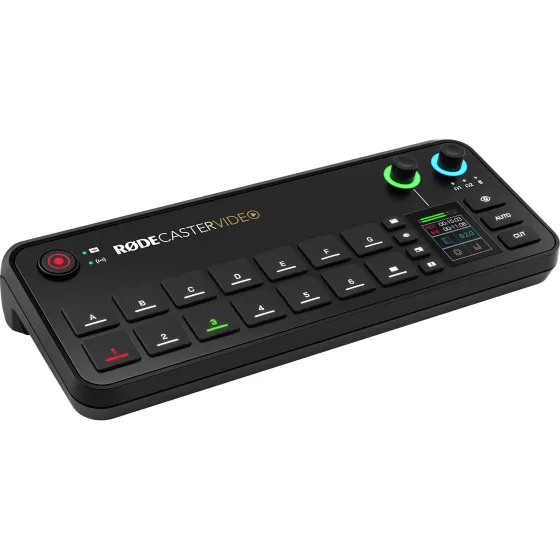
Rode RØDECaster Video audio production, switching, recording console HD 1080p...
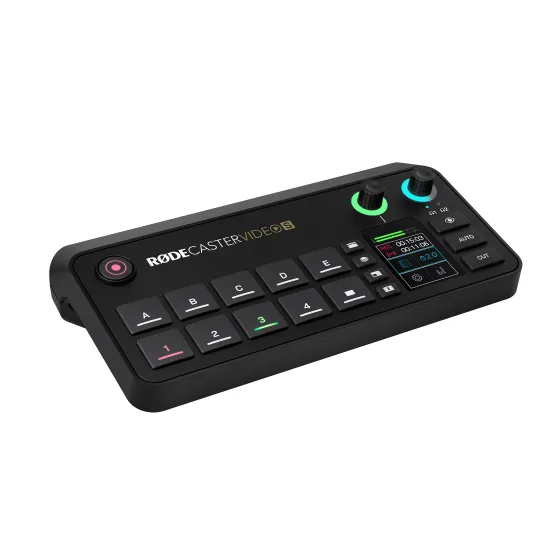
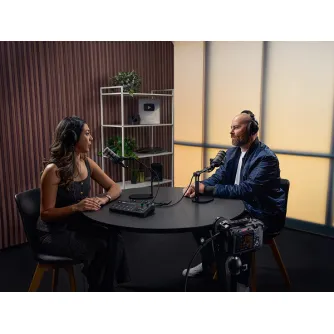
RØDECaster Video vs RØDECaster Video S
The two RØDECaster Video consoles address overlapping but distinct creator needs. Rode RØDECaster Video audio production, switching, recording console HD 1080p HDMI (code 59210) is built as a larger, more studio-scalable console; Rode RØDECaster Video S video switching, recording, streaming (code 59769) compresses most of that capability into a compact, desk-friendly layout. This comparison highlights practical workflow differences, camera flexibility, switching/recording contexts, creator fit, and the expected physical and cabling footprint for each unit. Workflow scale
The RØDECaster Video (code 59210) targets multi-operator studio workflows and small broadcast crews. Its higher scene count, multiview outputs and additional USB-C video inputs make it easier to run more complex productions with a dedicated director or technical operator. The Video S (code 59769) uses the same octa-core processing and APHEX audio suite but scales down scene banks and physical controls for single-operator or solo-creator workflows. If you frequently move between single-host streams and larger multi-person shoots, Video is the more future-proof option; if your work is predominantly solo streaming or seated conversations, Video S will streamline setup and operation. Multi-camera flexibility
RØDECaster Video (code 59210) supports up to six video signals in practice (four Full HD HDMI inputs plus flexible USB-C sources) and offers two configurable HDMI outputs for program/preview and multiview. Video S (code 59769) supports up to four video sources (three HDMI + one USB-C) and provides a single HDMI output with program/preview functionality. For three-plus camera shoots with dedicated preview screens or confidence monitors, the larger Video has clear advantages; for two- or three-camera desk setups, Video S is usually sufficient. Switching and recording context
Both consoles include intelligent auto-switching based on audio, onboard scene building, graphics/overlay playback, and ISO recording to external USB storage. The RØDECaster Video’s extra scene slots, additional outputs, and expanded input routing simplify multi-operator switching, live event routing, and ISO workflows for post-production. The Video S delivers the same core recording and streaming features with fewer I/O paths—smaller productions gain simplicity at the cost of routing headroom. Creator fit and recommended use cases
- RØDECaster Video (code 59210): multi-host video podcasts, small studios, live event streaming where multiview and extra scenes are needed.
- RØDECaster Video S (code 59769): solo creators, desk-based streamers, or small-scale video podcasts who prioritize a compact footprint and simpler cabling.
Expected setup footprint
The full-size RØDECaster Video requires more desk or rack space and more cable management—multiple HDMI feeds, two HDMI outputs, USB-C devices, external antennas, and power—making it better suited to dedicated studios. The Video S occupies less surface area, reduces visible cabling, and is easier to transport between locations. Practical advice
If you plan to grow: choose the RØDECaster Video for additional inputs, multiview outputs, and scene capacity. If you need a compact, fast-to-deploy console for single operators or small teams, the RØDECaster Video S saves space and simplifies operation without sacrificing professional audio processing. For hybrid use (desk streams plus occasional live multi-camera shoots), consider starting with Video S only if you are certain you will not need multiview outputs; otherwise invest in the larger Video to avoid re-rigging later. Conclusion
Both units bring RØDE’s integrated audio and video approach to creators. Pick RØDECaster Video (code 59210) when multi-camera flexibility, multiview monitoring and studio scalability matter. Pick RØDECaster Video S (code 59769) when desk space, portability and single-operator simplicity are the priority.
Rode RØDECaster Video audio production, switching, recording console HD 1080p...
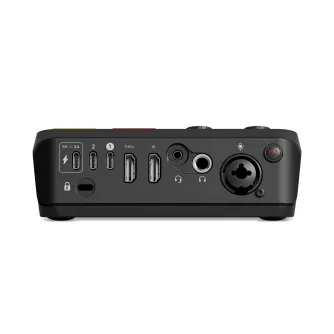
Video accessories
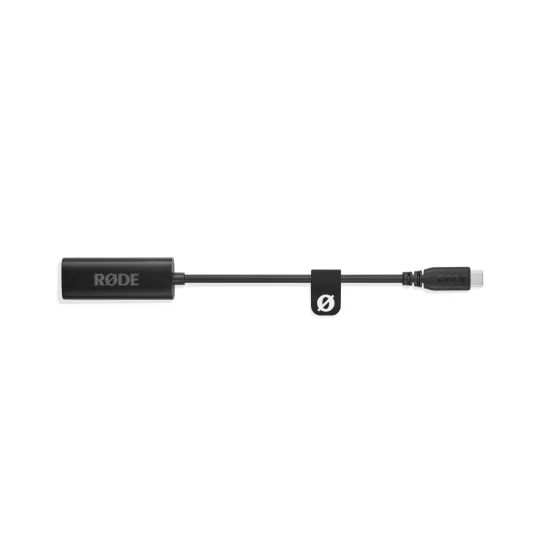
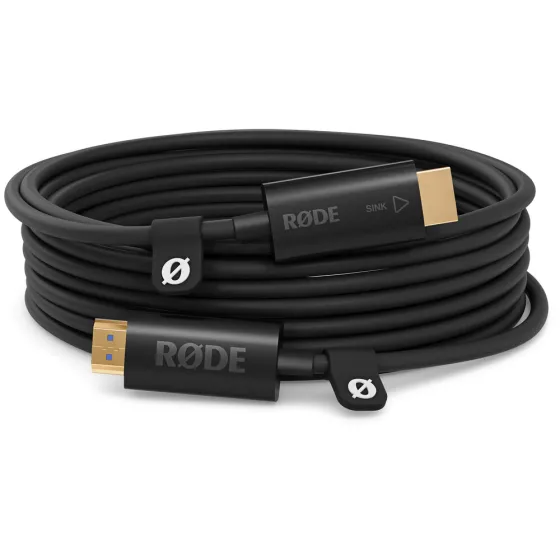
Modern compact creator setups rely on a small set of video accessories that bridge camera output, long-run connections, and live-production control. The RØDE HDMI to USB-C Converter (code 59605) provides a straightforward UVC capture path from DSLR or mirrorless cameras at up to 1080p60, turning a camera into a reliable webcam source without special drivers. For creators who place the camera away from their computer or streaming device, a purpose-rated HDMI cable such as the RØDE 10M - 2.0 HDMI Cable (dia 6mm) (code 59942) maintains a digital link over a longer distance while supporting HDMI 2.0 bandwidth characteristics. The Rode StreamerX audio interface, 4K video capture and control surface Streamer X (code 52415) unifies multi-source video capture, studio-grade audio inputs, and hands-on controls, enabling a compact but powerful streaming or recording station.
Practical advice for using these parts together: if you need low-latency plug-and-play capture from a single camera and your capture target accepts UVC, use the HDMI-to-USB-C converter close to the camera and connect its USB-C output to your computer. For runs around 10 metres, a certified HDMI 2.0 cable is a pragmatic choice—route the cable away from noisy power lines, avoid tight bends, and test the specific resolution/refresh combination required, because longer passive runs can be sensitive to resolution/refresh settings and cable quality. When your workflow requires multi-input routing, audio mixing, or hardware control (scene switching, hotpads, mic preamps), place the Streamer X at the hub: feed camera HDMI into Streamer X for 4K30 capture (with 4K60 passthrough where needed) and use its Neutrik combo input and onboard DSP for broadcast-ready audio.
Key technical points and features to consider:
- RØDE HDMI to USB-C Converter (code 59605): UVC plug-and-play capture, 1080p60 support, compact form factor.
- RØDE 10M - 2.0 HDMI Cable, (dia 6mm) (code 59942): 10-metre length, HDMI 2.0 specification compatible cable construction; suitable for longer camera-to-capture runs with attention to signal conditions.
- Rode StreamerX (code 52415): integrated audio interface and video capture, up to 4K30 capture and 4K60 passthrough, Neutrik combo XLR/instrument input with Revolution Preamp™, APHEX processing, dual USB-C, and customizable SMART pads.
Workflow scenarios and recommendations:
- Single-camera desktop streaming: use RØDE HDMI to USB-C Converter (code 59605) for a simple camera-to-PC capture and keep the HDMI run short.
- Studio or stage with separated camera positions: use the 10m HDMI cable (code 59942) to bridge distance; if you need longer than 10m or higher resolutions reliably, consider active/extender solutions in addition to passive cable runs.
- All-in-one production with tactile control: route HDMI through Streamer X (code 52415) to centralize capture, monitoring, multichannel audio, and quick on-the-fly effects or scene triggers.
Integrating these accessories gives creators a balance of portability, signal reliability, and production control. Choose the converter for simple UVC capture tasks, the longer cable when placement flexibility is required, and the Streamer X when professional audio, multi-source capture, and hands-on control are priorities.
59605 | RØDE HDMI to USB-C Converter
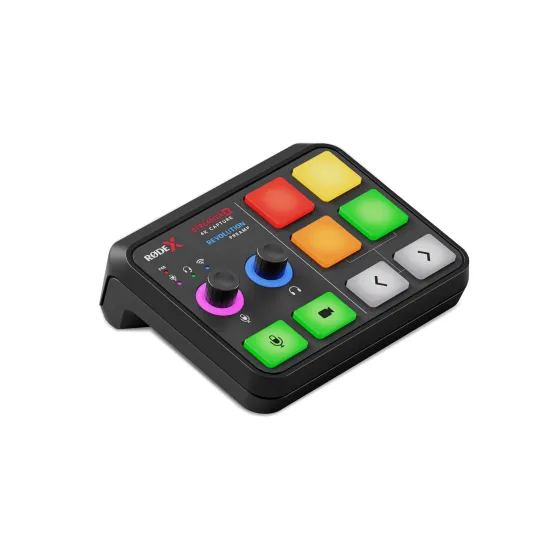
Rode StreamerX audio interface, 4K video capture and control surface Streamer X